Table of Contents
-
Key Takeaway:
-
Sulfur burps are caused by increased hydrogen sulfide gas in the digestive system.
-
Common triggers for sulfur burps are sulfur-rich foods, certain medications, and digestive imbalances.
-
Persistent symptoms such as sulfur burps and diarrhea should be evaluated by a healthcare professional.
What Are Sulfur Burps?
Burping is normal, but sometimes it can smell like sulfur (rotten egg smell), which is embarrassing and unpleasant. Most burps come from swallowed air, but sulfur-rich foods can create a rotten egg odor. The good news is that these smelly burps are usually temporary.
Sulfur burps can happen for many reasons, including certain foods, digestive issues, medications, or bacterial infections. They are typically not serious, and there are plenty of simple ways to manage and prevent them.
Are you curious about what might be causing these smelly burps? Here is a quick guide to what causes sulfur burps and how you can get relief.
Why Do I Have Sulfur Burps?
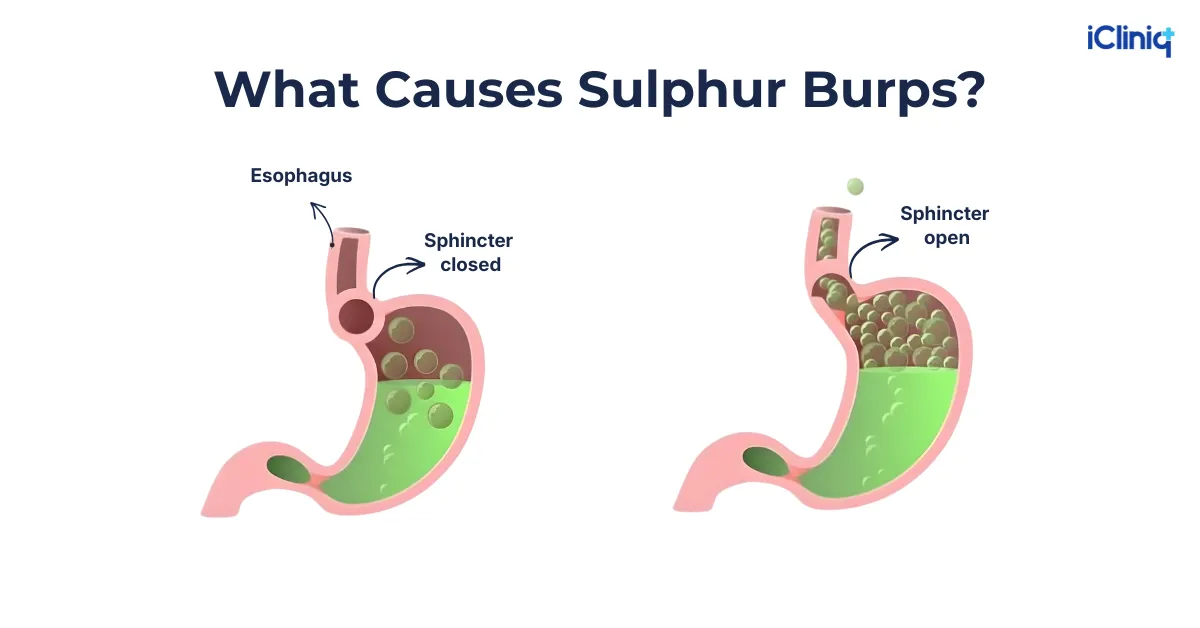
Sulfur burps occur when your digestive system produces a gas called hydrogen sulfide. It gives off a strong rotten egg smell. When you burp, built-up gas moves from your stomach and exits through your mouth, bringing that unpleasant odor with it.
Some people experience sulfur burps after eating certain foods, especially those high in sulfur. Others may notice them due to changes in the balance of gut bacteria, which affects how gas forms in the intestines (bowel).
Your body naturally makes hydrogen sulfide as part of digestion, but certain triggers can increase it, leading to more frequent or stronger sulfur burps.
Common Causes of Sulfur Burps
Wondering why your burps smell like rotten eggs? Let us break down the most common sulfur burp causes one by one.
Diet-related causes
Sulfur-rich foods can lead to the formation of hydrogen sulfide gas in the digestive system. So, which foods are responsible? The common culprits are:
-
Artificial sweeteners: Such as aspartame.
-
Beans: Including black, kidney, and white beans.
-
Carbonated drinks: Like soda and sparkling water.
-
Dairy products: Including whole milk and cheese.
-
Protein-rich foods: Like eggs, chicken, beef, and fish.
-
Vegetables: Such as broccoli, cabbage, cauliflower, and onions.
Behavioral and lifestyle causes
Certain everyday habits can trigger sulfur burps. Here are some common behavioral and lifestyle causes:
-
Eating too quickly.
-
Talking while eating.
-
Drinking fizzy or carbonated beverages.
-
Chewing gum or sucking on hard candy.
-
Smoking.
-
Eating large or heavy meals.
-
High-sugar or fast-food diets.
-
Irregular meal times.
-
Stress or lack of sleep.
Underlying medical or digestive conditions
Sulfur burps can also happen due to certain health conditions or medications. Some common health issues that may cause these smelly burps include:
-
Indigestion: When your stomach has trouble breaking down food properly.
-
Gastroesophageal reflux disease (GERD): Stomach acid flows back into the esophagus, causing heartburn and burping.
-
Gastritis: Inflammation or irritation of the stomach lining.
-
Peptic ulcer disease: Sores in the stomach or small intestine.
-
Infections: Such as Helicobacter pylori (a stomach bacterium) or Giardia (a parasite causing gut infection).
-
Lactose intolerance: Difficulty digesting milk or dairy products.
-
Fructose intolerance: Difficulty digesting certain sugars found in fruits and sweetened foods.
-
Celiac disease: An immune reaction to gluten (found in wheat, barley, and rye) that affects digestion.
Medications
-
Some medications slow digestion, making food stay in the stomach longer, which can increase sulfur burps. Examples include: Semaglutide and Tirzepatide.
-
Certain medications can disrupt gut bacteria, leading to more hydrogen sulfide and sulfur burps. These include: Antibiotics (especially with repeated use), diabetes medications like Metformin.
How Common Are Sulfur Burps?
Sulfur burps are common and can happen to anyone. Usually, it occurs after eating certain foods or drinking carbonated drinks. Most people experience them occasionally, and they are usually temporary. Frequent sulfur burps are less common and may signal an underlying digestive issue.
How to Get Rid of Sulfur Burps?
Treating sulfur burps depends on the cause. So identifying the reason is important. Sulfur burps caused by diet often improve with dietary changes or over-the-counter (OTC) remedies. However, if sulfur burps are persistent and linked to an underlying condition such as GERD, irritable bowel syndrome, or an infection, it is important to address that condition first.
OTC antacids and anti-gas medications can help ease sulfur burp symptoms. Sulfur burp medications include:
-
Simethicone: Helps excess gas pass through your digestive system more quickly.
-
Bismuth subsalicylate: Treats an upset stomach that may occur with sulfur burping.
-
Proton pump inhibitors (PPIs): May reduce sulfur burps related to GERD.
10 Home Remedies to Relieve Sulfur Burps
The following are a few natural sulfur burp cure options:
-
Peppermint tea: Supports digestion. Other herbal teas, like green tea or chamomile, may also help.
-
Moderate exercise: Activities like walking can help move gas through your digestive system.
-
Lying on your left side: Resting or sleeping on this side may make it easier to pass excess gas.
-
Drink plenty of water: Try to drink a full glass before each meal and stay hydrated throughout the day.
-
Apple cider vinegar: Taking a spoonful daily may aid digestion.
-
Baking soda: Add one teaspoon to a glass of water. Do not exceed one spoonful per day or mix with other antacids (medicine that reduces stomach acid).
-
Manuka honey: May help target harmful bacteria in the digestive tract.
-
Turmeric: Supports digestion and can help relieve digestive discomfort.
-
Limit carbonated beverages: Sodas and sparkling drinks introduce extra gas, so reducing them may help prevent sulfur burps.
-
Cumin: It supports digestion and reduces issues.

How Can I Prevent Sulfur Burps?
Sulfur burps can often be prevented with simple diet and lifestyle changes.
-
Avoid certain foods: Limit high-protein foods (chicken, fish, eggs), whole legumes and grains, and dairy (cheese, whole milk).
-
Food preparation tricks: Soak grains and pulses overnight to reduce gas production.
-
Eat mindfully: Chew food well and eat slowly to reduce swallowed air.
-
Stay hydrated: Drink plenty of water.
-
Exercise and manage stress: Regular activity, yoga, or meditation can improve digestion and reduce sulfur burps.
When to See a Doctor?
If you notice sulfur burps happening more than three times a week or they come with stomach pain, diarrhea, or vomiting, it is time to see a doctor. They can check what is causing the burps and may run tests to identify any underlying digestive issues. Do not wait; getting a proper diagnosis is the first step to feeling better.
Conclusion
Sulfur burps are usually harmless. They are related to diet or lifestyle habits. If you make some simple changes, then you can avoid these smelly burps.
Simple changes like adjusting your food choices, exercising, trying sulfur burp remedies, taking medicines, and managing stress can reduce these smelly burps. However, if they are frequent or come with symptoms (like stomach pain, diarrhea, or vomiting), it is important to get a proper check-up.
Consult our expert gastroenterologist for personalized advice and treatment options.

