- 1What Exactly Is a Dry Socket?
- 2What Are the Causes and Risk Factors for Dry Socket?
- 3What Are the Symptoms of Dry Socket?
- 4Normal Socket Healing After Extraction
- 5Differences Between Dry Socket and Normal Socket
- 6Treatment And Management Strategies of Dry Socket
- 7Prevention: How to Minimize the Risk of Dry Socket
- 8Key Takeaways
What Exactly Is a Dry Socket?
Alveolar osteitis, often known as dry socket, is a frequent side effect following tooth extraction. It arises when the blood clot covering the wound bursts or dissolves, revealing the bone and nerves in the socket. Dry sockets are most common in the lower jaw and accompany the removal of teeth in the molar area. Those taking birth control pills and smokers are especially vulnerable to dry sockets. Dry sockets can be easily relieved with a medicated dressing when their symptoms appear.
What Are the Causes and Risk Factors for Dry Socket?
The following are the causes and risk factors for dry socket:
-
Pressure on the wound: Applying pressure with chewing or biting on an empty socket can dislodge the blood clot. Activities such as using straws, sucking on food, and nasal blowing can create a negative-pressure environment in the mouth. Such an environment can assist in dislodging a blood clot.
-
Location and type of extraction: Dry socket is more common after wisdom tooth removal. It occurs more frequently when the extraction is complicated or traumatic. Its occurrence can also depend on the surgeon’s level of experience.
-
Preexisting infection: Individuals with bacterial infections in their mouth prior to tooth extraction are at a higher risk of developing a dry socket. They require consulting a dentist for the use of antibiotics.
-
History of serious illness and cancer: A 2019 analysis of dental records concluded that people with a history of sores in the mouth, being hospitalized with a serious illness, and with cancer were more likely to suffer from a dry socket.
-
Smoking - Smoking can dislodge blood clots because of the suction created while inhaling and the chemicals in cigarettes that can affect healing.
-
Poor oral hygiene - This can lead to infections and, in turn, the risk of dry sockets.
-
Rinsing the mouth vigorously or spitting - It can frequently dislodge the blood clot.
-
Birth control pills - High levels of estrogen in oral contraceptives can interfere with the healing process.
What Are the Symptoms of Dry Socket?
Recognizing the symptoms of dry socket is necessary for getting timely treatment. Symptoms include:
-
Severe pain: It is one symptom of the infection, where pain radiates to the ear, eye, or neck. This pain usually starts a few days after the tooth extraction.
-
No blood clot: The socket appears empty, and bone is visible where there is no blood clot visible.
-
Bad breath and unpleasant taste: A foul smell or taste in the mouth indicates a possible infection or early-stage dry socket.
-
Swollen lymph nodes: The lymph nodes around the neck or jaw can swell as the body reacts to the exposed bone. Early recognition of symptoms will allow for early treatment to alleviate pain in the case of a dry socket.
Normal Socket Healing After Extraction
What happens immediately after tooth extraction?
It is common to feel some discomfort and mild pain following a tooth extraction. This will subside in a few days and is the body's normal healing after a tooth extraction reaction to the injury. Signs of a normal socket after tooth extraction healing include the following:
-
After extraction, bleeding starts.
-
Your jawbone and nerves are shielded from dry socket by the formation of a blood clot.
-
The surrounding tissue begins to incorporate the blood clot. The area may appear white. (This is not an indication of an infection; it is normal.)
-
New tissue grows into your tooth socket. During this healing phase, you may notice a tiny indentation. Pain and discomfort gradually lessen after the first five to seven days.
Role of the blood clot - why it matters? (Dry socket vs blood clot)
The role of the blood clot is essential because it is the emergency repair kit of the body, as the platelets and proteins within the clot seal the bleeding that ensues if the vessel is damaged and protect from infection. Healing depends on this natural process, but abnormal clots that form without injury or do not dissolve can obstruct blood flow, resulting in potentially fatal conditions like pulmonary embolisms (venous clots that travel to the lungs) or heart attacks (arterial clots).
Typical timeline of normal healing
How long does a socket normally take to heal? A normal dental socket can heal within three to five days, but it usually takes a couple of weeks to ensure complete recovery. You will notice the initial signs of healing, such as a reduction in pain and swelling, whereby by the third day, the blood clot would have fully formed over the socket. The blood clot protects the socket and provides a visible indication that the healing process is proceeding smoothly.
As healing continues, new tissue starts to fill the socket, which reduces discomfort. It is common to feel some discomfort for a few days. However, with proper tooth extraction aftercare, the wound typically heals without any issues.
Differences Between Dry Socket and Normal Socket
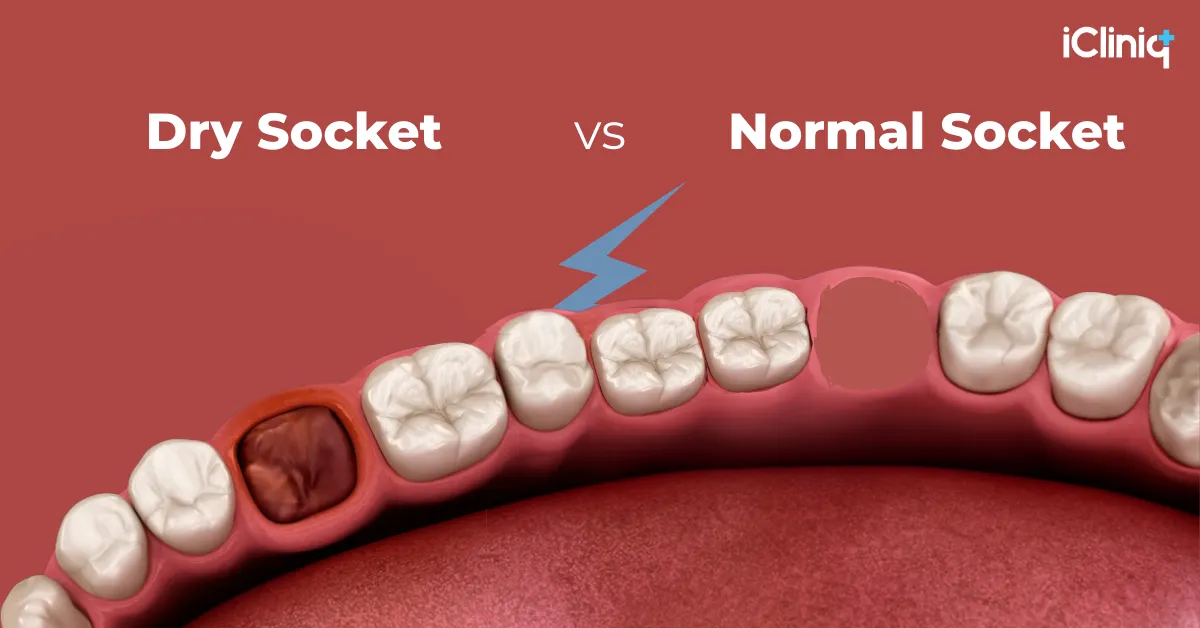
Dry socket:
-
The pain in a dry socket first gets better, then gets worse.
-
Either the blood clot has partially broken up, or it is not visible.
-
There may be visible exposed bone or tissue in the tooth socket, and the amount may have grown since the procedure.
-
It is common to have an unpleasant taste. Bad breath may result from unpleasant odors emanating from the wound, which explains what dry socket looks like.
Normal socket:
-
The pain in a typical socket keeps getting better.
-
Until the wound heals, a noticeable blood clot remains in place.
-
No exposed tissue or bone is visible.
-
The taste has not changed. The breath does not smell any different at all.

Treatment And Management Strategies of Dry Socket
The following are treatment and management strategies for dry socket:
-
Antibiotics - Your dentist may prescribe antibiotics if they suspect that you have an infection.
-
Irrigation - It is performed to gently flush the socket with a saltwater solution or an antibacterial mouthwash.
-
Medicated dressings - A medicated dressing can be applied to the socket, often containing ingredients such as Lidocaine or Eugenol, to help reduce discomfort and numb the site.
-
Pain medicine: These are medicines that you can buy without a prescription, such as Acetaminophen or Ibuprofen. They may help decrease some of your discomfort caused by a dry socket.
Prevention: How to Minimize the Risk of Dry Socket
Although you cannot always prevent dry socket, you can reduce your risk. Here are some tips for safeguarding the healing area following a tooth extraction:
-
Post-extraction care: After the procedure, refrain from vigorously swishing any liquid.
-
Absent straws: Avoid drinking using a straw. The clot may come loose from the sucking motion.
-
No smoking: Due to the suction and toxins in the vapor, smoking significantly raises your chance of having a dry socket. After surgery, abstain from smoking for at least five days.
-
Diet: For the first several days following surgery, limit your diet to soft foods like yogurt and mashed potatoes. Do not forget to stay away from seeds.
-
Oral hygiene: To prevent bacteria or food particles from causing an infection, keep your mouth clean and avoid touching the extraction site.
Conclusion
A dry socket may be the cause of your extreme pain if you just had a tooth extracted. In the days following a tooth extraction, dry sockets may become increasingly uncomfortable. They could also smell bad or have exposed bone or tissue. In contrast, normal healing sockets do not produce any further symptoms and gradually become less uncomfortable. The pain also subsides gradually, and a significant blood clot remains in place until the wound has healed.
However, dry socket is typically not a dangerous condition. An over-the-counter anti-inflammatory and pain medicine reduces pain and inflammation. A dentist can quickly relieve pain with a zinc oxide eugenol medicated bandage. You can also consult our dentist at iCliniq for more details.
Key Takeaways
-
A typical tooth socket heals in three to five days, marked by a reduction in discomfort and swelling, as well as the uncomplicated development of new tissue.
-
Mild pain and swelling may be expected after the procedure. However, if continued or increasing pain occurs, it may signal a complication, such as a dry socket, and necessitate an immediate visit to a dental care provider.
-
Proper oral hygiene practices, avoiding smoking and straw use, and dental post-extraction care practices are needed for averting a dry socket and allowing active healing.