
Table of Contents
- 1What Is Ezetimibe Used For?
- 2When Should You Take Ezetimibe?
- 3How Does Ezetimibe Work?
- 4How Should You Take Ezetimibe?
- 5What Should You Know About Missed Doses and Overdose Risks?
- 6What Are the Side Effects of Ezetimibe?
- 7Who Should Not Take Ezetimibe?
- 8What Should You Know Before Taking Ezetimibe?
- 9What Interactions Can Occur With Ezetimibe?
- 10Is Ezetimibe Safe During Pregnancy?
- 11Can You Take Ezetimibe While Breastfeeding?
- 12How Should You Store Ezetimibe?
- 13Conclusion
- 14
What Is Ezetimibe Used For?
Ezetimibe is a medicine used to lower high cholesterol levels. It is usually prescribed for people whose cholesterol is not controlled with diet changes alone. Ezetimibe is used for reducing low-density lipoprotein (LDL) or bad cholesterol, and is often taken along with statins or other cholesterol-lowering medicines if needed.
When Should You Take Ezetimibe?
Most people take Ezetimibe once daily, at the same time each day, with or without food. Your doctor will take your medical condition into account and decide when to start the drug. Ezetimibe is mostly recommended when cholesterol levels are not reduced with lifestyle changes. In such scenarios, Ezetimibe provides additional support by targeting cholesterol absorption rather than cholesterol production. This makes it especially useful for people who cannot tolerate high doses of statins or experience side effects from other medications.
How Does Ezetimibe Work?
Ezetimibe works as a small shield in your intestine. Instead of allowing cholesterol from your diet to enter your bloodstream, it blocks part of the absorption process. This means less cholesterol reaches your blood, allowing your body to naturally reduce LDL levels. Ezetimibe belongs to the class of drugs known as cholesterol absorption inhibitors. It is not a statin, although many people take it together with statins for better results. So if you’ve ever wondered if Ezetimibe is a statin, the answer is no, but it works well alongside it.
Dosage and Administration
How Should You Take Ezetimibe?
You can take the medicine with or without meals. For long-term cholesterol management, consistency is crucial. Try to take it at the same time every day to maintain steady levels in your body and improve its effectiveness. If your doctor has prescribed Ezetimibe with a statin or another cholesterol-lowering medication, follow the timing carefully to avoid potential interactions.
Available Dosage Forms
It is available mostly as a 10-milligram tablet, which is the standard dose for adults and older children.
-
Adult Dosage Guidelines: The usual dosage for adults is 10 milligrams once daily. Your doctor may decide to pair it with other medicines depending on your LDL levels, heart risk, or past medical history.
-
Children's Dosage Guidelines: It may be prescribed for children aged 10 years and older with certain cholesterol disorders. The recommended dosage is usually the same as for adults, that is, 10 milligrams daily, but only under strict medical supervision.
What Should You Know About Missed Doses and Overdose Risks?
Missed Dose:
Skipping doses frequently may reduce the benefit of the medicine, even if it is well-tolerated. Setting reminders can help maintain a regular intake schedule. If you forget a dose, take it as soon as you remember. If it is almost time for the next dose, skip the missed dose. Do not double it up.
Overdose:
Taking more than the recommended amount can increase the chances of side effects like stomach upset or muscle pain. If you suspect an overdose, take immediate medical help.
What Are the Side Effects of Ezetimibe?
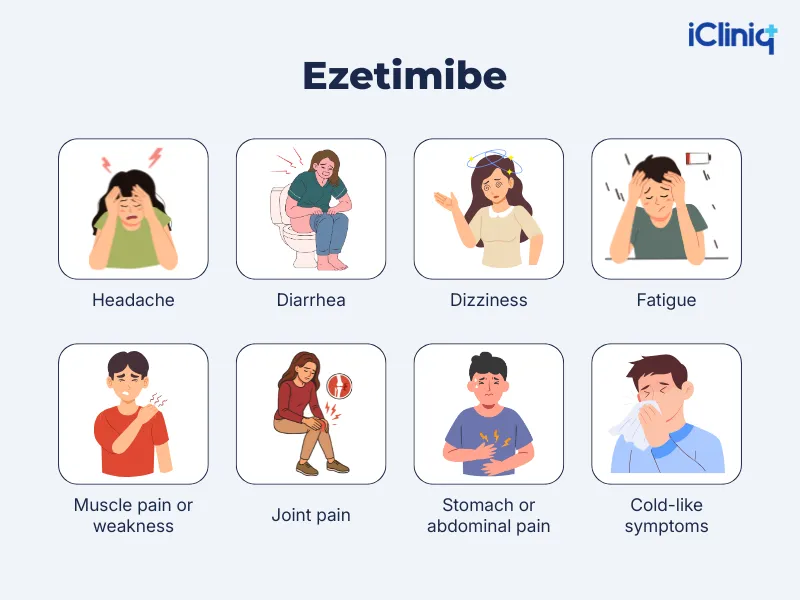
Common Side Effects
Side effects are mild and short-lived.
Common ones include:
-
Headache.
-
Joint or muscle discomfort.
-
Tiredness.
Serious Side Effects
These are rare but require immediate attention:
-
Severe muscle weakness.
-
Unexplained muscle pain (especially if taken with a statin).
-
Yellowing of eyes or skin (possible liver issue).
-
Allergic reactions, like swelling or rash.
Warnings and Precautions
Who Should Not Take Ezetimibe?
-
Ezetimibe should not be used by people who have active liver disease.
-
It is not recommended for individuals with significantly raised liver enzyme levels, as it may worsen liver problems.
-
People who have had an allergic reaction to Ezetimibe or any of its ingredients should avoid taking this medicine.
-
Anyone with a known history of liver-related conditions should use this medication only if clearly advised by a doctor.
-
Before starting Ezetimibe, it is important to inform your healthcare provider about any liver issues or previous drug allergies.
What Should You Know Before Taking Ezetimibe?
Inform your doctor if you have:
-
Under other medications, such as statins or other cholesterol-lowering medications.
-
If you are pregnant or planning to become pregnant.
-
Experiencing any kind of muscle pain or weakness.
Your doctor may monitor your liver function or adjust your treatment plan depending on your condition.
What Interactions Can Occur With Ezetimibe?
1. Drug Interactions:
There is a chance of this medication interacting with other medications, like:
-
Statins.
-
Fibrates.
-
Cyclosporine.
-
Bile acid sequestrants like Cholestyramine.
These interactions can increase side effects or reduce the effectiveness of your medication, so always share your full medication list with your doctor.
2. Food Interaction:
There are no major food restrictions with Ezetimibe. However, limiting foods high in saturated fat and cholesterol will help the medicine work better.
Ezetimibe Use During Pregnancy and Breastfeeding
Is Ezetimibe Safe During Pregnancy?
-
Ezetimibe is usually not advised during pregnancy.
-
It should be used only if the doctor believes the benefits clearly outweigh the possible risks.
-
In most cases, cholesterol-lowering treatment can be safely delayed until after the baby is born.
-
Doctors often recommend stopping Ezetimibe and choosing safer options during pregnancy.
-
Always inform your doctor if you are pregnant or planning to become pregnant before taking this medicine.
Can You Take Ezetimibe While Breastfeeding?
There is limited information on Ezetimibe passing into breast milk. To be safe, healthcare providers often advise avoiding it while breastfeeding.
How Should You Store Ezetimibe?
These tablets must be stored in a cool, dry place away from sunlight and moisture. Store them at room temperatureand out of reach of children.
Conclusion
Ezetimibe helps individuals who require additional support in lowering their cholesterol, particularly when diet and lifestyle changes are insufficient. It works gently by reducing the amount of cholesterol absorbed from the food you eat.
When taken correctly and under medical guidance, Ezetimibe 10 mg can significantly improve cholesterol levels with very few side effects. Regular check-ups, a healthy diet, and open communication with a doctor are essential for receiving the best treatment.
If you or anyone you know is worried about increasing cholesterol levels, consult a heart specialist to clear your concerns.
Key Takeaways
-
Ezetimibe helps lower bad cholesterol by reducing the amount of cholesterol absorbed from the intestines.
-
This medication is usually administered in combination with statins to enhance cholesterol-lowering effects.
-
Most people tolerate Ezetimibe well with minimal side effects and good safety for long-term use under medical supervision.
-
Healthy diets and regular follow-ups enhance its effectiveness, making it a reliable option for heart health.