
Table of Contents
What Are the Most Common Causes of Itchy Ears?
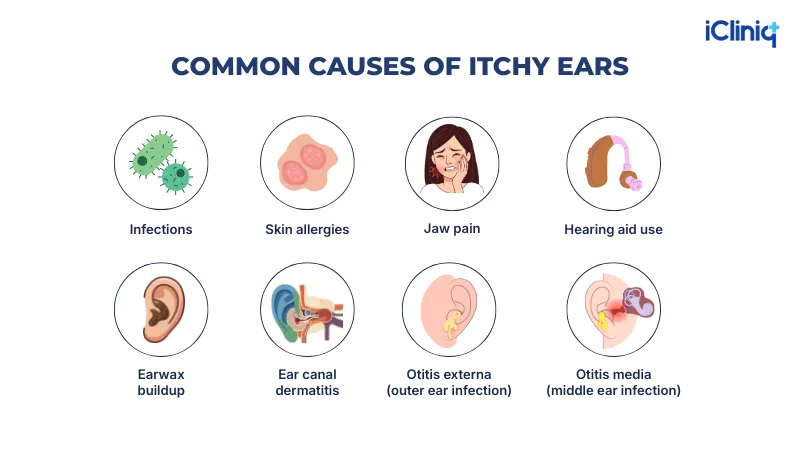
Itchy ears, however, can sometimes be indicators of a skin condition, infection, or allergy. The most common causes of itchy ears are listed below-
-
Earwax buildup:
Earwax serves to shield the ear canal, and an excessive supply of earwax leads to an earwax buildup itch. As the wax solidifies, it dries the skin and causes irritation, which results in itching or block sensation.
-
Ear canal dermatitis:
Ear canal dermatitis arises when the skin in the ear becomes inflamed. This can occur as a result of soaps, shampoos, earbuds, or regular cleaning using cotton swabs. Among the typical signs are redness, dryness, and itching.
-
Hearing aid use:
Itching caused by hearing aids is a common issue. Devices may capture moisture, scratch the skin, or cause an allergy to the material used, leaving your ear constantly itchy.
-
Infections:
The ear canal may be inflamed due to bacterial or fungal infection. In most cases, these infections lead to itchiness, pain, discharge, or swelling.
-
Skin allergies:
Cosmetics, hair dyes, earrings, or jewelry containing nickel may cause allergies and itching in your ears. Among allergic reactions, there is a possibility of redness, scaling, and severe itching.
-
Otitis externa (outer ear infection):
Otitis externa, also referred to as the swimmer's ear, is a frequent cause of an itchy ear, particularly after swimming. Bacteria or fungi begin to grow in the presence of moisture, resulting in itching, pain, and discharge.
-
Otitis media (middle ear infection):
Otitis media can also result in deep ear pain and itching, usually accompanied by fever or difficulty hearing, although it is a more common condition that primarily affects children.
-
Eczema:
Ear canal eczema, also known as ear eczema, is a skin condition characterized by dry, flaky, and itchy skin on the inside or around the ear. Stress, allergens, or changes in the weather can aggravate symptoms.
-
Psoriasis:
Psoriasis may also affect the ears, causing thick, scaly patches that can be itchy. The skin of the ear canals becomes swollen and tender, and scratching is irresistible and detrimental.
-
Food allergies:
Some food allergies can cause itching in unexpected areas, such as the ears. Other allergic conditions, such as hives or a sore throat, are usually related to this.
-
Keloids:
Keloids (scars that are raised in the ear, much like the result of ear piercing) are known to be itchy and painful due to nerve irritation and tightness.
You are not alone in thinking to yourself, Why am I itching my ears so much? Or why do my ears itch? I frequently hear this objection, and in most instances, it is not a harmful reason.
What Symptoms Typically Occur Along With Itchy Ears?
Itchy ears are rare to come by, but when they develop, they come with other symptoms, such as:
-
The ear canal skin is generally dry and scaly.
-
Redness or swelling.
-
Pain or tenderness.
-
Eardrum perforation or leakage.
-
A blocked or full sensation.
-
Temporary hearing loss.
-
Scald or burning of the ear.
When symptoms become more intense or persist for longer than several days, seek medical consultation.
How Are Itchy Ears Treated?
Treatment of an itchy ear is based on the cause. Some of the common treatments are listed below-
-
Debridement of wax by a medical practitioner.
-
Topical steroids of inflammatory and eczematous drops or creams.
-
Infection: The ear drops used to treat infections are either antibiotic or antifungal.
-
Allergy-related itching: Antihistamines.
-
Refitting or changing hearing aids to alleviate irritation.
Never put anything in your ears; this is most of the time itchy and more prone to infection.
What Home Remedies Help Relieve Itchy Ears?
In the case of mild ones, itchy-ear home remedies may help resolve the problem:
-
Ears should not be moist, particularly after swimming or bathing.
-
Dry the outer ear with a clean soft towel.
-
Apply some drops of warm olive oil or mineral oil (in case of absence of pain or discharge).
-
Do not use cotton swabs and avoid scratching.
-
Wash with fragrance-free soaps and hair shampoos.
-
Treat allergies using medically prescribed drugs.
These medicines can help prevent itchy ears in cases of mild symptoms.
Conclusion
Itchy ears are usually not severe; nonetheless, they should not be overlooked if they persist. Dry skin in the ear canal, infection, and skin-related causes are just some of the causes that would cause discomfort. Understanding the reason you get itchy ears helps you decide on the appropriate treatment and prevents habits like scratching or excessive cleaning. It is always safe to consult an ENT specialist, particularly when uncertain, in cases of pain or discharge.
Key Takeaways
-
The majority of itchy ears are due to dry skin, earwax accumulation, allergies, or mild infections.
-
Cotton swabs and scratching should be avoided because these aggravate irritation and put an individual at risk of infection.
-
Taking care of day-to-day activities can prevent itchy ears and help you lead a normal, itch-free life.