

What Actually Happens When You Swallow Gum?
Swallowing gum by accident can feel alarming, especially if you’ve grown up hearing scary stories about it staying inside your body forever. Many people immediately panic, imagining gum sticking to their intestines or causing serious damage. The good news is that your digestive system is much brighter and stronger than that.
When you swallow gum, it follows the same path as food. It travels down your esophagus and enters your stomach, just like any other item you have swallowed. Although chewing gum isn't meant to be eaten, your body knows how to move it along safely. In most healthy individuals, digestion occurs smoothly without causing harm.
The stomach does not absorb gum, but it also does not trap it. It doesn't stick to your stomach walls or damage your intestines in normal situations. It is simply treated as indigestible material and moves forward into the intestines, where it continues its journey until it is naturally expelled from the body.
Does Gum Really Stay in Your Stomach for Years?
This is one of the most common chewing gum myths, and it simply isn't true. Swallowed gum does not stay in your stomach for years. The idea likely started as a way to discourage children from swallowing the chewing gum, but it doesn't hold up medically.
While gum is not digested in the same way food is, that doesn't mean it stays in the body. Your digestive system is constantly moving. The muscles of the intestines push contents forward through rhythmic contractions. Due to this movement, gum does not remain in one place.
In most cases, accidentally swallowed gum moves through your digestive tract and is eventually passed out in your stool, usually within a few days. The idea that gum can be stuck in the stomach long-term is a misunderstanding of how digestion works.
How the Digestive System Break Down Gum Ingredients?
Chewing gum consists of both digestible and non-digestible components. Some of these are easy for the body to handle, while others are not. The sweeteners, the flavorings, and the softeners can be broken down easily by your digestive system. The gum base itself is designed to be chewy and resistant, so your body doesn't fully digest it. However, digestion isn't just about breaking things down; it's also about moving waste forward. Even though the gum base isn't absorbed, it still passes through your intestines just like fiber or other industrial materials.
Is Swallowing Gum Dangerous?
For most healthy individuals, swallowing gum occasionally is not a danger. If it happens once in a while, there is usually no reason to worry. The body handles it without any major issues. Many parents worry more when children accidentally swallow gum, but even in kids, a single swallowed piece is usually harmless. Children’s digestive systems work much like adults, and gum typically passes through without causing trouble.
Problems arise only when gum is swallowed frequently, in large quantities, or mixed with other indigestible items, such as coins, seeds, or candy wrappers. This is why doctors advise children not to make a habit of swallowing gum, even though an occasional accident is not dangerous.
Another common concern is whether swallowed gum can stick inside the intestines. In normal digestion, the intestines keep moving food and waste forward through rhythmic muscle contractions. Due to this constant movement, gum does not adhere to the gut lining; instead, it travels along with other waste until it is naturally expelled from the body.
Side Effects of Swallowing Gum
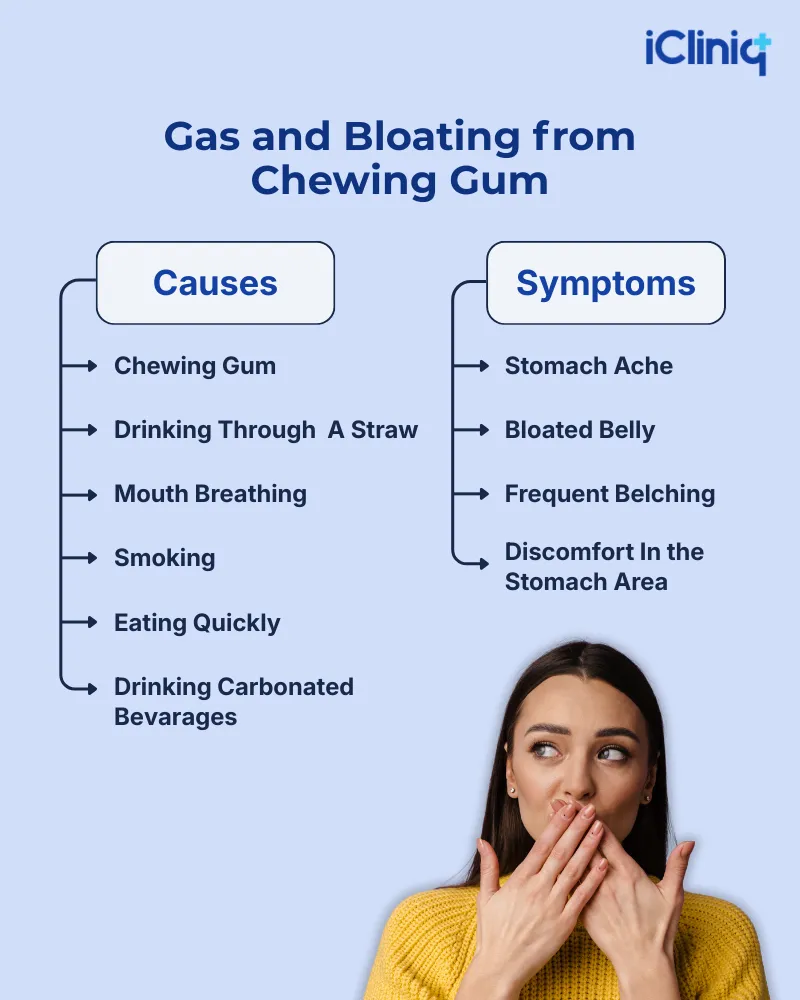
Most people don't notice any symptoms at all. In rare cases, some may experience mild stomach discomfort, temporary bloating, and a feeling of fullness. These symptoms usually settle on their own. Serious complications are uncommon and typically associated with advanced gum disease rather than a single, accidental event.
What Are the Symptoms of a Gum-Related Blockage?
A gum blockage is very rare, but it can happen in extreme situations. It is most often seen in children who frequently swallow gum or combine it with other non-food items.
Possible warning signs:
-
Persistent stomach pain.
-
Vomiting.
-
Constipation lasting several days.
-
Abdominal swelling.
If these symptoms appear, especially in children, medical attention is important. Early evaluation helps prevent complications and provides reassurance.
What Should You Do After Swallowing Gum?
If you have accidentally swallowed gum, the best course of action is to do nothing. Stay calm and let your digestive system do its job. Drinking water and eating normal meals can help both things along smoothly. Your body is designed to handle small indigestible items, and gum is no exception. It will pass naturally, and there is no need for laxatives, home remedies, or special diets.
What Not to Do?
-
Don’t panic or assume something is wrong.
-
Don't try to force vomit.
-
Avoid taking unnecessary medications.
-
Overreacting often causes more stress than the gum itself can ever do.
Conclusion
Swallowing gum is usually harmless. Despite popular belief, gum does not stay stuck in your stomach for years, nor does it damage your digestive system when swallowed occasionally. Your body is well-equipped to handle small, indigestible items and naturally eliminate them. Understanding how the digestion of swallowed gum really works can help put your mind at ease. If it happens rarely and without symptoms, there is no cause for concern.
However, repeated excessive swallowing or symptoms like pain and vomiting should always be checked by a doctor. If you or your child has accidentally swallowed gum and is concerned about the symptoms, please consult our stomach specialist for proper guidance.
Key Takeaways
-
Swallowing chewing gum is not dangerous, as it passes through the digestive system safely and naturally.
-
Problems are rare and typically occur with repeated excessive swallowing in children.
-
Around 90% of people swallow chewing gum at least once in their lifetime, with the rate rarely being less than one percent; intestinal blockage may occur.

