Table of Contents
- 1Why Does Hair Get Thin?
- 2What Are the Causes of Thinning Hair?
- 3What Is the Difference Between Hair Thickness and Hair Density?
- 4What Are the Best Foods for Hair Thickness?
- 5What Is a Daily Hair Care Routine to Build Thickness?
- 6What Are the Natural Remedies That May Help With Hair Thinning?
- 7What Are Clinically Proven Treatments for Thinning Hair?
- 8When to See a Doctor for Thinning Hair?
- 9Conclusion
- 10Key Takeaways
Why Does Hair Get Thin?
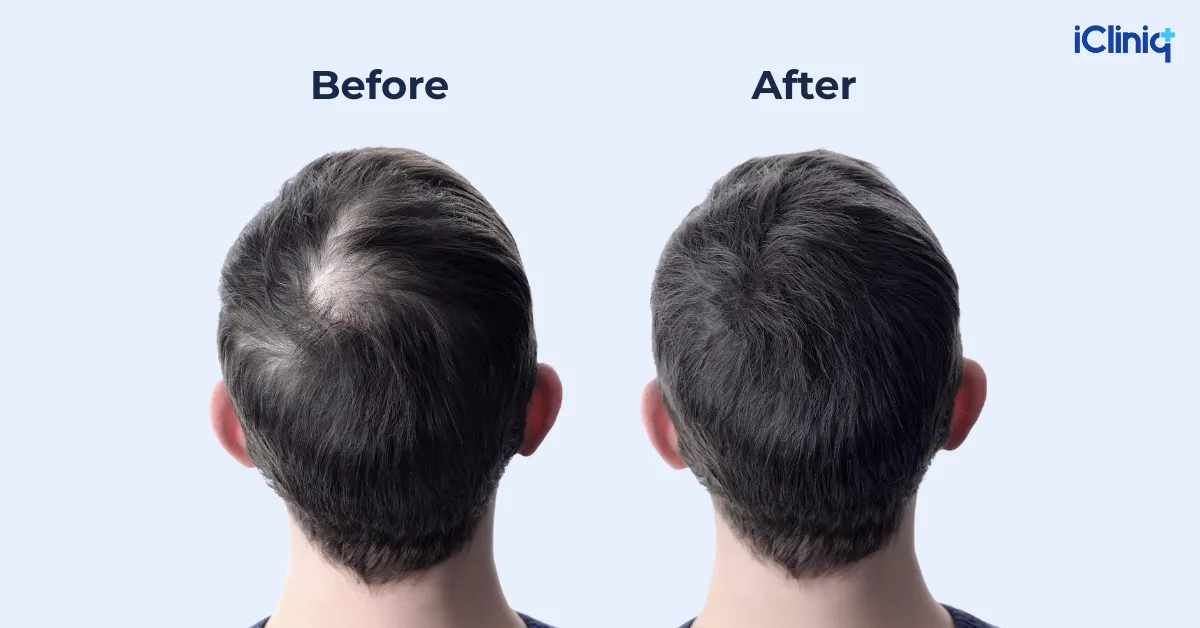
Thinning of hair (ToH) or hair loss can occur in anyone, as it is a very common phenomenon. It can occur in different ways and may depend on an individual’s gender. Among females, hair thinning typically begins between the ages of 50 and 60, later than in males. There is no hard-and-fast rule, and ToH may affect females aged 30 and above as well. Among men, thinning of hair may occur at any age.
Among females, thinning of hair occurs on the top of the scalp and in the middle parting line. Generally, the hairline in the front remains unchanged. In males, one can observe ToH in the crown part of the head and a receding hairline in the front.
Factors that contribute to thinning of hair include:
- Nutrition choices.
- Stress.
- Age.
- Genetics.
- Hormonal imbalance.
- Chemical allergies.
- Health conditions.
What Are the Causes of Thinning Hair?
The causes of thinning of hair include:
- Genetics plays a significant role in determining whether your hair is thick or thin. If you have a family history of hair loss, it is most likely that you will be affected by hair loss.
- When you get stressed, your body releases cortisol. This can disrupt the natural hair growth cycle. This may further lead to hair loss and slower hair regrowth.
- If your body is not getting proper nutrients, it may affect your hair growth. Some vitamin deficiencies, as well as mineral deficiencies such as zinc, iron, and biotin, can lead to ToH.
- Hormonal imbalances can be observed during pregnancy, menopause, or thyroid problems. During these phases of life, ToH can be noticed.
What Is the Difference Between Hair Thickness and Hair Density?
Thick and dense are used alternatively, but in reality, these two are distinct. Hair density means the amount of hair on the scalp. Hair thickness refers to how broad your hair strands are.
Hair density is the number of hair follicles that grow per square inch on your scalp. That means if you have highly dense hair, the number of hair follicles per square inch of your scalp is more. Hair density can be affected by factors like:
- Genetics.
- Age.
- Hair loss.
Hair thickness is how wide your single hair strand is. Thick hair and dense hair are not directly correlated. If you have thick hair, it is not necessary to have dense hair. It is vice versa too.
What Are the Best Foods for Hair Thickness?
Your hair is a reflection of your health. What you eat determines how strong and thick your hair becomes. The right foods can help nourish your scalp, strengthen your roots, and improve your hair texture or thickness. A balanced diet can contribute to hair thickening, improved hair health, and increased hair strength.
Your meal should include the following to have thick hair.
-
Eggs:
Eggs contain proteins and biotin, which help strengthen and improve the hair's structure. Eggs also contain zinc and selenium, which help boost scalp health.
-
Berries:
Berries contain vitamin C and antioxidants, which help in iron absorption and protect the hair follicles. As they are rich in vitamin C, they help in the production of collagen. Antioxidants help in preventing hair cell damage.
-
Spinach:
It contains many nutrients for hair. These are vitamin A, C, iron, and folate. Folate and vitamin A keep the scalp moist. Vitamin C helps promote good blood circulation to the scalp and helps in the good production of sebum.
-
Fatty Fish:
These include salmon, sardines, and mackerel. These fish contain omega-3 fatty acids, which help in follicle nourishment. It also contains proteins and vitamin D, which help promote follicle growth and strengthen hair strands, as well as reduce scalp dryness and irritation.
-
Sweet Potatoes:
Sweet potatoes contain beta carotene, which is converted into vitamin A in the body. These also contain antioxidants. All these contents contribute to scalp health, hair growth, and help fight against hair damage.
-
Avocados:
These are rich in antioxidants and healthy fats, which help strengthen hair and improve its shine. It contains vitamin E, which helps improve hair on the scalp. It helps enhance oxidative stress in hair follicles.
-
Nuts:
Nuts are dense with nutrients. They contain zinc, vitamin B, and healthy fats, which benefit hair from the inside out.
-
Seeds:
Flax seeds, chia seeds, and sunflower seeds are beneficial for hair care. These contain omega-3 fatty acids, vitamin E, and selenium.
-
Sweet Peppers:
These contain vitamin C and antioxidants, which help stimulate collagen production, enhance iron absorption, and support the fight against oxidative stress in the scalp.
-
Oysters:
Oysters are the best animal source of zinc. Zinc is essential for hair growth and helps prevent hair thinning and shedding.
-
Beans:
Beans are a rich source of protein, iron, and zinc. These help build keratin to strengthen hair. They contain B vitamins, which are essential for strengthening hair roots.
-
Soybeans:
They contain plant-based proteins, rich in isoflavones, iron, and zinc, which help in strengthening weak or damaged hair.
-
Meat:
Meats are rich in high-quality proteins and iron, which strengthen and thicken hair strands.
What Is a Daily Hair Care Routine to Build Thickness?
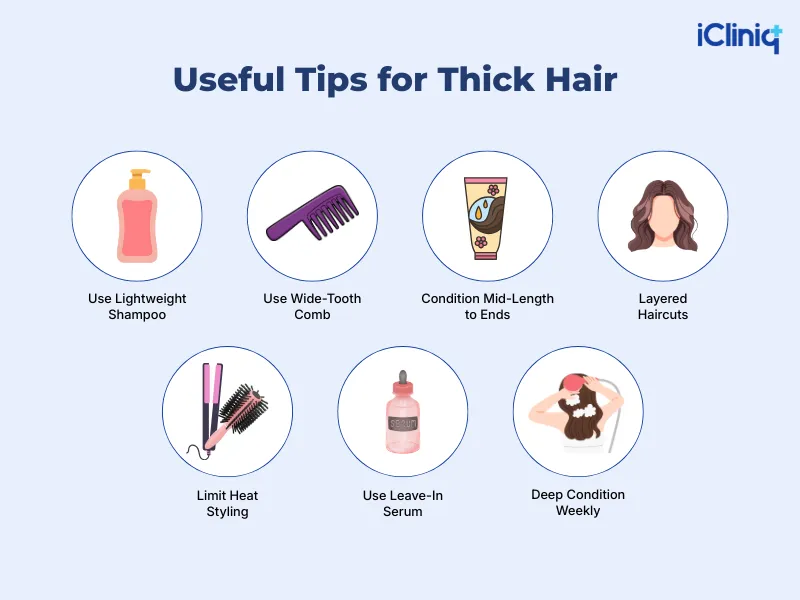
A daily hair care routine helps keep the health of your hair. If you follow a daily hair care routine, it helps keep your hair strong and promotes growth over time. Tips for thick hair include:
- Cleanse your hair with a good mild shampoo. Frequent cleansing can help remove buildup on the scalp. This helps in getting thicker hair.
- Gently massage your scalp with natural oils, such as coconut oil and amla. Massaging can improve blood flow to the hair roots and provide essential nutrients.
- Do not avoid using conditioner, as it provides essential moisture and nourishment for your hair.
- Use of heat-styling tools can damage the shaft of your hair. This may lead to breakage. Minimal usage of these tools or letting your hair dry naturally, wherever you are, can help prevent hair thinning.
- You should comb your hair smartly. Detangling can make your hair break or fall. Apart from this, try to sleep on a silk pillow case to avoid friction. These can help prevent hair thinning.
- Providing your body with good nutrients and hydration can prevent hair thinning.
- You should practice these daily hair care routines consistently, so that your hair becomes accustomed to this routine. This helps prevent hair thinning and promotes hair growth as well.
What Are the Natural Remedies That May Help With Hair Thinning?
Hair thinning or hair loss is considered common, as we tend to lose around 50 to 100 strands of hair every day. When it exceeds this normal range, it is time to take action to prevent this. Many treatments are available, but they are often more expensive and harsh. Hence, there are some natural ways to thicken hair. These are not expensive and are free from harsh chemicals.
Natural remedies work in conjunction with the body's processes to nourish your scalp, strengthen your hair from the roots, create a favorable environment for hair growth, and may help promote thicker hair. These include:
1. Coconut Oil Scalp Massage:
Coconut oil can seep into the hair shafts and deeply nourish them. Warm coconut oil should be massaged on your scalp in circular motions for 10 to 15 minutes. This increases blood circulation, allowing nutrients to reach the hair follicles. Massaging should be done two to three times a week.
2. Aloe Vera:
Aloe vera contains enzymes. These enzymes can help repair dead skin cells on your scalp. Extracted aloe vera gel has to be applied directly to the scalp. Before washing your hair, leave aloe vera on your scalp for almost an hour. This provides the hair with good hydration.
3. Onion Juice:
Onions contain sulphur. This may help strengthen hair and regrowth. It also helps keep the scalp clean and free from infection.
4. Green Tea:
Cleansing with green tea can help strengthen your hair. Antioxidants present in it can reduce hair loss. It also balances your scalp oil levels.
5. Hair Masks:
Homemade hair masks made from the following can help nourish your hair. These masks can be used once a week.
-
Banana and Honey:
These help prevent hair damage.
-
Egg and Olive Oil:
These help in adding protein and shine to your hair.
-
Avocado and Yogurt:
These help moisturize and soften your hair strands.
These natural remedies may help in getting rid of hair thinning. The results may not be the same for everyone.
What Are Clinically Proven Treatments for Thinning Hair?
Clinically proven treatments for thinning hair can help slow or stop hair thinning. Some hair may regrow after undergoing such treatments. These include:
-
Minoxidil:
Minoxidil is an over-the-counter medication. It is a Food and Drug Administration (FDA)-approved medication that can be used by both males and females. It is available in liquid form in 2% and 5% concentrations. In oral form, it is taken daily with a dose of 2.5 to 5 milligrams for hair growth. Oral Minoxidil may be prescribed by a doctor in selected cases.
-
Finasteride:
This medicine helps in stopping the body from producing a hormone called Dihydrotestosterone (DHT). These hormones are present at the root of male pattern baldness. This medicine is not recommended for females and pregnant women.
-
Biotin:
It is vitamin B. It is easily available in the diet. It can be found in egg yolk, yeast, liver, and other foods. If a person is not getting enough biotin, hair loss may be possible. A hair supplement that contains biotin along with others such as collagen, B complex, horse tail extract, and other nutrients can help with hair thinning.
-
Low-Level Laser Therapy (Lllt): (LLLT):
This therapy is found to halt hair loss when hair follicles absorb laser light. But evidence is not enough.
When to See a Doctor for Thinning Hair?
You should consult your doctor when you observe sudden hair loss. This hair loss may be due to many reasons, like medicines, illnesses, low iron, or vitamin D. If you have been facing a hair loss problem for some time, you can discuss it with your doctor about treatment options.
Conclusion
Hair loss is a common phenomenon among individuals, but when it becomes noticeable and there is a sudden loss, it requires medical attention. Hair loss can occur for various reasons. The exact cause must be identified to treat it effectively. Many home remedies are available that can stop hair loss. Newer treatments are also available to address hair thinning. Hence, complete knowledge is necessary to prevent and treat hair loss. For more information, consult a hair care specialist for proper guidance.
Key Takeaways
-
Hair loss or thinning hair is a common phenomenon that occurs as we age.
-
Hair loss can occur due to various other factors, including diet, illness, or certain medications.
-
Hair thinning can be effectively treated with both home remedies as well as with treatments.

