
What Is the GOLD System for COPD Staging?
The GOLD (Global Initiative for Chronic Obstructive Lung Disease) system for COPD (Chronic Obstructive Pulmonary Disease) staging is a widely used method to classify the severity of a person’s chronic obstructive pulmonary disease and to guide proper treatment. It focuses on the extent of airflow blockage in the lungs, the number of symptoms the person experiences, and the frequency of flare-ups.
The system first measures lung function using a test called spirometry. This test checks the FEV1 (forced expiratory volume in 1 second), which is the amount of air a person can forcefully exhale in one second. Based on this value, COPD is divided into four stages: mild, moderate, severe, and very severe.
Along with lung function, symptoms such as breathlessness, cough, and activity limitation are taken into consideration in the GOLD system. By combining symptom scores and exacerbation history, patients are assigned to groups A, B, C, or D, which helps doctors determine the most suitable treatment.
Overall, the GOLD system offers a clear and practical approach to understanding disease severity, predicting future risks, and creating a personalized treatment plan to enhance the quality of life for individuals living with COPD.
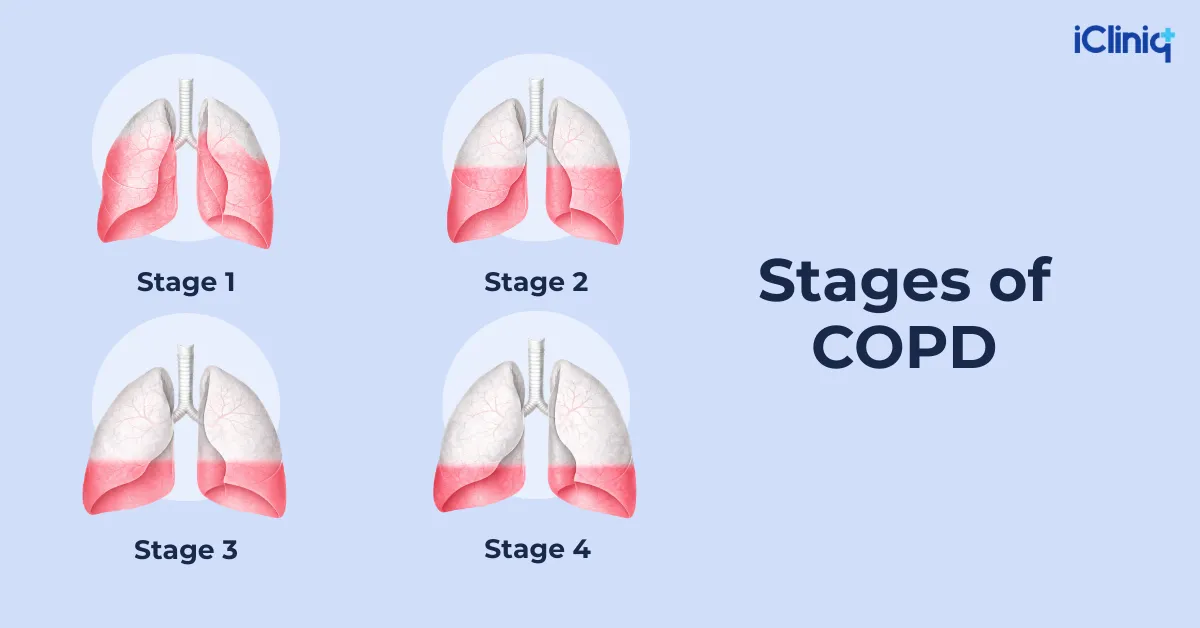
What Are the Four Stages of COPD?
Stage 1 – mild COPD
-
Breathing may feel slightly harder than before, especially during activity.
-
A chronic cough or small amounts of mucus may appear.
-
Many people do not realize they have COPD at this stage.
Stage 2 – moderate COPD
-
Shortness of breath becomes more noticeable during everyday tasks.
-
Coughing and mucus production increase.
-
This is often the stage when people seek medical help and get diagnosed.
Stage 3 – severe COPD
-
Breathing problems become significant, even with light activities.
-
Frequent flare-ups or worsening symptoms may occur.
-
Fatigue, chest tightness, and reduced exercise ability are common.
Stage 4 – very severe COPD
-
Symptoms are constant and can be life-limiting.
-
Low oxygen levels may require long-term oxygen therapy.
-
Quality of life is heavily affected, and flare-ups can be dangerous.
These stages help doctors determine the severity of the disease and plan the most effective treatment for each individual.
What Will Cause COPD to Progress Through Stages?
-
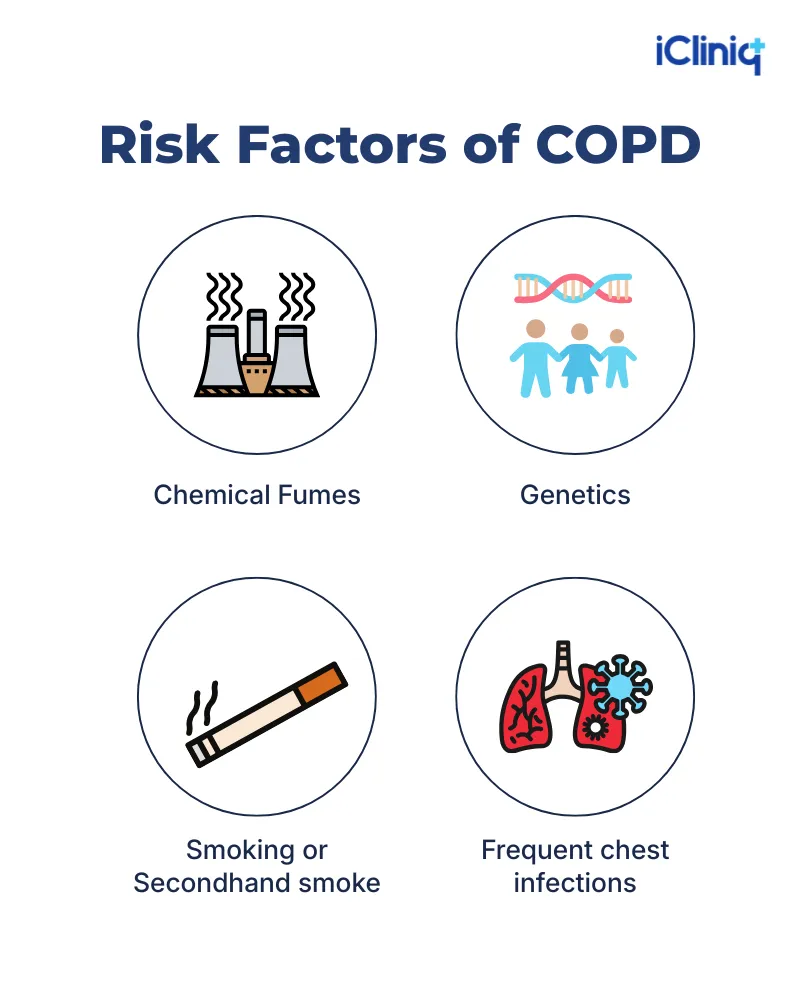
Smoking: Continuing to smoke is the biggest cause. It continues to harm the lungs and worsens breathing over time.
-
Secondhand smoke: Breathing smoke from others can also irritate the airways and speed up lung damage.
-
Air pollution: Dust, fumes, strong chemicals, and polluted air can exacerbate lung inflammation and accelerate the progression of COPD.
-
Frequent chest infections: Getting bronchitis or pneumonia often can weaken the lungs and make symptoms harder to control.
-
Not using inhalers properly: Skipping medicines or misusing inhalers can lead to more flare-ups and faster lung decline.
-
Other untreated health problems: Issues like asthma, heart disease, or sinus infections can put extra pressure on the lungs.
-
Lack of exercise: Not staying active weakens the muscles needed for breathing, making everyday tasks more difficult.
-
Poor diet: Low nutrition reduces the body’s strength and slows its ability to repair damaged lung tissue.
-
Genetic factors: Some people are born with conditions, such as alpha-1 antitrypsin deficiency, that make their lungs more susceptible.
-
Ongoing exposure to triggers: Cold air, strong smells, allergens, and smoke can repeatedly irritate the lungs and worsen COPD over time.
Why Is It Necessary to Detect COPD Early?
Early detection of COPD is crucial, as it helps people slow down the progress of the disease, thereby protecting their lungs. When COPD is found in the early stages, lung damage is still limited, and simple steps like quitting smoking, avoiding pollution, and using inhalers correctly can make a big difference. Early detection also helps prevent flare-ups, which can quickly worsen lung function and lead to more serious stages of the disease.
When COPD is diagnosed early, doctors can create a treatment plan that fits the person’s needs. This may include medicines, breathing exercises, and lifestyle changes that make daily activities easier. Early treatment also reduces the risk of complications such as infections, heart problems, and severe breathing difficulty.
Another important benefit is quality of life. Individuals who learn about their condition early can manage symptoms more effectively, stay active, and reduce the frequency of hospital visits. It also gives them time to understand triggers, recognize warning signs, and take action before symptoms worsen.
In simple terms, early detection helps protect the lungs, slows the progression of the disease, reduces complications, and allows people to live a more comfortable and active life.
How Do the COPD Symptoms Change by Stage?
COPD symptoms change gradually as the disease moves from mild to very severe stages. In the early stages, most people notice a light cough or a small amount of mucus, and breathing may feel slightly harder, especially during activity. As COPD progresses to the moderate stage, shortness of breath becomes more pronounced, particularly during activities such as walking or climbing stairs. Coughing becomes more frequent, and daily tasks may take more effort.
In the severe stage, breathing difficulties intensify, even during simple activities such as getting dressed. Flare-ups occur more frequently, and the person may experience fatigue, wheezing, or a tight chest. By the very severe stage, COPD symptoms are constant and much more limiting. Breathing becomes difficult even at rest, oxygen levels may drop, and flare-ups can become dangerous.
How Is COPD Treated at Each Stage?
Stage 1 – mild COPD
-
Doctors usually start with a short-acting inhaler that you use when you feel short of breath.
-
Stopping smoking and avoiding polluted air are the most important steps.
-
Light exercise and a healthy diet are encouraged.
Stage 2 – moderate COPD
-
A daily long-acting inhaler is added to keep the airways open for longer.
-
Breathing exercises and pulmonary rehabilitation may be recommended.
-
Vaccines for flu and pneumonia help prevent infections.
Stage 3 – severe COPD
-
Two types of long-acting inhalers may be used together for better control.
-
Steroids or other medicines may be added to reduce flare-ups.
-
Regular rehab, oxygen checks, and close monitoring become important.
Stage 4 – very severe COPD
-
Long-term oxygen therapy may be needed if oxygen levels are low.
-
Medicines focus on symptom relief and preventing dangerous flare-ups.
-
Some people may be considered for surgery or special treatments.
What Is the Life Expectancy of an Individual with COPD?
The life expectancy of a person with COPD can vary widely because it depends on many factors, not just the stage of the disease. COPD itself does not have a fixed timeline. Instead, how long someone lives with it depends on how early it is diagnosed, how fast it progresses, and how well it is managed. On the other hand, frequent flare-ups, repeated infections, and other health issues, such as heart disease, can reduce life expectancy. Some people with mild or moderate COPD live many years with a good quality of life, while those with very severe COPD may have more limited breathing ability and higher risks.
Conclusion:
Over time, the disease slowly gets worse in stages of COPD, starting with mild symptoms and progressing to more limited breathing. Understanding each stage helps people know what to expect and when to seek the right treatment. Early stages can often be managed effectively with lifestyle changes and medication, while later stages require more intensive medical support and close monitoring. Knowing the stage of COPD provides patients and their families with a clearer understanding of how to manage daily life, prevent flare-ups, and maintain as much activity and comfort as possible.
Key Takeaways:
-
COPD gets worse in stages, starting with mild breathing trouble and gradually leading to more serious limitations.
-
Early stages can be managed well with quitting smoking, inhalers, and healthy habits, while advanced stages need stronger treatment and support.
-
Knowing the stage helps patients plan care, avoid flare-ups, and maintain the best possible quality of life. If you have any queries, you can consult an iCliniq pulmonologist for your concerns.

