Table of Contents
- 1What Are Ingrown Hairs?
- 2What Is Herpes?
- 3What Is the Difference Between Ingrown Hairs and Herpes?
- 4What Are the Symptoms of Ingrown Hairs?
- 5What Are the Symptoms of Herpes?
- 6What Are the Causes of Ingrown Hairs?
- 7What Are the Causes of Herpes?
- 8How to Differentiate Between an Ingrown Hair and a Herpes Bump?
- 9How Are Ingrown Hairs Treated?
- 10How Is Herpes Treated?
- 11How Can We Prevent Ingrown Hairs?
- 12How Can We Prevent Herpes?
- 13Conclusion
What Are Ingrown Hairs?
Ingrown hairs occur when a hair that is supposed to grow outward curls back into the skin instead. This usually happens after shaving, waxing, or plucking, especially in areas where the hair is coarse or curly. When hair grows in the wrong direction, it can cause a small bump that resembles a pimple.
What Is Herpes?
Herpes is an infection that becomes active from time to time. During a flare-up, individuals may experience small, painful blisters, itching, or a burning sensation on the skin. These episodes typically resolve on their own within a few days.
What Is the Difference Between Ingrown Hairs and Herpes?
-
Ingrown hairs occur when a hair grows back into the skin after shaving or waxing, whereas herpes is caused by the herpes simplex virus, which spreads through skin-to-skin or sexual contact.
-
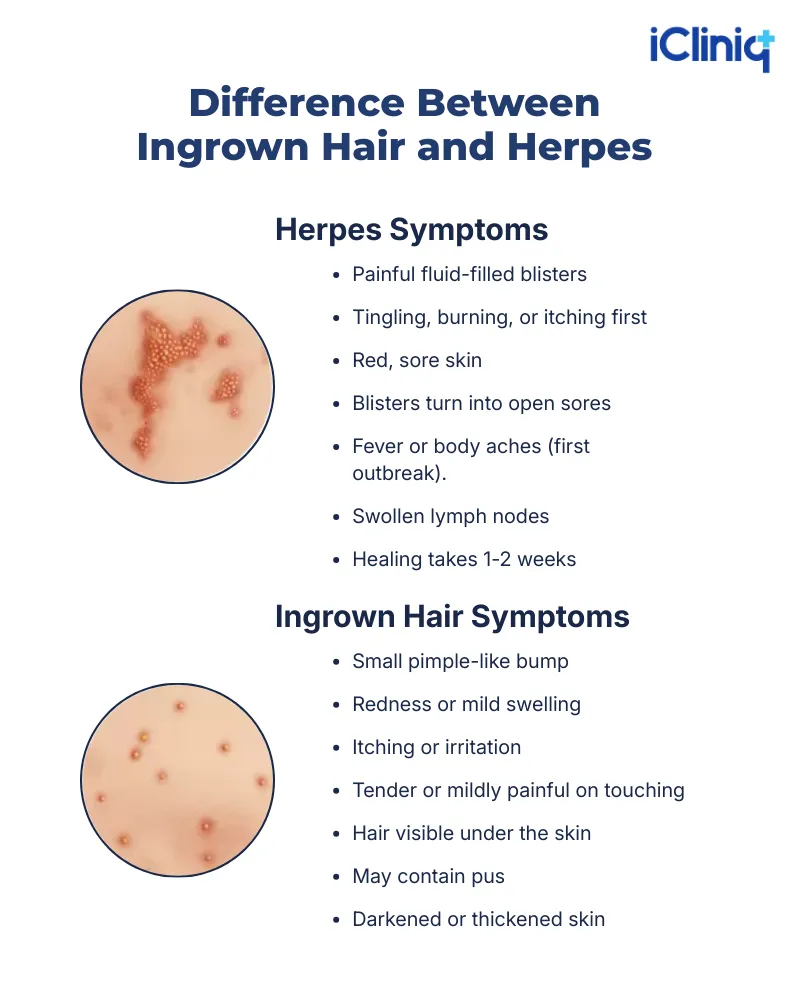
Ingrown hairs usually appear as small red bumps, sometimes with a visible trapped hair. Herpes appears as clusters of tiny, painful, fluid-filled blisters.
-
Ingrown hairs may cause mild soreness, itching, or swelling. Herpes causes burning, tingling, and significant pain before and during flare-ups.
-
Ingrown hairs are not contagious, while herpes is highly contagious, especially during active sores.
-
Ingrown hairs typically clear up with gentle exfoliation and proper shaving or waxing techniques. Herpes sores typically heal within one to two weeks, but the virus remains dormant in the body and can cause recurring outbreaks.
-
Ingrown hairs can be prevented by using clean razors, shaving carefully, and exfoliating the skin. Herpes is prevented through safe sexual practices and avoiding close contact during outbreaks.
What Are the Symptoms of Ingrown Hairs?
-
A small, round bump that looks similar to a pimple.
-
Redness or slight swelling around the area.
-
Itching or irritation where the hair is trapped.
-
Mild pain or tenderness when you touch the bump.
-
A visible hair that appears curled under the skin in some cases.
-
A bump that may fill with pus if the skin becomes irritated.
-
Darker or thicker skin around the spot, especially in individuals who frequently develop them.
What Are the Symptoms of Herpes?
-
Small clusters of painful, fluid-filled blisters on the skin.
-
A burning, tingling, or itching feeling in the area before the blisters appear.
-
Redness and soreness around the affected spot.
-
Blisters that break open and turn into shallow, painful sores.
-
Mild fever, tiredness, or body aches may occur during the first outbreak in some people.
-
Swollen lymph nodes near the affected area, especially in the groin, for genital herpes.
-
Sores that take about one to two weeks to heal, sometimes leaving mild scabbing.
What Are the Causes of Ingrown Hairs?
-
Shaving too closely makes the hair tip sharp and more likely to curl back into the skin.
-
Waxing or plucking can pull hairs out unevenly, causing new growth to become trapped.
-
Curly or coarse hair types, which naturally bend and re-enter the skin more easily.
-
Using old or dull razors that drag on the skin and cut hair unevenly.
-
Tight clothing that rubs against the skin and pushes growing hairs downward.
-
Dead skin buildup that blocks the hair follicle and prevents the hair from growing straight out.
-
Not exfoliating regularly allows the skin to trap new hair growth.
What Are the Causes of Herpes?
-
HSV-1 can be transmitted through kissing or by sharing items such as lip balms, utensils, or drinks.
-
HSV-2 is mainly spread through sexual contact, including vaginal, oral, or anal sex.
-
Direct skin-to-skin contact with an active sore can easily transmit the virus.
-
The virus can also spread even when no sores are visible because it can shed silently.
-
Having a weakened immune system makes it easier for the virus to infect the body.
-
Once infected, certain triggers such as stress, illness, or hormonal changes can reactivate the virus and cause outbreaks.
How to Differentiate Between an Ingrown Hair and a Herpes Bump?
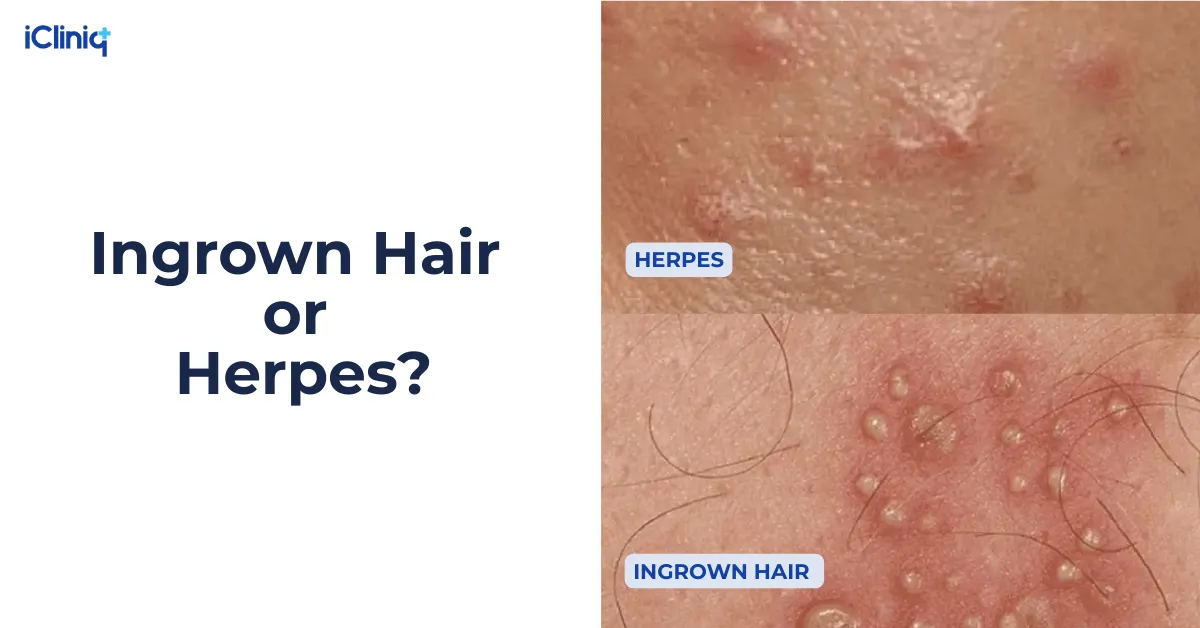
Differentiating between an ingrown hair and herpes primarily depends on how the bump appears, feels, and behaves over time. An ingrown hair typically appears as a single, red bump that resembles a pimple. It may feel slightly sore or itchy, and sometimes you can see tiny hair trapped inside. These bumps often appear after shaving or waxing and tend to remain in one spot without spreading.
Herpes, on the other hand, typically begins with a tingling or burning sensation before any bumps appear. Instead of one bump, it forms small clusters of clear, painful blisters. These blisters can break open and turn into shallow sores. Herpes bumps often feel more painful than ingrown hairs and may be accompanied by other symptoms, such as a mild fever or swollen lymph nodes.
If the bump looks like a pimple with a hair inside and follows hair removal, it’s more likely an ingrown hair. If it appears as grouped painful blisters, especially with burning or tingling, it is more likely to be herpes. When unsure, a medical check is the safest way to confirm the cause.
How Are Ingrown Hairs Treated?
-
Stop shaving or waxing the area temporarily to allow the skin to heal.
-
Use antibacterial creams if the area becomes red, swollen, or infected.
-
Remove the trapped hair carefully with sterilized tweezers if it is visible and close to the surface.
-
Use proper shaving techniques in the future, such as sharp razors, shaving in the direction of hair growth, and moisturizing the skin.
-
Wear loose-fitting clothing to prevent friction in the affected area while it heals.
How Is Herpes Treated?
-
Start treatment early when you notice tingling or burning, as it works best at the beginning of an outbreak.
-
Take medications daily if prescribed for long-term suppressive therapy to prevent frequent outbreaks and reduce the risk of spreading the virus.
-
Keep the affected area clean and dry to avoid irritation and secondary infections.
-
Avoid sexual contact during active outbreaks, and use protection even when no sores are visible to reduce transmission.
-
Manage triggers like stress, illness, or fatigue, which can help reduce the frequency of flare-ups.
How Can We Prevent Ingrown Hairs?
Ingrown hair prevention is achieved by following the points listed below:
-
Shave carefully using a sharp, clean razor to reduce irritation.
-
Avoid shaving too closely or pulling the skin tight while shaving.
-
Use proper hair removal methods, such as waxing or depilatory creams, if shaving repeatedly causes ingrown hairs.
-
Avoid tight clothing in areas prone to ingrown hairs to reduce friction.
-
Do not pick or squeeze bumps that appear, as this can cause infection and scarring.
-
Consider professional hair removal for areas where ingrown hairs happen often.
How Can We Prevent Herpes?
-
Avoid direct contact with herpes sores, including kissing or touching affected areas.
-
Avoid sharing towels, lip balm, or utensils with an individual who has herpes.
-
Safe sex is essential by using condoms even if no sores are visible.
-
Avoid sexual activity during outbreaks, as the virus is most contagious at this time.
-
Inform sexual partners if you or they have a history of herpes to take precautions.
-
The immune system should be strong, which can be achieved by eating well, getting enough sleep, and managing stress, all of which can help reduce flare-ups.
-
Wash your hands thoroughly if you touch any area with sores.
-
Consider taking antiviral medication, as prescribed by a doctor, to reduce the risk of transmission.
Conclusion
Ingrown hairs and herpes can look similar at first, but they come from entirely different causes. Ingrown hairs typically develop when a hair grows back into the skin, resulting in a small, painful bump that resolves once the hair is removed. Herpes, on the other hand, is a viral infection that causes clusters of blisters that tend to recur and may be accompanied by burning or tingling sensations before they appear. Understanding these differences helps you act quickly; simple care can heal an ingrown hair, but herpes needs proper medical attention.
Key Takeaways
-
Ingrown hairs are not contagious, whereas a virus, such as the one that causes herpes, spreads through direct contact.
-
Ingrown hairs appear as single, red bumps that may itch or be tender, whereas herpes shows clusters of painful, fluid-filled blisters, often accompanied by burning or tingling beforehand.
Ingrown hairs can be treated with gentle care, while herpes is managed with antiviral medications, good hygiene, and safe contact practices to prevent spreading. If you have any queries, you can consult an iCliniq dermatologist for your concerns.

