Table of Contents
- 1What Is the Difference Between Seborrheic Dermatitis and Psoriasis?
- 2What Causes Seborrheic Dermatitis and Psoriasis?
- 3Risk Factors for Seborrheic Dermatitis and Psoriasis
- 4What Are the Symptoms of Seborrheic Dermatitis and Psoriasis?
- 5How Are Seborrheic Dermatitis and Psoriasis Diagnosed?
- 6What Are the Best Treatments for Seborrheic Dermatitis and Psoriasis?
- 7Key Takeaways
What Is the Difference Between Seborrheic Dermatitis and Psoriasis?
Seborrheic dermatitis and scalp psoriasis are two common skin conditions that affect the scalp. The symptoms may look alike, which is why many people get confused. But there are a few key differences that make each condition unique. Understanding these helps in choosing the right treatment.
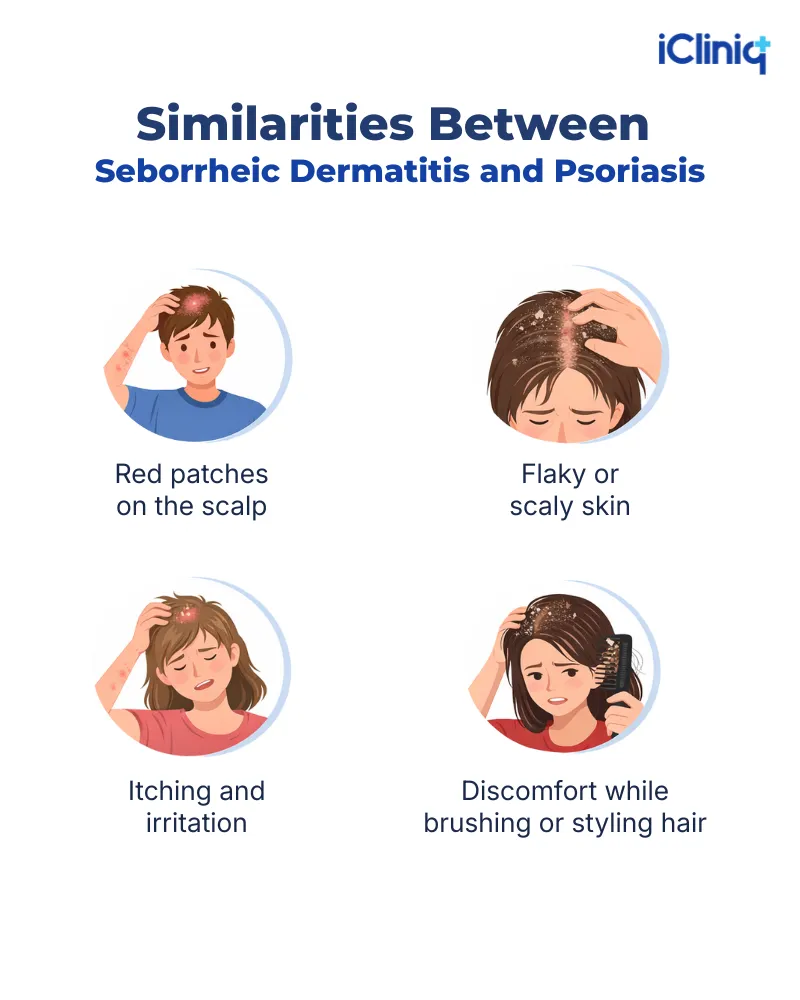
Similarities:
Both seborrheic dermatitis and psoriasis can cause:
-
Red patches on the scalp.
-
Flaky or scaly skin.
-
Itching and irritation.
-
Discomfort while brushing or styling hair.
Key differences
-
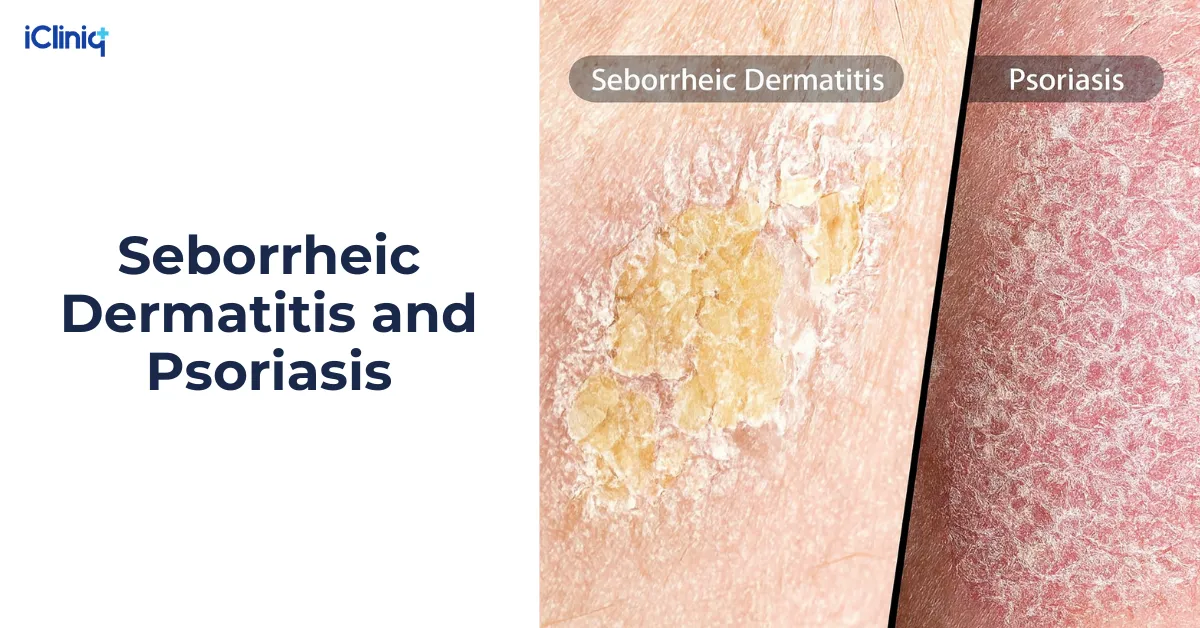
Thickness of flakes: Psoriasis has thicker, drier, and more stubborn scales. Seborrheic dermatitis flakes are greasier, lighter, and more yellowish.
-
Location: Seborrheic dermatitis affects the scalp, eyebrows, sides of the nose, behind the ears, and the chest. Psoriasis can appear on the scalp, as well as on the elbows, knees, lower back, and nails.
-
Inflammation: Psoriasis is a multisystem inflammatory disease, which means it affects more than just the skin. Seborrheic dermatitis is mainly a skin condition.
-
Appearance of patches: Psoriasis patches are sharply defined and look dry. Seborrheic dermatitis patches look oily, red, and flaky.
-
Other signs: Individuals with psoriasis may notice changes in their nails, such as small pits or grooves. This is not common in seborrheic dermatitis.
What Causes Seborrheic Dermatitis and Psoriasis?
Both conditions develop for different reasons. Understanding the cause can make the diagnosis easier and help in controlling flare-ups.
-
Seborrheic dermatitis: This condition is linked to an overgrowth of a natural yeast called Malassezia, which lives on the skin. It primarily affects areas with more oil glands. It may worsen in cold weather, with stress, or during hormonal changes.
-
Psoriasis: Psoriasis happens when the immune system becomes overactive and causes the skin cells to grow rapidly. These extra skin cells accumulate on the surface and form thick patches. It is not caused by infection and is not contagious.
Risk Factors for Seborrheic Dermatitis and Psoriasis
Seborrheic dermatitis risk factors:
-
Oily skin.
-
Stress or fatigue.
-
Cold or dry weather.
-
Certain medical conditions, like Parkinson’s disease (a progressive neurological movement disorder).
-
Hormonal changes.
-
Family history.
Psoriasis risk factors:
-
Family history of psoriasis (chronic inflammatory skin condition).
-
Stress.
-
Skin injuries or infections.
-
Certain medications.
-
Obesity (a chronic excessive fat condition).
-
Smoking or heavy alcohol use.
What Are the Symptoms of Seborrheic Dermatitis and Psoriasis?
While some symptoms overlap, each condition has its own pattern.
Seborrheic dermatitis symptoms:
-
Greasy or oily flakes.
-
Yellow or white scaling.
-
Redness, skin irritation.
-
Itchy scalp.
-
Dandruff.
-
Flakiness on eyebrows, beard area, chest, or inside the ears.
-
In babies, seborrheic dermatitis appears as cradle cap, which forms thick, yellowish crusts on the scalp.
Psoriasis symptoms:
-
Thick, dry, silver-white scales.
-
Raised red patches.
-
Itching or burning sensation.
-
Cracks or discomfort due to thick scaling.
-
Flakes that extend beyond the hairline.
-
Psoriasis in other areas, like the elbows, knees, or back.
-
Nail changes, such as pitting or discoloration.
-
Psoriasis scales usually feel tougher and more stuck to the skin than seborrheic dermatitis flakes.
How Are Seborrheic Dermatitis and Psoriasis Diagnosed?
To detect both conditions, doctors perform a routine physical examination. They check its thickness, location of the patches, appearance of scales, any nail changes (tiny pits or lines), and irritation. Sometimes, doctors recommend a biopsy, in which they gently scrape a small sample of the skin to examine it under a microscope. It is quick and painless, just to understand the real cause of the skin problem, flakes, and redness.
In seborrheic dermatitis, doctors recommend this in rare cases to rule out other conditions and to know why the treatment was not giving the desired result. Its finding often shows blockage in hair follicles with the buildup of oily secretions (sebum). In psoriasis, a biopsy helps to rule out characteristic changes in skin cells.
The good news is that both conditions are very manageable, especially when diagnosed early, and the right treatment can bring significant relief.
What Are the Best Treatments for Seborrheic Dermatitis and Psoriasis?
Both conditions have treatments that help reduce symptoms, control flare-ups, and improve the overall health of the scalp. The treatment plan typically depends on the severity of the symptoms and their recurrence frequency. A dermatologist may also consider your daily routine, hair-care habits, and the sensitivity of your skin.
Most people only need shampoo, while others require hair cream or medication as well. It is very common to adjust the treatment after some time, as it is quite impossible for a prescribed treatment to yield the same result every time for everyone. Therefore, doctors adjust the plan to meet individual requirements.
Treatment is not one-size-fits-all. What works for one person may not work for another. That is why regular follow-ups with a dermatologist can help you stay on the right track and keep the condition under control.
Seborrheic dermatitis treatment:
-
It includes gentle scalp cleansing with medicated shampoo and cream.
-
Roflumilast foam for scalp redness, itching, and discoloration.
-
For severe cases, it includes oral antifungals and phototherapy.
For psoriasis:
-
For mild psoriasis, topical creams like coal tar, vitamin D analogs, and corticosteroids can be helpful.
-
For severe cases, light therapy (UVB therapy and Excimer Laser) may be recommended.
-
Medications include oral retinols (vitamin A), biologics (TNF inhibitors and interleukins).
Conclusion
Both conditions, seborrheic dermatitis and scalp psoriasis, cause an itchy, flaky scalp; however, their causes and patterns are very different. Seborrheic dermatitis is linked with skin oils and yeast, though psoriasis results from an overactive immune system and can be seen on different parts of the body. Knowing the differences helps you to choose the right treatment. With proper treatment and regular scalp care, both conditions can stay under control. If symptoms persist or worsen, a dermatologist can help you develop the right plan.
Key Takeaways
-
Both seborrheic dermatitis and scalp psoriasis make your head itchy and flaky, but they both have certain differences.
-
Seborrheic dermatitis is linked to skin oil mixing with yeast, whereas psoriasis begins with an overactive immune system.
-
One can manage these conditions with proper care and treatment, such as medicated shampoos, creams, or light-based therapy.
-
Consistent scalp care and early detection help in reducing flare-ups.

