Table of Contents
- 1What Is a Facial Stress Rash?
- 2Why Stress Causes a Facial Rash?
- 3What Are the Symptoms of a Stress Rash on the Face?
- 4What Are the Common Triggers and Risk Factors?
- 5How to Treat Stress Rash on Face?
- 6What Helps Prevent Stress Rashes on the Face?
- 7What Are the Other Common Facial Rashes Mistaken for Stress Rash?
- 8Conclusion
- 9Key Takeaways
What Is a Facial Stress Rash?
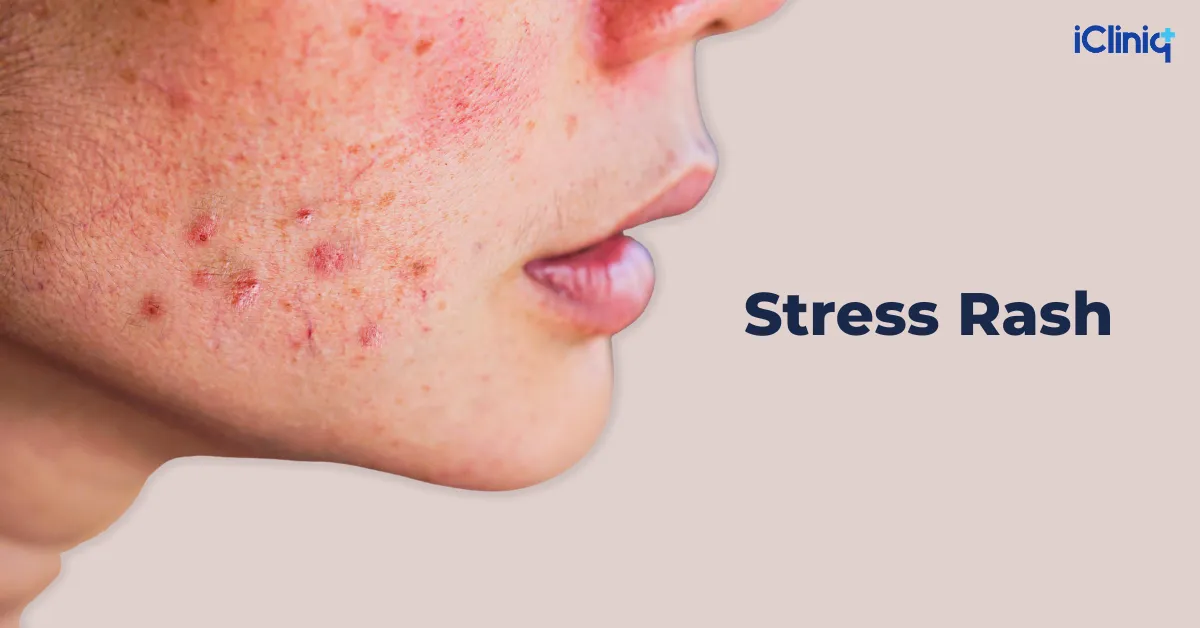
Facial stress rash looks like an itchy, red, raised bump on the face, neck, or chest. These bumps may itch, tingle, or feel a burning sensation. It occurs in response to stress. Stress can cause our body to release certain chemicals or hormones, which are responsible for causing skin irritation and swelling. Facial stress rash is not a serious condition, but it can cause discomfort. Stress rash (SR) can affect nearly 20 percent of all age groups at some point in their lives. It was also found that women are more prone to SR when compared to men.
Why Stress Causes a Facial Rash?
Stress can cause facial rashes or hives. There is a well-established connection between the mind and the skin. Hence, stress can worsen certain conditions, such as acne, eczema, or psoriasis.
When you feel stressed, your stress response, involving the HPA (hypothalamic-pituitary-adrenal) axis and the autonomic nervous system (ANS), triggers an immune response. These responses are designed to counter the threat. It is known as the fight-or-flight mode. This response to the stress causes the release of chemicals from your body. The chemicals released are:
-
Stress hormone-cortisol.
-
Histamines.
Histamine is responsible for the inflammation that causes the itchiness of the hives.
It was found that when your body releases histamine, it causes tiny blood vessels under the skin to leak fluid into the surrounding tissues. This may further cause inflammation and swelling. These bumps formed are called stress rash or hives. Stress is not only responsible for your new stress rashes, but it can also worsen the already existing hives. These often settle as stress levels reduce.
What Are the Symptoms of a Stress Rash on the Face?
Stress hives can occur anywhere on the body. A stress rash appears as a red, raised, and pink rash on lighter skin. They can be tiny pinpoints or welts. They may develop into raised, red, cluster-like bumps. Stress hives may change their size and shape. When the hives are pressed, the skin appears lighter in the center.
When the stress rash is on the face, it can cause the following symptoms:
-
Painful swelling of your lips, eyes, and the inside of your throat.
-
The rash may burn, sting, itch, and cause pain.
-
The skin may feel warm.
-
It may be discolored or red in color.
-
Dryness of the skin or scaling.
-
In rare cases, stress-related hives may be associated with angioedema, which causes swelling of the lips or eyelids and requires urgent medical attention.
What Are the Common Triggers and Risk Factors?
Some triggers may be responsible for causing stress and stress rash. These include:
-
Major changes that occur in life, like a change in job, a change of house, the death of your loved one, or any issues in relationships.
-
Worries related to finance or anxiety.
-
When there is exhaustion, poor sleep, or if you are fighting an illness.
-
Exercise or physical activity increases your body temperature.
-
Taking hot showers, saunas (a room that uses hot air or a steam bath), or sun exposure.
-
Eating spicy foods.
-
When wearing tight clothing, there is physical pressure on the skin.
Triggers may also be of an acute type. These include:
-
Getting ready for a big test.
-
Preparing for a work presentation.
-
When you find yourself in an argument with a friend or loved one.
-
Work pressure.
-
Facing many problems all at once.
Some mental health issues are related to chronic stress, anxiety, or depression. These may increase the likelihood of stress-induced skin reactions.
Some mental health issues can also cause stress hives. These issues cause stress, and in turn, stress hives are formed.
-
Anxiety.
-
Depression.
-
Somatoform disorder.

How to Treat Stress Rash on Face?
Stress rash on the face may occur suddenly. These acute stress rashes may cause reactions. These reactions may last anywhere from a few minutes to an hour. These may not continue for a week or more. The treatment should control the symptoms. The treatment may be done in the following way:
-
A moisturizer that contains soothing ingredients to be used especially when you have stinging or pain.
-
Mild cleansers should be used to keep the facial skin clean.
-
You should select the moisturizing cosmetics that do not have harsh chemicals or ingredients.
-
Antihistamines can be used to treat symptoms like itching.
For long-term stress rash management, healthcare providers’ help is sought. For severe stress rashes, they may prescribe strong antihistamines or topical or systemic corticosteroids. These steroids should be strictly taken under medical supervision.
What Helps Prevent Stress Rashes on the Face?
Stress rashes can be formed or worsened due to either external or internal factors. These are
-
Psychological stress.
-
Environment.
When these factors are not managed effectively, they can persist for a long time and become chronic. These stress rashes may need long-term management.
Healthy lifestyle changes can help prevent stress rashes from appearing. These include:
-
Getting a proper night's sleep is important.
-
Practicing healthy eating and a balanced diet helps.
-
Practice regular exercise.
-
Practice stress management techniques, such as meditation and yoga. This helps manage stress.
-
Always stay hydrated.
-
Avoid triggers that you are aware of.
Environmental factors influence stress hives. Ways to prevent such things include:
-
Wear sunscreen before going out in the sun. This can prevent damage to the skin by ultraviolet (UV) radiation.
-
Avoiding exposure to pollution can prevent dry, itchy skin and eczema.
-
Limit intake of alcohol, hot beverages, and spicy foods. This can prevent flare-ups of redness or rosacea.
What Are the Other Common Facial Rashes Mistaken for Stress Rash?
Sometimes, conditions can be confused with stress rash. Those other conditions include:
-
Heat Rash:
These rashes occur if you live or work in hot, humid conditions. In such cases, heat rashes may develop. These can occur due to the blockage of pores in the skin. In such cases, the sweat may not be able to escape.
-
Stress Acne:
Stress and anxiety may trigger acne. The symptoms are similar to those of non-stress-induced acne.
-
Pityriasis Rosea:
It is a common type of rash. It goes away on its own. It usually starts as a large, red patch and a raised area of skin. It does not itch.
-
Rosacea:
Based on the type, rosacea often causes small, discolored, sometimes pus-filled bumps. Sometimes, stress can cause rosacea. The skin may become thick in those areas.
-
Contact Dermatitis:
It can cause an itchy rash on the skin. You may also get blisters, bumps, swelling, and tenderness.
-
Eczema:
It is a chronic condition. This is triggered by stress. This can cause the skin to become discolored and itchy.
Conclusion
Stress is an unavoidable part of life. It can influence your skin health and cause stress rash or hives. A stress rash on the face is usually temporary and improves once stress levels are controlled. Identifying triggers, maintaining a healthy lifestyle, and managing stress effectively can help prevent its recurrence. If you have persistent or severe symptoms, you should consult a skincare specialist for further guidance.
Key Takeaways
-
Stress rash is caused by a stress response on the face.
-
Stress affects the immune system, causing the release of chemicals such as histamine and cortisol.
-
Stress hives typically resolve on their own when stress levels are lowered.

