Table of Contents
What Is Weeping Eczema?
Weeping eczema describes eczema (atopic dermatitis) that produces fluid-filled blisters that break open and release fluid onto the skin. It's a complication of eczema, not a separate condition.
During a severe flare, blood vessels near the skin surface dilate and leak a clear-to-straw-colored serum into the surrounding tissue. This seeps through the skin and dries into a yellow-orange crust.
When the damaged skin barrier allows bacteria, viruses, or fungi to enter, the fluid turns cloudy, yellow-green, or pus-like, signaling a secondary infection that requires different treatment.
All eczema types can weep, including atopic dermatitis, contact dermatitis, dyshidrotic eczema, and seborrheic dermatitis.
What Does Weeping Eczema Look Like?
Appearance varies depending on whether the cause is inflammatory or infectious.
Inflammatory (Non-Infected):
-
Small blisters on red, inflamed skin.
-
Clear or pale yellow fluid seeping from open skin.
-
Yellow-orange crusting once the fluid dries.
-
Surrounding skin that is dry, scaly, or cracked.
Infected:
-
Thicker, cloudier, or honey-colored fluid.
-
Yellow or gold crusting is a hallmark of staph infection.
-
Viral infection (eczema herpeticum) clusters of small, dark blisters (red, purple, or black) that burst into painful, weeping sores.
-
Spreading redness, warmth, and swelling.
Key Visual Criteria for Distinguishing Between Inflammation and Infection: Clear or light yellow discharge indicates inflammation. Thick, honey-colored, or green discharge indicates infection. If in any doubt, consult a medical professional.
Weeping Eczema Symptoms
Typical signs are:
-
Blisters filled with fluid.
-
Drainage.
-
Severe itching or burning sensations.
-
Inflammation of the skin.
-
Yellow-orange crusting.
-
Swelling.
When a secondary infection is present, additional signs appear:
-
Thick or pus-like discharge.
-
Chills.
-
Fatigue.
-
Swollen lymph nodes.
-
Hot, painful blisters that spread rapidly beyond the original patch.
Red Flag Symptoms Requiring Emergency Care: High fever with widespread weeping skin; clusters of dark blisters on the face or neck; swollen lymph nodes alongside rapidly spreading sores. These may indicate eczema herpeticum.
What Causes Weeping Eczema?
-
Weeping caused by inflammation occurs when a severe flare widens blood vessels, allowing fluid to seep through the vessel walls into the skin.
-
Secondary infection happens when the compromised skin barrier is cracked, broken, or scratched, allowing pathogens to enter.
-
Staphylococcus aureus is present on the skin of up to 90% of people with atopic dermatitis, compared to around 20% of those without eczema. When it penetrates broken skin, it causes honey-colored crusting, increased weeping, and worsening inflammation. MRSA is a harder-to-treat strain that requires specific antibiotics.
-
Herpes simplex virus (HSV-1) can infect eczema-affected skin and spread rapidly. It presents as clusters of painful, dark blisters, typically first on the face or neck, accompanied by fever, fatigue, and swollen lymph nodes. Per the National Eczema Society, this is a medical emergency. Do not wait until morning.
-
Candida and ringworm can infect eczema-prone skin, particularly in warm, moist folds, such as the armpits, groin, and under the breasts.
-
Common triggers that can drive inflammation to weeping without infection include dust mites, fragranced soaps, food allergens, excessive sweat, extreme temperatures, stress, and scratching.
Weeping Eczema Treatment Options
-
Topical Corticosteroids: They are the mainstay of therapy in inflammatory weeping eczema. The strength depends on the site: potent formulations for the trunk and limbs and mild ones for the face and intertriginous areas. Apply to the slightly moist skin after washing the affected area.
-
Topical Calcineurin Inhibitors (Tracrolimus, Pimecrolimus): They are considered steroid-sparing agents and are suitable for sensitive skin and maintenance of disease control in between flares.
-
Antibiotics: They are used in case of infection by bacteria. For localized Staph infections, use Mupirocin. In case of widespread infection, use oral antibiotics. Flucloxacillin is the preferred choice, but Erythromycin can be used in patients allergic to Penicillin. MRSA infections require Doxycycline, Clindamycin, or Trimethoprim-sulfamethoxazole based on swab cultures.
-
Antiviral Medication (Aciclovir): It is an important part of the management of eczema herpeticum. Administer aciclovir by intravenous infusion in severe cases in a hospital setting. Early initiation of treatment is crucial, as late initiation has a poor prognosis.
-
Biologics: Dupilumab (Dupixent), Tralokinumab (Adbry), Lebrikizumab (Ebglyss), and Nemolizumab (Nemluvio) have been approved by the FDA.
-
Home Therapy: This needs to be performed concomitantly with medical therapy. The soaking and sealing approach, which involves soaking for 10-15 minutes in lukewarm water, gently drying the area, and applying emollients within three minutes, constitutes the basis of home therapy. Cool compresses (for 15-20 minutes, 2-4 times a day) help reduce inflammation and ease itching. Wet wraps, according to NIAID, help reduce inflammation and improve the absorption of topical medications. Medication application, followed by wrapping in moist cotton fabric, then covering with dry fabric, and wearing for 2 to 4 hours or overnight, helps achieve this purpose. Diluted bleach baths (one teaspoon of bleach to one gallon of lukewarm water for 5-10 minutes, twice a week) reduce Staphylococcus aureus on the skin.
How to Prevent Weeping Eczema?
-
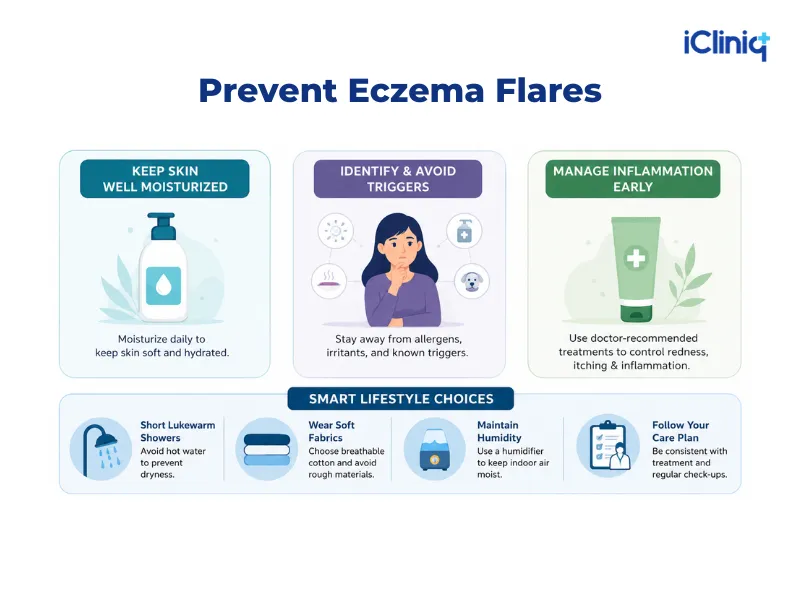
Moisturize Consistently: Apply a thick, fragrance-free emollient at least two times a day. The most critical time to apply is within 3 minutes of bathing. Moisturizing every day strengthens the barrier, reducing how easily it breaks down.
-
Identify and Avoid Triggers: Common culprits include fragranced products like perfumed powders and lotions; dust mites; pet dander; harsh detergents; extreme temperatures; sweat; and stress. A symptom diary is one of the most practical tools for finding personal patterns.
-
Use Fragrance-free, PH-balanced Products: Switch all cleansers, moisturizers, laundry detergents, and fabric softeners to fragrance-free, dye-free alternatives.
-
Keep Nails Short: Scratching is the primary way bacteria enter broken eczema-skin. Wear cotton gloves at night if nocturnal scratching is a problem.
-
Treat Flares Early: Starting topical treatment at the first sign of a flare before weeping develops prevents escalation.
-
Avoid Contact With Active Cold Sores: Anyone with eczema who hasn't had HSV should avoid direct skin contact with cold sores, the primary route of transmission for eczema herpeticum.
-
Wear Breathable Fabrics: Cotton, bamboo, and TENCEL are the safest choices. Avoid wool and synthetics that trap heat and sweat.
When to See a Doctor?
See a GP or dermatologist promptly if weeping isn't improving after 48 to 72 hours; discharge is becoming thicker or pus-like; honey-colored crusting appears; the area is growing redder, warmer, or more painful; or you develop a fever alongside a flare.
Seek Emergency Care Immediately If:
-
If you notice dark clusters of blisters forming on the face, neck, or near the eyes.
-
If the affected person develops a high fever with large areas of weeping skin.
-
Swollen lymph glands occur with rapidly forming blisters.
-
A child develops spreading blisters and fever.
These signs may indicate eczema herpeticum. Per the National Eczema Society, do not wait until morning. If your GP is unavailable, go to an emergency department.
Conclusion
Weeping eczema can be considered quite serious, but it is definitely not impossible to manage and treat. In many cases, it implies either a severe inflammatory flare-up or a secondary infection, sometimes both. For the vast majority of patients, management of weeping eczema involves using topical corticosteroids, daily emollients, cool compresses, and wet wraps.
For severe eczema, biologic agents or even JAK inhibitors may help tremendously. However, the best thing about controlling weeping eczema is that you should stay persistent by using emollients daily, avoiding triggers, treating flares as soon as possible, and identifying symptoms of secondary infections promptly. Do not allow your condition to worsen if your eczema is weeping; make sure to visit a dermatologist and find the most effective treatment.
Key Takeaways
-
Weeping eczema is not a disease entity in itself; it is rather a complication of eczema in which blisters filled with fluid rupture, causing clear, yellowish, or straw-colored exudate.
-
This may be caused solely by severe inflammation or by an infection with bacteria (staphylococcal), viruses (herpes simplex virus), or fungi.
-
Topical steroids and moisturizers for inflammation; topical or systemic antibiotics, antivirals, or antifungals for infection.
-
Wet dressing technique, cold compresses, and diluted bleach baths are essential home management techniques.
-
Infected weeping eczema, particularly eczema herpeticum, can become life-threatening if not treated promptly. Recognize the warning signs.
-
If your eczema is weeping yellow or green fluid, becoming more painful, or accompanied by fever, see a doctor the same day.

