Table of Contents
What Is Phencyclidine (PCP) or Angel Dust?
Phencyclidine, also called PCP or angel dust, is a powerful psychoactive substance and dissociative hallucinogen. This means it changes how the brain works and makes people feel disconnected from their body or the world around them. PCP was first created as an anesthetic drug for surgeries (in the 1950s). But doctors stopped using it because it caused dangerous side effects. Now, it is an illegal drug with no safe medical use. PCP is usually found as a white powder, crystal, tablet, or liquid. People may not know what they are taking because PCP is often mixed with other drugs.
How Is Phencyclidine (PCP) Used?
People use PCP in many ways. They may:
-
Smoke it by dipping cigarettes or marijuana joints in liquid PCP.
-
Snort it as powder.
-
Swallow it as pills.
-
Inject it (less common).
PCP starts working fast. The effects can last for hours. Sometimes they last even longer because PCP stays in body fat and gets released slowly.
What Are the Short-Term Effects of Phencyclidine (PCP)?
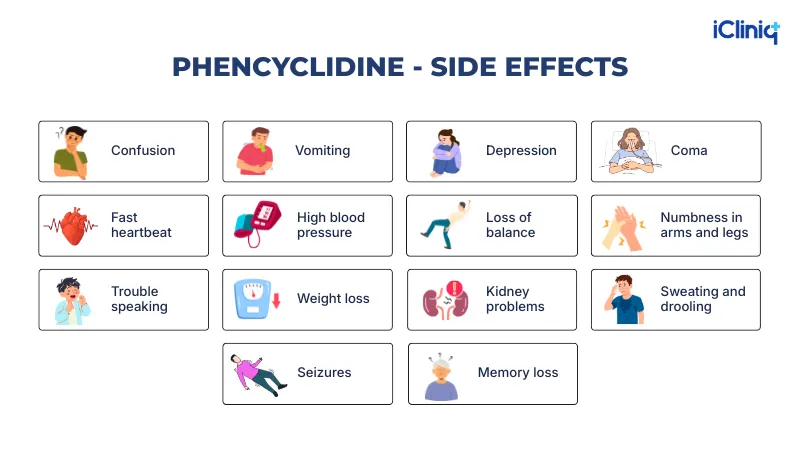
PCP causes strong and unpredictable short-term effects. It affects the brain chemicals that regulate mood, movement, and sensory perception.
People using PCP may show:
-
Feeling “out of body.”
-
Seeing or hearing things that are not real (hallucinations).
-
Confusion.
-
Fear, panic, or anger.
-
Feeling very strong.
-
Trouble speaking.
-
Loss of balance.
-
Slurred speech.
-
Blank or spaced-out look.
-
Fast heartbeat.
-
Sweating and drooling.
-
Numbness in arms and legs.
-
Poor judgment.
-
Aggressive behavior.
Higher doses can cause:
-
Severe fear.
-
Violent actions.
-
Seizures.
-
Vomiting.
-
Unconsciousness.
-
Coma.
Short-term PCP drug effects are risky because people may hurt themselves or others without realizing it.
What Are the Long-Term Effects of Phencyclidine (PCP)?
Using PCP often or for long periods can damage the brain and body.
Long-term PCP side effects include:
-
Memory loss.
-
Trouble thinking or focusing.
-
Anxiety.
-
Speech problems.
-
Weight loss.
-
Social withdrawal.
-
Flashbacks (feeling like the drug is active again even after stopping)
-
Long-lasting mood changes
-
Kidney or liver problems
-
Increased risk of mental health disorders
-
Some long-term effects may take months or years to improve.
What Are the Signs of Phencyclidine (PCP) Abuse or Addiction?
PCP can be addictive. This means a person may feel strong cravings and keep using the drug even when it harms their life.
Signs of PCP abuse include:
-
Sudden mood swings.
-
Anger, fear, or paranoia.
-
Poor school or work performance.
-
Risky or violent behavior.
-
Slurred speech.
-
Strange body movements.
-
Loss of interest in hobbies.
-
Changes in friends.
-
Unusual smell on clothes (chemical smell).
-
Forgetfulness.
-
Confusion.
-
Staying alone for long periods.
Signs of PCP addiction include:
-
Needing more PCP to feel the same effects.
-
Using PCP even after fights, accidents, or injuries
-
Trying to stop but failing
-
Spending a lot of time getting or using the drug
-
Withdrawal symptoms when stopping (sadness, sleep problems, confusion)
-
Addiction can affect relationships, health, and safety.
What Are the Risks of PCP Overdose?
A PCP overdose happens when a person takes too much. A PCP overdose can be life-threatening.
Symptoms of angel dust overdose include:
-
Extreme confusion.
-
Very high body temperature.
-
Severe agitation.
-
Violent behavior.
-
Stiff muscles.
-
Irregular heartbeat.
-
Trouble breathing.
-
Loss of consciousness.
-
Coma.
A PCP overdose can lead to heart failure, brain damage, or death. If you think someone is overdosing, call emergency services right away. Try to keep the person calm and safe until help arrives.
PCP Abuse or Addiction Treatment
There is no one medicine that is used to treat PCP addiction, but many treatments can help a person recover.
1. Treatment received in hospitals: Symptoms such as hypertension, seizures, and difficulty breathing may be treated by doctors. Severe reactions often require hospitalization.
2. Behavioral therapy: Treatment approaches for PCP addiction center around the main remedy of behavior modification. It aids individuals in:
-
Understand the triggers
-
Develop healthy behavior
-
Overcome cravings.
-
Learn how to cope.
Therapies include cognitive behavioral therapy and motivational interviewing.
3. Counseling: Issues with mood, anxiety, and trauma - each may be helped by talking with a therapist.
4. Support groups: NA is a self-help group with members who provide emotional support and a platform for recovering persons to maintain an abstinent lifestyle.
5. Family support: Family education may allow the loved one to gain insight into addiction and recovery. Recovery is, in fact, possible with the right support and care.
Conclusion:
Phencyclidine, also known as PCP or angel dust, is a very addictive and fatal dissociative drug. It affects the brain and physical structure. It affects the user’s mind and body, causing hallucinations, confusion, and aggression. It also impacts your memory and mental stability. Talk to our doctor for further guidance.
Key Takeaways
-
PCP (angel dust) is an illegal, powerful drug that affects the brain.
-
It can make people feel disconnected from reality.
-
PCP overdose is dangerous and can lead to seizures, coma, or death.
-
Treatment includes therapy, counseling, medical care, and support groups.
-
Recovery is possible with the right help.