
- 1What Is Stage 4 Lung Cancer?
- 2What Are the Causes and Risk Factors of Stage 4 Lung Cancer?
- 3What Are the Types of Stage 4 Lung Cancer?
- 4What Are Stage 4 Lung Cancer Symptoms?
- 5How Is Stage 4 Lung Cancer Diagnosed?
- 6What Are Stage 4 Lung Cancer Treatment Options?
- 7What Is Life Expectancy With Stage 4 Lung Cancer?
- 8Conclusion:
- 9Key Takeaways:
What Is Stage 4 Lung Cancer?
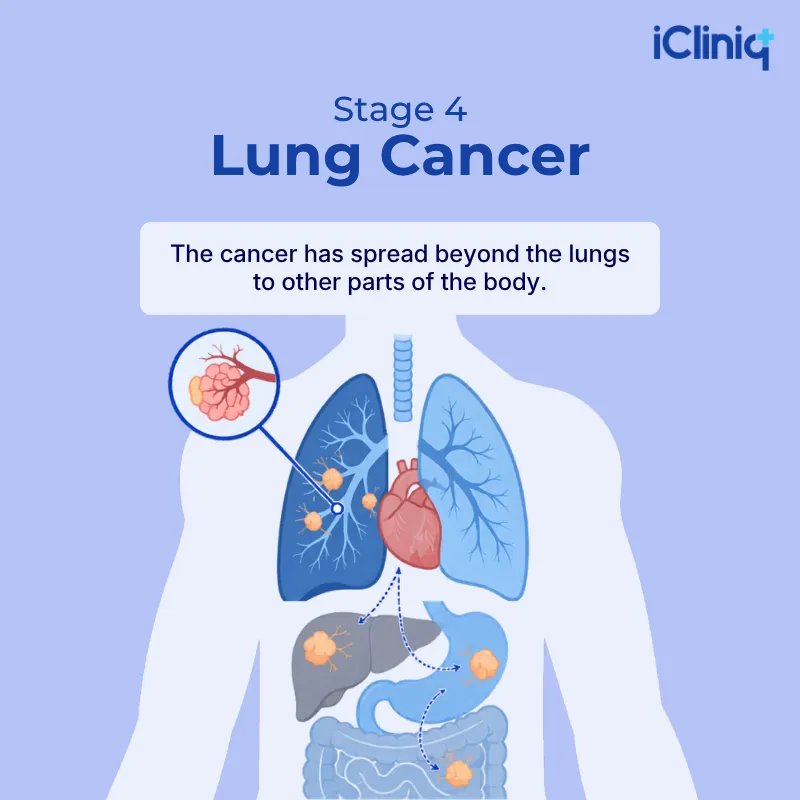
Stage 4 lung cancer, also known as metastatic lung cancer, occurs when cancer cells spread (metastasize) from the lungs to distant organs such as the brain, liver, bones, or adrenal glands. At this stage, the cancer is no longer confined to one lung or nearby lymph nodes.
How Serious Is Stage 4 Lung Cancer?
Stage 4 lung cancer is considered the most serious stage because it involves widespread disease. It is typically not curable but treatable. Many patients today live longer due to advances in lung cancer treatment, including targeted therapies and immunotherapy.
What Is the Stage 4 Lung Cancer Survival Rate?
The stage 4 lung cancer survival rate is about 5% to 10% at five years, meaning roughly 5 to 10 out of 100 people are alive five years after diagnosis. Rates vary depending on cancer type, overall health, and response to treatment.
What Are the Causes and Risk Factors of Stage 4 Lung Cancer?
The primary cause of lung cancer is exposure to harmful substances that damage lung cells. Key risk factors include:
-
Smoking (the leading cause).
-
Secondhand smoke exposure.
-
Air pollution.
-
Occupational exposure to asbestos, radon, or chemicals.
-
Family history of lung cancer.
-
Previous radiation therapy to the chest.
While smoking is the biggest risk factor, non-smokers can also develop lung cancer, particularly certain types of NSCLC.
What Are the Types of Stage 4 Lung Cancer?
Lung cancer at stage 4 falls into two main types:
Stage 4 Small Cell Lung Cancer
This is a fast-growing cancer that spreads early. By stage 4, it has usually spread to distant organs. Treatment mainly includes chemotherapy and immunotherapy to control the disease.
Stage 4 Non-Small Cell Lung Cancer
This is the most common type. It grows more slowly but can still spread widely in advanced stages. Treatment may include targeted therapy, immunotherapy, or chemotherapy.
Stage 4a Non-Small Cell Lung Cancer
At this stage, cancer has spread within the chest or to one distant site. Some patients may still benefit from more focused or combined treatment approaches.
Stage 4b Non-Small Cell Lung Cancer
This is the most advanced stage, where cancer has spread to multiple distant organs. Treatment is usually systemic, such as chemotherapy, immunotherapy, or targeted therapy.
What Are Stage 4 Lung Cancer Symptoms?
If someone has stage 4 lung cancer, the following issues will be present:
-
Difficulty in breathing, along with exhaustion after a short period.
-
Persistent cough, with blood or the presence of thick white sputum with cough.
-
Chest pain, along with chest heaviness.
-
Shortness of breath.
-
Weight loss.
As stage 4 cancer is very aggressive and spreads to other organs, stage 4 lung cancer symptoms can also include,
-
Back pain due to the spread of cancer to the back bones.
-
Pain in the hand, legs, or waist due to damage to the spinal cord.
-
Headache, dizziness, seizures, and behavioral changes due to brain damage.
-
Yellowish discoloration of the body and an enlarged tummy can occur due to liver damage.
How Is Stage 4 Lung Cancer Diagnosed?
The following tests can detect the spread of your lung cancers:
-
Chest X-ray.
-
CT (computed tomography) scan.
-
MRI (magnetic resonance imaging).
-
PET-CT (positron emission tomography) scan.
What Are Stage 4 Lung Cancer Treatment Options?
Metastatic lung cancer treatment includes the following protocols:
Chemotherapy:
Chemotherapy medicines can destroy the cancer cells. These medicines prevent the growth and spread of the cancer cells. As a result, cancer growth is halted.
Radiation Therapy:
Radiation therapy can damage your cancer cells. It helps to reduce the size of the cancer tumor. This also prevents the growth of cancer cells.
Immunotherapy:
These newer medicines boost your immunity and damage and destroy cancer cells.
Targeted Therapy:
An advanced lung cancer treatment. Cancer is caused by the harmful genetic changes in our bodies. This type of treatment blocks those genetic changes and prevents cancer growth.
Surgery:
Doctors remove the damaged part of the lung from your body. Also, the cancer tumor was removed.
What Is Life Expectancy With Stage 4 Lung Cancer?
As already told, it is one of the most advanced cases of lung cancer, and the stage 4 lung cancer survival rate is not very high. The survival rate depends on the facts like,
-
The spread of the cancer.
-
The amount of lung damage and damage to other organs.
-
The overall health of the patient.
-
The time of diagnosis.
-
Patient’s response to the treatment.
Living with Stage 4 Lung Cancer:
As you already know, this is a serious condition, and the life expectancy of stage 4 lung cancer is not very high. That is why living with such a disease is not easy, knowing the lung cancer stage 4 prognosis. However, the following steps can boost the patient:
-
A healthy family environment.
-
Moral boost from family and support groups.
-
Healthy diet and proper treatment.
When to See a Doctor?
Everyone must understand that stage 4 lung cancer is very serious. However, the chances of survival in such cases are very low. As a result, if you notice any symptoms related to lung cancer, you must not ignore them. Ignoring such symptoms can only damage your health and lungs. It will complicate your cancer and spread the disease.
One must not ignore the following symptoms:
-
Coughing for a long time.
-
Blood with a cough.
-
Weight loss.
-
Chest and heaviness in the chest.
Conclusion:
Stage 4 lung cancer is the most serious and the last stage of lung cancer. In such cases, the cancer cells have already damaged your other organs. The cancer cells spread to these organs via different routes. Due to such complications, the treatment is difficult. Also, the chances of cancer recurrence are very high in such cases. If you have any queries related to stage 4 lung cancer, you can talk to a cancer expert to help you find the best treatment.
Key Takeaways:
- Stage 4 lung cancer means the cancer has spread to distant organs.
- Common stage 4 lung cancer symptoms include persistent cough, chest pain, fatigue, and weight loss.
- The stage 4 lung cancer survival rate varies, but has improved with newer treatments.
- Stage 4 lung cancer life expectancy depends on individual factors and response to therapy.
- Treatment options include chemotherapy, radiation, immunotherapy, and targeted therapy.
- Advances in lung cancer treatment are improving the stage 4 lung cancer prognosis.
- Early diagnosis and personalized care are crucial for managing the disease.
