
Introduction
Type 1 diabetes, also known as insulin-dependent diabetes mellitus, is a condition in which the beta cells of the pancreas produce negligible or no insulin. The condition is primarily managed with insulin therapy to compensate for the lack of natural insulin in the body and control blood sugar levels. However, the condition also needs proper dietary management to improve the target glycemic (blood glucose) levels, healthy body weight, and optimized lipid (fat) profiles. Therefore, the article will help to decipher what one can eat in type 1 diabetes that could positively impact the management of blood sugar levels as well as the complications associated with this condition.
What Can One Eat With Type 1 Diabetes?
Typically, one can have all kinds of food if they have type 1 diabetes due to flexible insulin regimes. There is no specific type 1 diabetes food list. The only key rule is to make healthy eating choices, including foods low in salt, sugar, and saturated fat. This not only helps manage the condition but also reduces the risks of complications, such as stroke (blood supply interruption to the brain causing damage) and heart disease. Therefore, it is crucial to have a well-rounded diet containing all the essential nutrients and proper insulin management for type 1 diabetes.
Also, one should understand their carbohydrate intake if they have been diagnosed with type 1 diabetes. This is because carbohydrates and their amounts in any form can significantly impact blood sugar (glucose) levels. Counting daily carbohydrate intake and controlling portion size can help one manage the amount of insulin cover they need before meals to control type 1 diabetes. Therefore, one can incorporate healthy carbohydrates (such as fruits and vegetables, whole grains, pulses, starchy foods, seeds, or nuts) into the diet to prevent insulin from causing a drop in blood sugar levels.
-
A person can test their blood sugar levels regularly to understand how different foods or meals affect these readings.
-
One can adhere to eating a specific number of carbohydrates, such as 1.6 to 2.64 ounces per meal, three times a day.
-
They can balance out each meal of carbohydrates with protein and fiber. One can use the plate method to control the portion size of their meal. They can put vegetables on half of the plate, load a quarter of the plate with healthy proteins (fish, chicken breast, tofu, and lean meat), and the other half with carbohydrates (whole-wheat pasta, brown rice, and black beans). Additionally, low-fat or fat-free milk, yogurt, or a piece of fruit can be incorporated into the plate.
-
One can also prefer eating small fats in fish, nuts, olives, and avocado and avoid consuming butter, meat, cheeses, and other dairy foods containing saturated fats, including coconut, which also has saturated fa
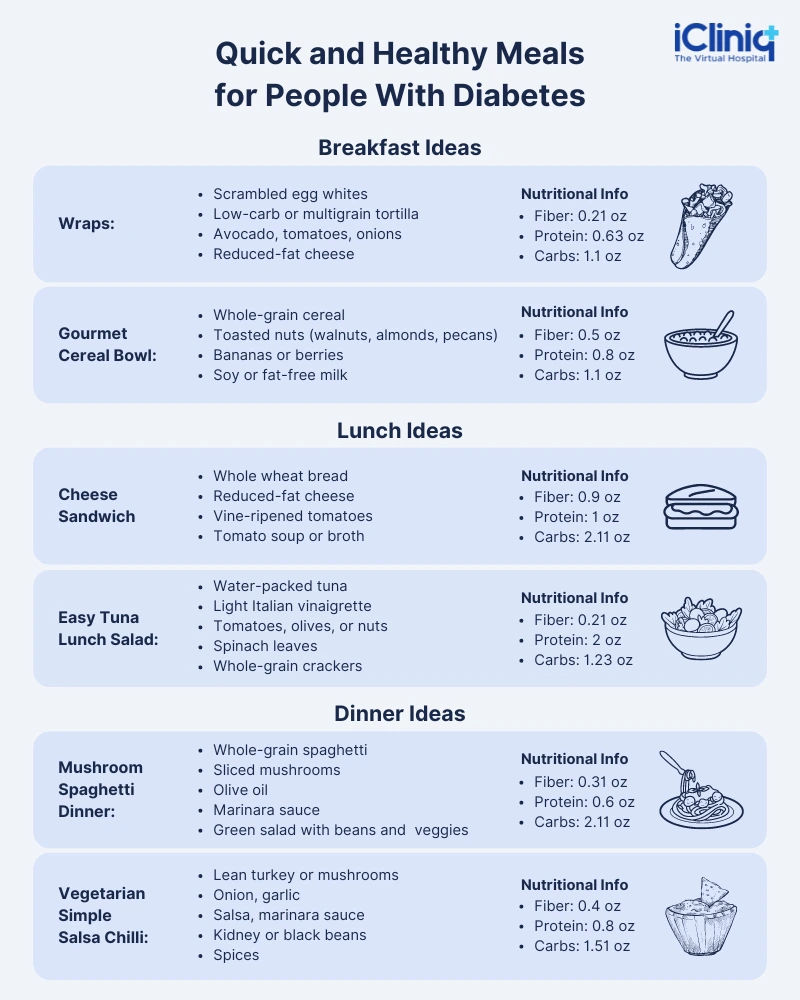
some quick and healthy meals for people with diabetes:
Breakfast Ideas for Diabetics
-
Wraps: It should contain one or two scrambled egg whites spread on a low-carbohydrate or multigrain flour tortilla, topped with one-fourth of avocado, chopped tomatoes and onions, and a one-eighth cup of reduced-fat cheeses (shredded). To cook the tortilla and warm the stuffing, microwave wrap for about 20 seconds, and enjoy. This recipe contains nearly 0.21 ounces of fiber, 0.63 ounces of protein, and carbohydrates, around 1.1.
-
Gourmet Cereal Bowl: Take a big bowl and add around one cup of whole-grain cereals containing 0.2 ounces of fiber and about 1.1 ounces of carbohydrates. This mixture can be topped with one-eighth cup of toasted nuts (such as walnuts, almonds, and pecans) and one-half cup of bananas or frozen or fresh berries. The mixture should be added to a three-fourth cup of soya or fat-free milk, stir, and enjoy. The recipe contains nearly 0.5 ounces of fiber, 0.8 ounces of protein, and 1.1 ounces of carbohydrates.
These are some of the simple breakfast ideas for diabetics; however, one can also try different but healthy diabetic breakfast recipes, making sure their meals are well-balanced and effectively manage type 1 diabetes.
Lunch Ideas for Diabetics
1. Cheese Sandwich and Grilled Tomatoes With Soup: One can add a slice of whole wheat bread, topped with one and a half ounces of reduced-fat cheese and three slices of vine-ripened garden tomatoes to a cooking spray-coated non-stick frying pan. Put a second piece of bread (whole wheat) on top and coat it with canola cooking spray. Flip the sandwich over once the underside is golden, and lightly brown the other side. This sandwich can be served with a tomato-based soup or broth, containing about 0.4 ounces of carbohydrates per one-cup serving. This meal contains around 0.9 ounces of fiber, one ounce of protein, and 2.11 ounces of carbohydrates.
2. Easy Tuna Lunch Salad: One can mix six ounces of one water-packed tuna (drained) with nearly three tablespoons of light Italian vinaigrette salad dressing. This can be incorporated with half a cup of coarsely chopped or grape tomatoes and one-eighth cup of sliced olives or nuts. The mixture can be served on two cups of tightly packed spinach leaves. The recipe can be enjoyed with whole-grain crackers (about an ounce). This diabetic lunch idea or recipe contains about 0.21 ounces of fiber, two ounces of protein, and 1.23 ounces of carbohydrates.
One can also prefer other diabetic lunch ideas or meal plans, keeping their type 1 diabetes and blood glucose levels in check.
Dinner Ideas for Diabetics
1. Mushroom Spaghetti Dinner: One can try this recipe for dinner by boiling some whole-grain spaghetti as per the label instructions. While it boils, take a medium-sized non-stick saucepan to saute any type of one cup of sliced mushrooms in one and a half tablespoons of olive oil per person. Put a three-fourth cup of marinara sauce per person, cover the saucepan, and bring to a boil, then simmer the heat and cook for another 10 minutes. Serve about three-fourth cup of cooked spaghetti pasta with about one cup of mushroom marinara. This can be served with a green salad consisting of one-fourth cup of garbanzo or kidney beans, tossed with two cups of romaine lettuce or tomatoes, some assorted veggies (carrot and cucumber), and a few olives. The recipe contains about 0.31 ounces of fiber, 0.6 ounces of protein, and 2.11 ounces of carbohydrates.
2. Turkey or Vegetarian Simple Salsa Chilli: This recipe can be prepared in an extra-virgin olive oil-coated (one tablespoon) medium-sized non-stick saucepan. Take one pound of sliced mushrooms or half a pound of ground lean turkey, half chopped onion, and one teaspoon of minced garlic. To this, add one cup of bottled or prepared salsa, one cup of bottled marinara sauce, 1.5 ounces of drained kidney or black beans, and ground cumin, oregano, and chili powder to taste. Then, cover the saucepan to bring it to a boil and cook it at simmering heat for around 20 minutes. Divide it into three servings, and enjoy it with a cup of fruit salad. This meal contains 0.4 ounces of fiber, 0.8 ounces of protein, and almost 1.51 ounces of carbohydrates.
These are some of the diabetic recipes for dinner. However, one can also try and experiment with other options available to manage blood glucose levels in type 1 diabetes conditions.
Can Diabetics Eat Bacon?
The current nutritional research suggests that bacon or ham should be avoided if one is diagnosed with diabetes. These foods, despite having zero glycemic index, do not significantly affect blood sugar levels, but since they are rich in sodium and high saturated fat, they can increase the risk of heart disease in a diabetic person.
Conclusion
To conclude, the moment one gets diagnosed with type 1 diabetes, one must focus on diet to keep their glycemic levels under control along with an insulin regime. Type 1 diabetes does not restrict anyone from eating any food, but it is recommended that one keep the carbohydrate count in check. Therefore, a person suffering from type 1 diabetes should consult the healthcare provider or a nutritionist to plan out their meals for proper management of diabetes and their overall health.

