Table of Contents
-
Key Takeaway:
-
Colds can spread during their incubation period, meaning you could pass the virus to others without being aware.
-
Congestion and a runny nose can linger even though other symptoms improve.
-
You may stay contagious as long as symptoms persist.
-
Common cold symptoms usually subside on their own gradually or within 7 to 10 days.
Cold Progression- What Happens Day by Day?
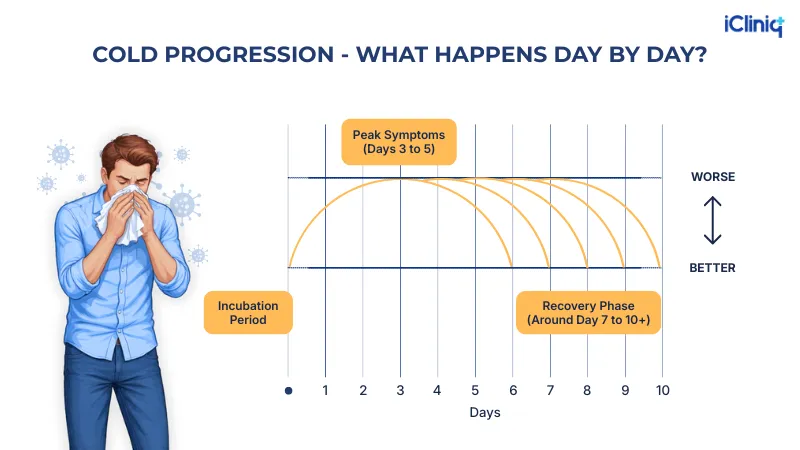
There are typically sequential stages to colds, each accompanied by its corresponding symptoms. However, the timing and stages may differ for each individual. The general stages of a cold are as follows.
1. Incubation period (first 12 to 72 hours after exposure)
The period of time between exposure to a virus and the onset of illness is known as the incubation period. It usually takes one to three days for you to experience symptoms after being exposed to a cold virus. However, symptoms may appear as soon as 10 to 12 hours following exposure.
2. Early symptoms (days 1 to 3)
The onset of a cold usually happens gradually. One to three days after being exposed to the virus, you may start to experience symptoms. The following are the most typical signs of a cold:
-
A runny nose and a tickle, soreness, or scratchiness in the back of your throat.
-
Coughing, sneezing, and nasal congestion.
-
Mild aches and pains in the body.
-
Headache and malaise.
-
Fever.
-
While some symptoms, like a cough, may persist longer than a sore throat or runny nose.
3. Peak symptoms (days 3 to 5 or up to day 7)
Your symptoms will typically worsen when the cold is at its worst. As your mucus thickens and frequently turns yellow or green, your nose may become completely blocked. If you have a fever, it should peak and begin to subside. During this stage, you may experience fatigue due to decreased appetite and trouble sleeping.
4. Recovery phase (around Day 7 to 10+, but varies)
Your cold symptoms should start to reduce after about a week. The recuperation phase typically lasts a few days for most people. Typically, cold symptoms go away after ten days, but they can linger for several weeks if you have:
-
An aging-related weakened immune system.
-
An underlying illness.
-
Temporary conditions (like stress or sleep deprivation).
-
Another illness at the moment.
Why Do Some People Recover More Slowly?
The body's response to cold temperatures includes reduced blood flow, muscle stiffness, and a lower metabolic rate in the affected areas. As a result, some people recover more slowly in the cold. These factors hinder the body's natural healing processes. Age, genetics, and certain medical conditions can make this situation worse.
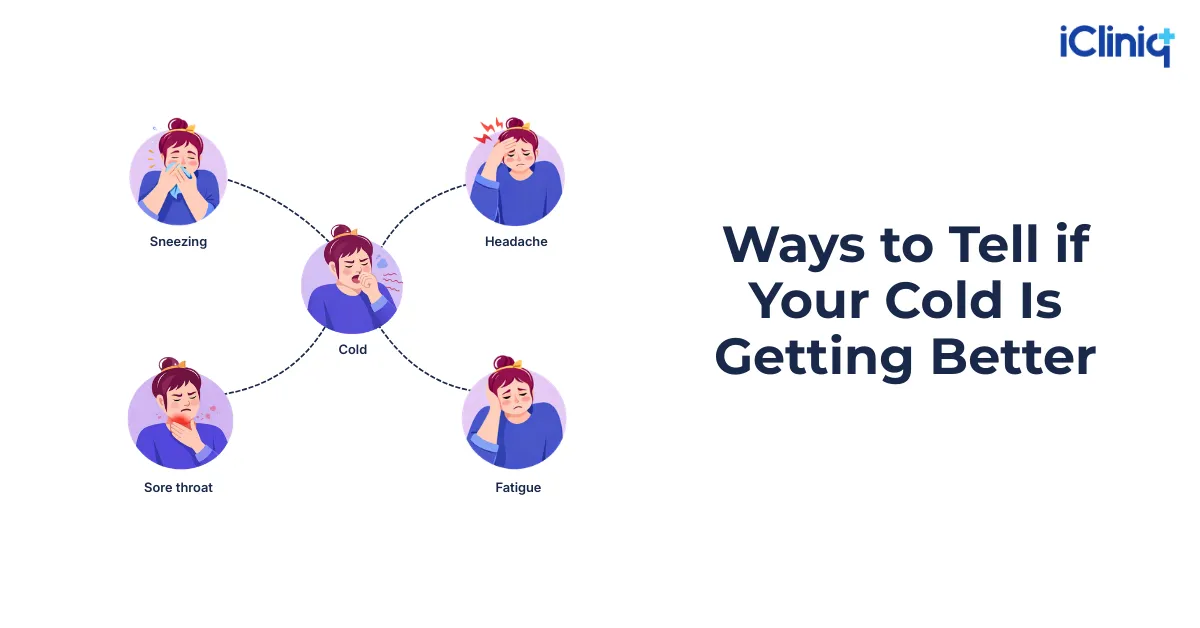
What Are the Signs Your Cold Is Getting Better?
Less nasal congestion and sneezing
Sneezing, runny noses, and nasal congestion are some of the most typical symptoms of a cold. A sore throat can also result from postnasal drip.
Mucus colour and consistency changing
As your cold worsens, the mucus will frequently become thicker and darker before thinning out and clearing up.
Fever subsides / no more fever
One of the initial signs of a cold in adults can occasionally be a low fever. Usually, it only lasts a few days. Compared to adults, children may have a higher fever when they have a cold. Your fever breaking indicates that you are beginning to feel better, even if you still have other cold symptoms.
Reduced pain: less sore throat, less body ache, headache relief
The common cold can cause various types of pain, including headaches, muscle aches, and a sore throat. As you begin to recover, the pain should lessen. You may find that it is easier to move around without body aches.
Energy levels return - able to do daily activities
Colds often drain your energy. They leave you feeling sluggish and reluctant to get out of bed. Congestion or pain can make it difficult to eat or sleep, which makes it even more challenging to stay energized and awake during the day. This can lead to tiredness, drowsiness, and brain fog. When your energy levels rise and you start feeling like yourself again, it is a good indication that your cold is beginning to improve.
Coughing less frequent and less intense
Coughing is a common symptom of a cold, regardless of whether you have phlegm. Even after your cold is over, you might continue to cough at night for several days or weeks. However, this should gradually decrease as you heal.
When It Might Not Be a Simple Cold?
Although most colds are mild, there are some indicators that they could be more serious. If symptoms last longer than 7 to 10 days, worsen instead of improve, or are very severe from the beginning, it may not just be a regular cold. High fever, trouble breathing, chest pain, wheezing, persistent vomiting, severe headache, ear pain, or unusual sleepiness should cause concern. If there is dehydration, bluish lips, rapid breathing, or the person seems unusually weak, seek urgent medical help. Symptoms that return after improvement or any breathing difficulty in young children or older adults also suggest that it is more than a simple cold.
How to Support Recovery?
-
Decongestants and cough syrup can help, but avoid mixing combination medications.
-
Get plenty of sleep and rest.
-
Stay hydrated. Drinking enough fluids can help thin nasal secretions.
-
Gargle with salt water. This may help relieve sore throat pain.
-
Use a humidifier, take a steam bath, or shower.
-
OTC (over-the-counter) Zinc supplements or lozenges may reduce symptoms. However, a possible side effect is nausea.
When to Consult a Doctor?
Consult a doctor if you or your child:
-
Have symptoms that last longer than 10 days without improvement, are very severe, or start to improve but then recur.
-
Have a fever higher than 103°F (39.4°C) for adults, above 102°F (38.9°C) for children, or above 100.4°F (38°C) for infants younger than 3 months.
-
Have a fever of 100.4°F (38°C) or higher for more than three days.
-
Have difficulty breathing or shortness of breath.
-
Notice that underlying health conditions have worsened.
Conclusion
You might recognize that you are recovering from a cold when you experience less nasal congestion and sneezing, no fever, reduced pain such as headaches and body aches, increased energy, and less coughing. Common cold symptoms usually subside on their own within about a week to ten days. If your symptoms persist or worsen, consider consulting a healthcare provider.

