Table of Contents
What Is Thalassophobia?
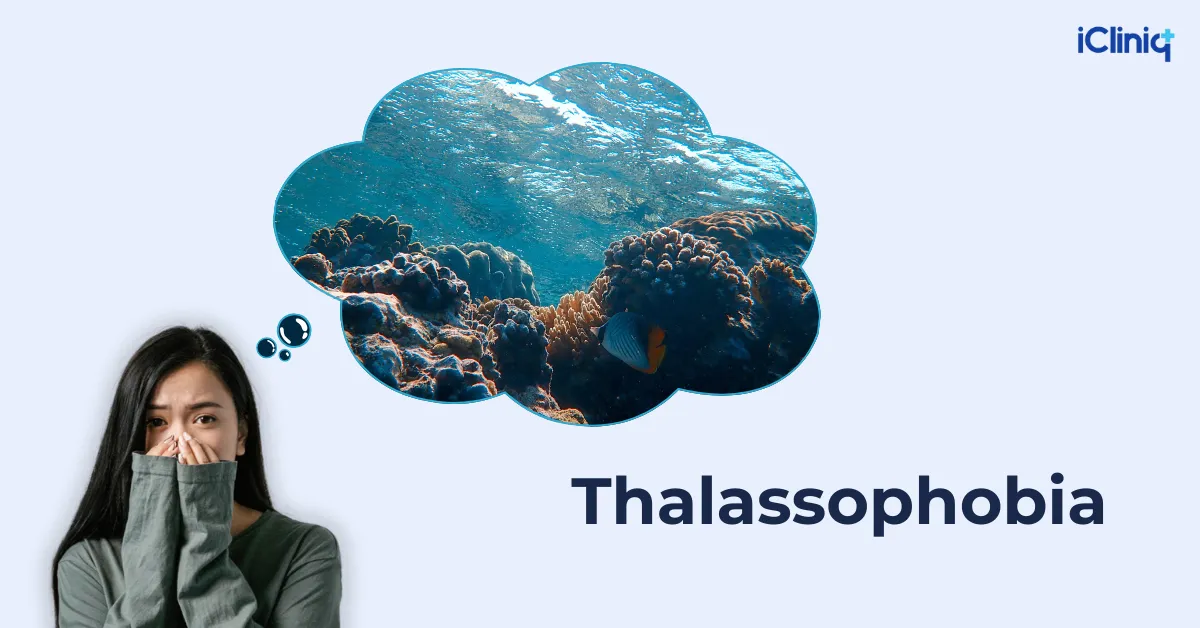
Have you ever felt uneasy looking down into dark blue water where you can’t see the bottom? Or maybe the thought of swimming in the ocean makes your stomach tighten, even if you are standing on the shore. This extreme fear of deep water is known as thalassophobia. Thalassophobia is more than just “not liking the ocean.” It is a deep, persistent fear associated with large bodies of water, such as the sea, ocean, or deep lakes. For most people, it is triggered by the idea of what lies beneath the surface: unknown creatures, endless darkness, or the loss of control in open water. This fear can range from mild discomfort to severe panic.
People with thalassophobia may avoid beaches, boat rides, or even deep water pictures. Interestingly, most of them never had a traumatic water experience. Sometimes, the fear simply develops from imagination, overthinking, or being overly cautious. Humans naturally avoid situations that feel unsafe, and the ocean generally represents a mysterious and unpredictable space, allowing the mind to imagine it as dangerous.
What Causes Thalassophobia?
There is no single cause of thalassophobia, but several factors can contribute to it:
-
Natural instinct: Humans are designed in a way that they are always cautious around new or unfamiliar environments. Deep water is dark and fearful, where we cannot see things automatically, which triggers a response.
-
Traumatic experience: A frightening incident in or around water can leave a lasting impression. This can include being caught in strong waves, nearly drowning, or even witnessing someone else struggle in deep water. Even if the event occurred many years ago, the fear can resurface and lead to a phobia of water.
-
Learned behavior: A lot of times, fear arises from a family member repeatedly scaring about water and its dangers.
-
Media: A lot of movies, documentaries, and viral videos showing scary sea creatures and underwater darkness can build anxiety and phobias over time.
-
Imagination: For many people, the fear stems from imagining what lies hidden beneath the surface. This imagination can often feel scarier than reality.
What Are the Signs and Symptoms of Thalassophobia?
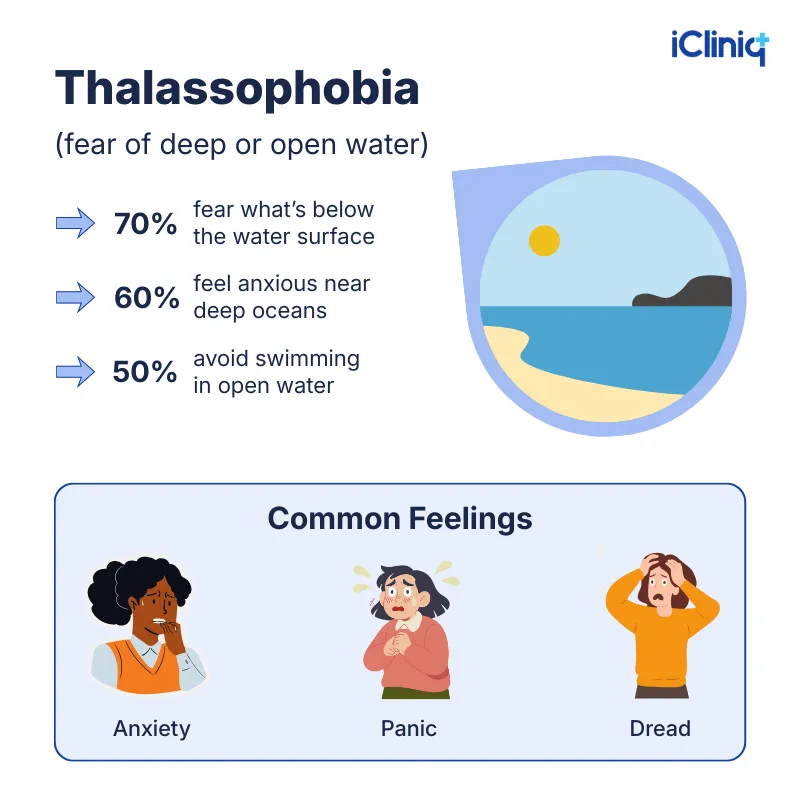
The symptoms of thalassophobia are varied. Some individuals are afraid of water and water bodies, while others become scared when looking at pictures and videos of water.
Common signs and symptoms include:
Physical symptoms like
-
Nausea.
-
Increased heart rate.
-
Sweat on palms.
Emotional symptoms like
-
Too much worry about visiting water bodies.
-
Trying to avoid or postpone the visit.
-
Avoiding beaches and boats altogether.
Thalassophobia affects everyone differently. Some may hide their fear but feel uncomfortable inside, while others may visibly panic. What matters is acknowledging the fear rather than ignoring it.
How Is Thalassophobia Diagnosed?
Thalassophobia is not diagnosed through a lab test or scan. Instead, mental health specialists identify it through a conversational and straightforward assessment.
They may ask about:
-
What situations trigger your fear?
-
How severe is your reaction?
-
Does your fear affect your daily activities?
-
If you avoid certain places because of your fear of deep water.
Some professions use a thalassophobia test, which is a questionnaire designed to understand the depth of your fear and how it affects your life. A diagnosis is usually made when the fear is extremely intense and persistent and prevents the person from engaging in normal activities, such as traveling, enjoying vacations, or even watching television with water scenes.
How Do I Know if I Have Thalassophobia?
To know if you have thalassophobia, you need to answer the following:
-
Do you feel afraid of water bodies, such as beaches, rivers, and the sea?
-
Have you ever felt uneasy while watching pictures or movies that involve water?
-
Do you feel a rapid increase in heart rate, sweaty palms, and a feeling of running away when you come across water?
If the answer to this question is yes, it may be more than a simple dislike of water; it may be thalassophobia.
Additionally, you can try online self-assessments, but they are intended solely for awareness purposes. They need to confirm whether it is thalassophobia or general anxiety.
What Is the List of Treatments for Thalassophobia?
Thalassophobia is treatable, and many people overcome it with the right support taken at the proper time. Here are the most common thalassophobia treatment options:
This therapy helps you understand the thoughts that fuel your ocean fear disorder and teaches you how to replace them with more realistic and calm thoughts.
-
Exposure therapy:
This method slowly and safely exposes you to water-related triggers while teaching your mind not to panic. It begins small, such as looking at pictures of water, and gradually progresses to real-life water situations.
-
Virtual reality therapy:
The use of advanced technology, such as a virtual reality headset, can simulate an ocean scene in a controlled environment. This helps face the fear safely while also learning how to manage the reaction.
-
Relaxation and breathing exercises:
Deep breathing, mindfulness, and grounding techniques can reduce anxiety symptoms when you encounter triggers.
-
Medication (only when needed):
At certain times, doctors may prescribe anti-anxiety medication if the fear is severe or linked to generalized anxiety. It is essential to note that medication alone is not a cure; rather, it supports therapy.
-
Support groups and counseling:
Talking to others who share the same fears often makes the journey easier. Many people realize they are not alone, which reduces their shame and worry.
-
Lifestyle support:
Activities like swimming lessons, gentle exposure to water, or learning about ocean safety help build confidence over time.
The goal of treatment isn't to force you to love the ocean. Instead, it is to help you feel safe and in control.
Conclusion
Thalassophobia is a very commonly misunderstood fear. For people with thalassophobia, water bodies are places of darkness, mystery, and strangeness. By seeking help and being guided by the right therapy, this fear can be overcome to a greater extent. You do not need to stop planning beach vacations and holidays. Identifying your symptoms and seeking help is the first step towards feeling empowered instead of fearful. If you or someone you care about struggles with a fear of water or deep oceans, consult our mental health expert.
Key Takeaways:
-
Thalassophobia is an intense fear of deep water, the sea, or what may lie beneath the water's surface.
-
Many people overcome this fear with the help of therapy, counseling, and facing their fears.
-
An estimated seven to nine percent of people have this, with many going undiagnosed.