Table of Contents
-
Key Takeaway:
-
Washing your hands often, keeping your eyelids clean, and avoiding touching your eyes can prevent both pink eye and styes.
-
Most cases are mild and improve with home care, which includes using warm compresses, keeping the eyelids clean, and avoiding makeup or contact lenses until the eye has healed.
-
See a doctor if symptoms get worse, affect your vision, cause severe pain, or do not improve after a few days, as this may signal a more serious infection. If you have any queries, you can consult an iCliniq ophthalmologist to solve your queries.
What Is the Difference Between Pinkeye and a Stye?
Pink eye and styes are two common eye problems that can affect people of any age. Although they may appear similar at first glance, they differ significantly in their causes, symptoms, and treatment.
Pink eye, also known as conjunctivitis, is an infection that occurs when the thin, clear layer that covers the white part of the eye becomes irritated or infected. This layer has tiny blood vessels that swell when inflamed, causing the eye to appear pink or red. Pink eye can be caused by viruses, bacteria, allergies, or irritants like dust, smoke, or chemicals.
Viral pink eye usually comes along with a cold or sore throat, while bacterial pink eye often has a thick yellow or green discharge. Allergic pink eye causes itching, watery eyes, and swelling. In most cases, pink eye is mild and resolves on its own, but keeping the eyes clean, avoiding rubbing, and using warm or cool compresses can help alleviate symptoms. Bacterial cases may require antibiotic eye drops prescribed by a doctor.
A stye, on the other hand, is a small, painful lump on the eyelid. It occurs due to the blockage or an infection of the eyelid oil glands. A stye usually looks like a small pimple or boil near the lashes. It can cause swelling, tenderness, and watery eyes. Unlike pink eye, a stye affects the eyelid rather than the surface of the eye. Most styes open and drain naturally within a few days. Applying a warm cloth to the eyelid several times a day can help reduce pain and speed up healing. It is important not to squeeze or pop the stye, as it can deteriorate the infection.
What Are the Symptoms of Pink Eye and Styes?
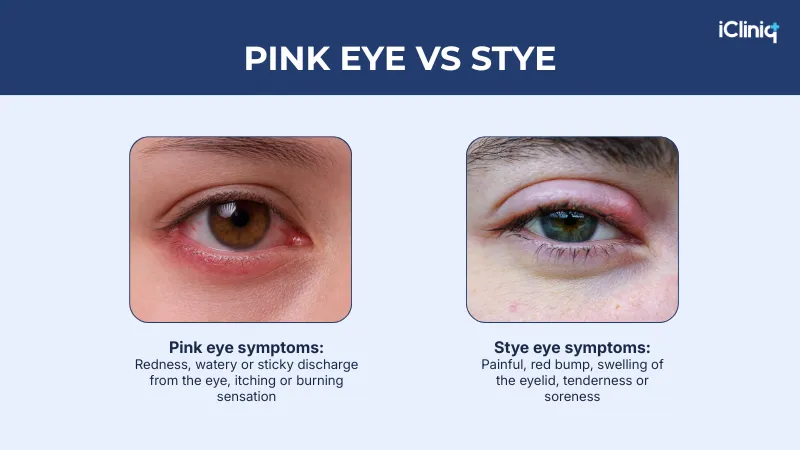
Pink eye symptoms are:
-
Redness in the white part of the eye.
-
Watery or sticky discharge from the eye.
-
Itching or burning sensation.
-
Sensitivity to bright light.
-
Swelling of the eyelids.
-
Feeling like something is in the eye.
-
Crusting of eyelids, especially after sleep.
Stye symptoms are:
-
Painful, red bump on the edge of the eyelid.
-
Swelling of the eyelid around the bump.
-
Tenderness or soreness when touched.
-
Watery eyes or mild tearing.
-
Rarely, a small spot of pus in the center.
-
Slight discomfort while blinking.
What Are the Causes of Pink Eye and Styes?
Causes of pink eye are:
-
Viral infection: This is the most common cause. Viruses that spread through coughing, sneezing, or touching infected surfaces can easily irritate the eye.
-
Bacterial infection: Certain bacteria can infect the eye, causing redness, swelling, and a sticky discharge. This often spreads through contaminated hands, towels, or makeup.
-
Allergies: Dust, pollen, pet hair, or seasonal changes can cause an allergic reaction, resulting in red, itchy, and watery eyes.
-
Irritants: Smoke, pollution, chlorine in swimming pools, or strong chemicals can irritate the outer layer of the eye, causing redness.
-
Contact lens issues: Wearing lenses for too long, using unclean lenses, or sleeping with them on can lead to infection and irritation.
-
Blocked tear duct (in infants): In newborns, a blocked tear duct can trap germs and cause mild pink eye.
Causes of a stye are:
-
Bacterial infection of eyelid glands: A stye typically forms when bacteria enter the tiny oil glands in the eyelid, resulting in swelling and a painful, red bump.
-
Poor eyelid hygiene: Failing to clean the eyelids, using old makeup, or touching the eyes with dirty hands increases the risk of infection.
-
Hormonal changes: Shifts in hormones can cause the oil glands to become overactive, potentially blocking them and leading to a stye.
-
Blepharitis (chronic eyelid inflammation): People with ongoing eyelid irritation are more likely to develop styes because the glands get clogged easily.
-
Rubbing the eyes: Frequent rubbing can transfer bacteria from the hands to the eyelids.
-
Stress and lack of sleep: These weaken the body’s natural defense system, making it easier for a stye to form.
-
Oily skin or dandruff: Excess oil around the eyelids can block the glands and trap bacteria.
How to Treat Pink Eye and Styes?
Antibiotics can be used to treat both pink eye and styes. To reduce inflammation and clear the infection, an ophthalmologist (eye doctor) may prescribe eye drops or ointment. Warm compresses and antibiotics are administered in the case of a stye to reduce swelling and clear the infection.
Pink eye:
-
Keep your hands clean to stop the infection from spreading to the other eye.
-
Avoid touching or rubbing your eyes, as this can exacerbate symptoms.
-
Use clean, warm water to gently wipe away any discharge from the eyelids.
-
Place a warm compress (a clean cloth dipped in warm water) on the eye for relief.
-
Use lubricating eye drops (“artificial tears”) to reduce redness and irritation.
-
Avoid using contact lenses until your eye has fully healed.
-
Do not share towels, pillows, or makeup, as the infection can spread easily.
-
If a bacterial infection causes the pink eye, your doctor may prescribe antibiotic eye drops.
-
If it is due to allergies, antihistamine eye drops may help.
-
Seek medical help if you have severe pain, blurred vision, or symptoms that don’t improve.
Stye:
-
A warm compress to the eyelid can be applied for a few minutes, three to four times a day, to help reduce swelling.
-
Gently clean the eyelid with warm water to remove oil and dirt around the lashes.
-
Do not squeeze or pop the stye, as this can cause the infection to worsen.
-
Avoid wearing eye makeup until the stye has healed to prevent irritation.
-
If the stye is painful, over-the-counter pain relievers like Paracetamol or Ibuprofen can help.
-
If the swelling becomes large or does not improve in a few days, a doctor may prescribe antibiotic ointment or drain it safely.
-
Keep your eyelashes clean, especially if you frequently get styes.
How to Avoid Pink Eye or a Stye?
-
Wash your hands often, especially after touching your face or using public items.
-
Keep your hands away from your eyes to prevent germs from entering.
-
Do not share towels, pillows, makeup, or eye drops, as infections spread easily through these items.
-
Clean your glasses and phone regularly, as they can collect bacteria that can reach your eyes.
-
Replace eye makeup every few months to avoid bacterial buildup.
-
Use clean tissues to wipe your eyes instead of using your fingers or sleeves.
-
Avoid swimming in dirty or poorly maintained pools, as they may contain harmful germs.
-
Avoid contact with people who have red, watery, or infected eyes to reduce the risk of contracting the infection.
When Is It Essential to Consult a Doctor?
For pink eye:
-
When eye pain becomes severe or persists.
-
If you notice blurred vision, trouble seeing, or sensitivity to light.
-
When the eye becomes very red or swollen, mainly if symptoms spread quickly.
-
If there is yellow or green discharge that keeps coming back after cleaning.
-
When symptoms do not improve within two to three days or get worse despite home care.
-
If you wear contact lenses and develop redness or discomfort.
-
When a child or newborn has red, swollen, or watery eyes, infections can be severe.
-
If you recently had an injury to the eye or something entered the eye before symptoms started.
For styes:
-
When the stye becomes very large, painful, or continues to grow.
-
If the swelling spreads to the whole eyelid or affects your ability to open your eye.
-
When the stye does not improve after three to four days of warm compresses.
-
If you develop a fever or feel unwell, along with eye swelling.
-
When you get styes repeatedly, as it may point to an underlying issue.
-
If the eyelid becomes red, warm, or very tender, this may suggest a deeper infection.
-
When pus forms but cannot be drained safely, a doctor should handle it.
Conclusion
Both pink eye and styes are common eye problems that usually clear up with simple home care, but they require proper hygiene and attention to prevent them from worsening. Keeping your hands clean, avoiding rubbing your eyes, and caring for your eyelids can significantly reduce the chance of infection. Most people recover quickly with warm compresses, clean eyelids, and a break from makeup or contact lenses.
However, if symptoms become painful, affect your vision, or do not improve after a few days, it’s essential to seek medical help. Early care not only speeds up healing but also protects your eyes from more serious complications.

