Table of Contents
- 1What Is a Lump on the Testicle?
- 2What Are the Causes of Testicular Lumps?
- 3What Are the Signs and Symptoms of Testicular Lumps?
- 4How Is a Lump on the Testicle Diagnosed?
- 5How Is a Testicular Lump Treated?
- 6What Are the Complications of a Testicular Lump?
- 7Can a Testicular Lump Be Prevented?
- 8A Key Takeaway by iCliniq:
What Is a Lump on the Testicle?
If you have noticed a lump on your testicle, you are probably wondering what is going on down there.
Your testicles are walnut-shaped organs hanging in the thin sac of skin behind your penis (that is, your scrotum). Most men have two, though some have more or fewer, but that is totally normal. These make sperm and pump out testosterone to keep your body running smoothly.
Finding a lump can be scary, but most lumps are not cancerous. In fact, the majority of scrotal masses (that is just another name for these lumps) are entirely harmless. Some lumps might affect your fertility, and in rare cases, they could signal something more serious, like testicular cancer.
A testicular lump is usually a sign of another condition, and most of the time, it is nothing to panic about. But it is definitely worth getting checked out to know for sure what you are dealing with.
What Are the Causes of Testicular Lumps?
Finding lumps and swellings in your testicles can be scary, but here is some good news: most of them are not anything serious.
The majority of lumps and swellings in that area come from conditions that are not cancerous. Many times, you won't even need treatment. Some serious causes of testicular lumps are as follows:
-
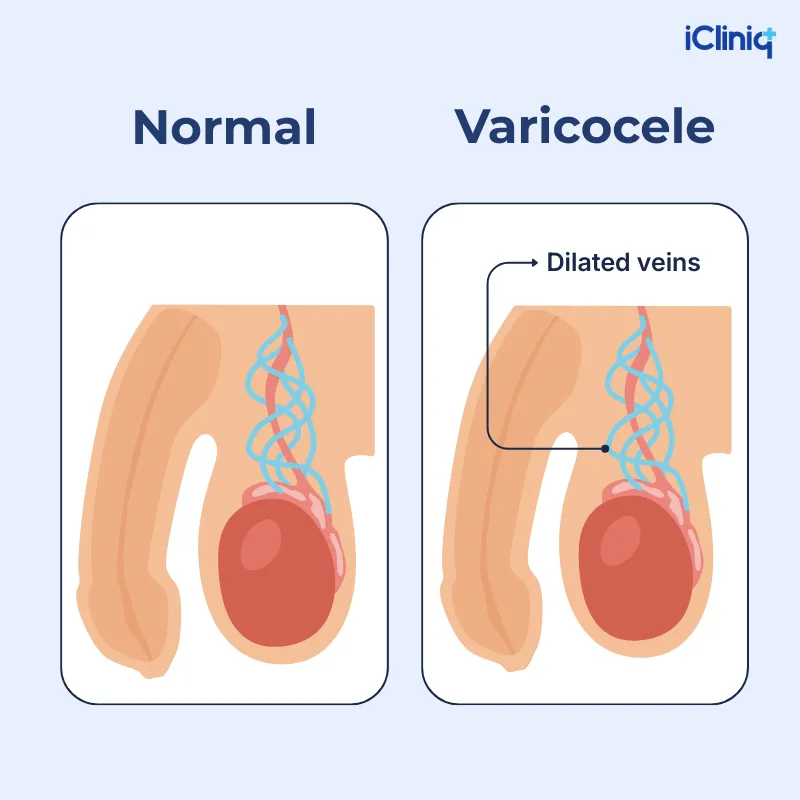
Varicocele: This occurs when the veins in your testicles become swollen, causing a lumpy feeling.
-
Hydrocele: Sometimes fluid collects around your testicle, causing it to swell up.
-
Epididymitis: This one makes the epididymis (that is, the tube behind each testicle that carries your sperm) painful and swollen.
-
Inguinal Hernia: This is when some of your abdominal tissue pushes through a weak spot in your abdominal wall. You might notice a bulge in your groin area. Sometimes fatty tissue or part of your bowel can poke through into your groin at the top of your inner thigh.
-
Testicular Torsion: Now this one is serious, but still not cancerous. It happens when the cord that brings blood to your testicles gets twisted up badly.
-
Testicular Cancer: This is the more serious possibility. A lump or swelling is often one of the first signs you will notice.
-
Orchitis: If you have a bacterial or viral infection, it can make one or both of your testicles swell up and hurt.
-
Spermatoceles: These are basically cysts on the epididymis filled with clear or cloudy fluid, and they might contain sperm.
What Are the Signs and Symptoms of Testicular Lumps?
When it comes to scrotal masses, your symptoms can really vary from person to person. Some lumps might cause you pain, while others won't bother you at all. It really depends on what is causing the lump and how big it has gotten.
So what should you watch out for?
-
You might notice an unusual painless lump that was not there before.
-
Your scrotum or testicles might feel heavier than usual.
-
Sometimes you will get sudden, sharp pain out of nowhere. It can spread through your groin, into your stomach area, or even up into your lower back.
-
You might even notice one of your testicles getting smaller (that is called testicular atrophy).
-
You may notice swelling in your scrotum and changes in the skin color in that area.
-
Some men notice blood in their semen.
-
You may also experience a fever or chills.
-
You may experience pain when urinating.
-
Some men feel nauseous or vomit.
How Is a Lump on the Testicle Diagnosed?
When it comes to checking testicular lumps and swellings, there is no one-size-fits-all test. Your doctor will want to discuss your symptoms with you and then perform a physical examination.
Your doctor will take a look at your testicles and gently feel them to get a better idea of what is happening. Your doctor will also shine a light over the skin to check for fluid buildup.
They might also suggest a few tests to figure out what is causing the issue:
-
Testicular Ultrasound: This is a painless scan that provides precise visualization of the location of the lump. It helps your doctor rule out things like hernias or testicular cancer without any invasive procedures.
-
Urinalysis: If your doctor thinks an infection might be behind your symptoms, they will ask you to give a urine sample.
-
Blood Tests: Your doctor will use a super tiny needle to take a small blood sample. This helps them check if you have any infection or inflammation going on.
How Is a Testicular Lump Treated?
When it comes to treating testicular lumps and swellings, your treatment really depends on what is causing the problem in the first place. If your lump is not causing you pain or discomfort and it is not something serious, you might not need any treatment at all.
But if you do need treatment, here is what your options typically look like:
-
You can take painkillers like Paracetamol to help with any discomfort or pain.
-
If you have a bacterial infection causing the issue, your doctor will likely prescribe antibiotics to clear it up.
-
For hernias, you will need surgery to push everything back where it belongs and strengthen that area.
-
Sometimes surgery is necessary to remove, drain, or repair a mass that has developed.
-
In more serious cases involving testicular cancer, you might need radiation therapy or chemotherapy to destroy the cancer cells.
-
And in some situations, an orchiectomy, which means removing one or both testicles, is necessary to treat the cancer.
What Are the Complications of a Testicular Lump?
So what happens next really depends on what kind of lump you are dealing with down there. Most bumps on your testicles are not anything to worry about. But if you have got epididymitis or orchitis, you might run into some issues:
-
You could develop a painful pocket of pus in your scrotum.
-
You might also notice fluid building up in there.
-
Sometimes your testicles can actually shrink.
-
Unfortunately, these conditions can affect your fertility too.
-
Now, if we are talking about testicular cancer, that is when things get more serious. It can impact your ability to have kids, and without proper treatment, it can actually be life-threatening.
-
If the lump turns out to be a tumor, it might spread to your lymph nodes. When that happens, you could experience back pain or have trouble breathing.
Can a Testicular Lump Be Prevented?
You cannot always prevent what causes testicular lumps. It is really worth checking your scrotum and testicles regularly for any lumps or changes. Seriously, you only need a few minutes once a month to do a quick self-exam.
Now, when it comes to bacterial or viral causes, you have some control:
-
First off, use condoms when you are having sex. They will help protect you from STIs (sexually transmitted infections) that could cause problems down there.
-
Also, make sure you are up to date on your vaccines. Getting vaccinated against certain viruses and bacteria can prevent scrotal masses from developing in the first place.
Conclusion
If you notice a lump in your testicle, it could mean a few different things. You might be dealing with something like a cyst, varicocele, hydrocele, epididymitis, testicular torsion, or even testicular cancer. Most lumps in your scrotum are not cancerous and won't put your health at risk. But some of these lumps can actually affect your fertility or become life-threatening if you do not get them checked out and treated correctly. So if you think you have found a testicular lump, don't wait around; get medical help right away because it might need emergency treatment.
A Key Takeaway by iCliniq:
-
Testicular swelling is a swelling that forms within your scrotum, which can be non-cancerous or cancerous.
-
You may have pain, swelling, heaviness, or severe pain.
If you see any lump in your testicles followed by pain, you should immediately consult our urologist at icliniq.com.