Introduction
Amongst all cancers worldwide, prostate cancer remains one of the most frequently occurring in males; it badly influences their life expectancy. A radical prostatectomy means the removal of the prostate gland surrounding tissues in the surgical procedure and has long remained the treatment for localized prostate cancer. However, traditional open surgery is often presented with challenges such as extended recovery periods, substantial blood loss, and higher risks of postoperative complications.
This field was changed with the establishment of minimally invasive robotic surgery, offering a high-technology solution for high precision and a reduced rate of complications, although recovery time decreases. RARP is the perfect combination of state-of-the-art robotic technology merged with the principles of minimally invasive surgery and a preferred choice of surgeons and patients. This paper discusses the technique, benefits, challenges, and future directions of RARP.
What Is the Advent of Robot-Assisted Surgery?
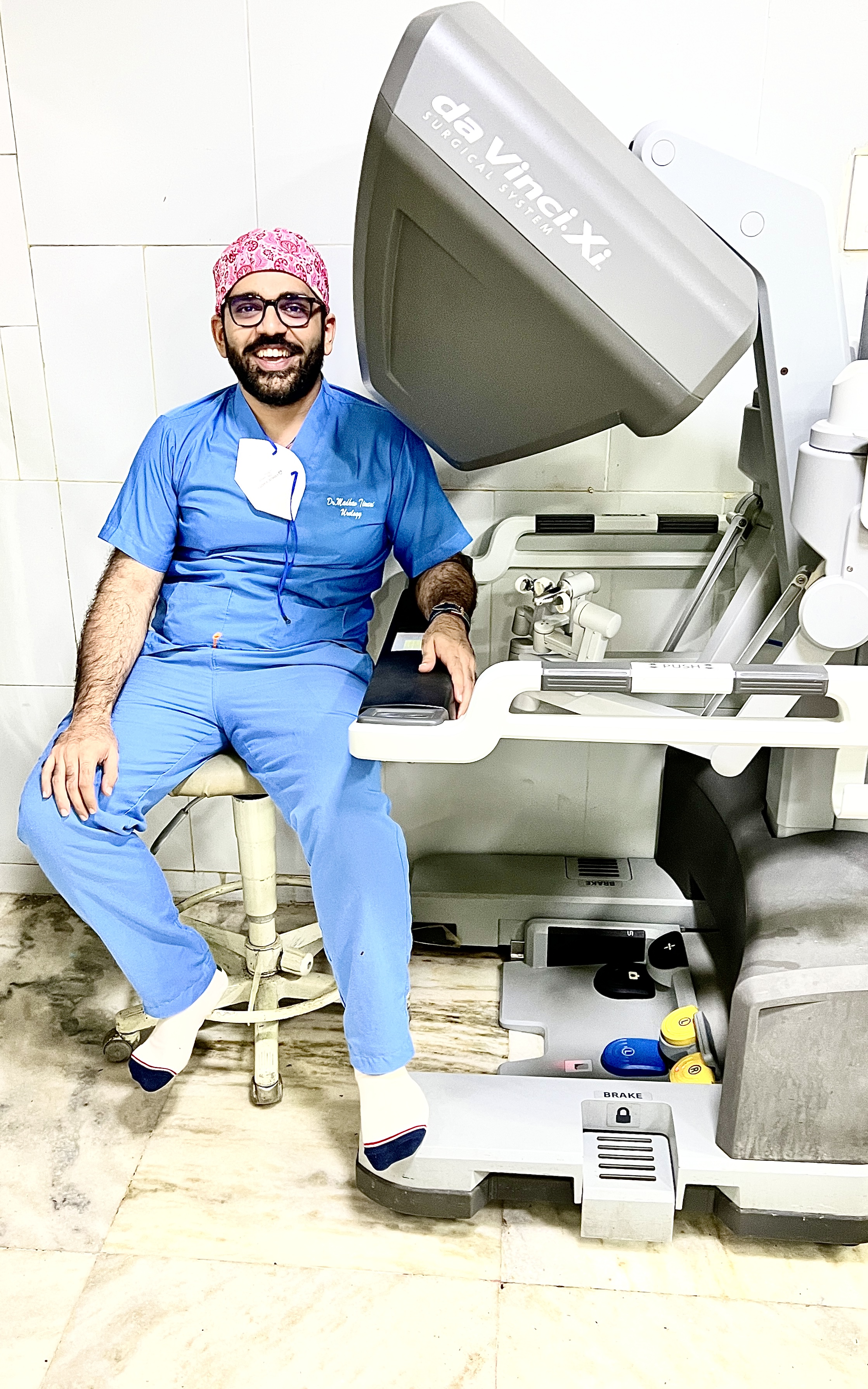
Robotic surgical systems emerged as a breakthrough in surgical techniques, providing surgeons with enhanced control, precision, and visualization. In the 2000s, the da Vinci Surgical System was introduced by Intuitive Surgical and is the most widely used platform for robotic surgeries, including RARP. Compared to conventional laparoscopic tools, the da Vinci system offers wristed instruments with greater flexibility and a high-definition, three-dimensional camera system. These features allow surgeons to perform complex procedures within the confined pelvic area with unprecedented accuracy.
RARP is a natural evolution from traditional laparoscopic techniques, combining the minimally invasive nature of these techniques with the superior capabilities of robotic technology. This approach allows surgeons to perform delicate tasks, such as nerve-sparing procedures, with greater precision, thus improving outcomes for patients.
What Is the RARP Procedure?
RARP is performed under general anesthesia and includes a number of painstaking steps:
Patient Preparation: The patient is positioned in a modified lithotomy position for optimal access to the pelvic region.
-
Placement of Trocar: Several small incisions on the abdomen allow trocars, which are entry points for the robot's arms and camera, to be inserted.
-
Docking the Robotic System: The robotic arms are attached to the trocars, and the surgeon controls them from a console.
-
Bladder Mobilization: The bladder is mobilized to expose the prostate gland.
-
Prostate Dissection: The prostate is carefully separated from surrounding tissues, including the urethra, bladder, and neurovascular bundles.
-
Nerve Sparing: Nerve-sparing techniques are employed to protect the neurovascular bundles in cases where erectile function preservation is a priority.
-
Apical Dissection: The prostate is detached from the apex of the bladder and urethra.
-
Specimen Removal: The prostate gland is removed through one of the trocar sites using an endoscopic bag.
-
Bladder Neck Reconstruction: The bladder neck is reconstructed and connected to the urethra to restore urinary function.
-
Hemostasis and Closure: Bleeding is controlled, and incisions are closed with absorbable sutures or staples.
This precise and controlled approach minimizes trauma to surrounding tissues, reducing complications and promoting faster recovery.
What Are the Benefits of Robot-Assisted Radical Prostatectomy?
RARP offers numerous advantages over traditional open and laparoscopic surgery:
-
Minimally Invasive Approach: Small incisions result in minimum blood loss, low risk of infection, and shorter hospital stays.
-
High definition: A 3-D camera system magnifies and clears the view; the surgical field would have visible nerves and blood vessels.
-
More Precision: Robotic surgery possesses better dexterity and precision in movement compared to other surgeries.
-
Faster Recovery: Patients undergoing RARP typically experience quicker returns to normal activities, shorter hospital stays, and faster recovery of urinary continence.
-
Lower Risk of Complications: Studies indicate that RARP is associated with fewer complications, such as blood transfusion, wound infection, and postoperative incontinence.
-
Comparable Oncological Outcomes: RARP achieves cancer control and recurrence rates similar to an open surgery while offering the added benefits of a minimally invasive approach.
What Are the Side Effects of Robotic Prostate Surgery?
Although RARP is associated with fewer complications than traditional methods, it is not without potential side effects. These may include:
-
Urinary Incontinence: Temporary loss of urinary control is common post-surgery but often improves with time and pelvic floor exercises.
-
Erectile Dysfunction: While nerve-sparing techniques aim to preserve erectile function, some patients may experience temporary or permanent difficulties.
-
Surgical Risks: Like any surgery, RARP carries risks of bleeding, infection, and blood clots, although these are minimized with robotic techniques.
What Are the Future Directions and Challenges?
With the continued evolution of the technology, a number of such advancements are seen for the future of RARP:
-
Virtual Reality Training: Virtual reality training reduces the learning curve for robotic procedures, while augmented reality overlays can help surgeons perform operations more precisely and safely.
-
Augmented reality: Real-time anatomical feature overlays could provide additional support for surgeons to execute the operation in a more precise and safer manner.
-
AI or Artificial Intelligence: Machine learning algorithms can aid in surgery planning and intraoperative decision-making by assessing imaging and patient data
-
Salvage Surgery: Robotics may be useful in salvage procedures for patients who have recurrent prostate cancer after radiation therapy.
-
Despite these developments, there are still challenges to be overcome. These include the high cost of robotic systems and the need for specialized training.
Conclusion
Robot-assisted radical prostatectomy is the main step in terms of developing prostate cancer treatment. RARP coupled the accuracy of robotic technology with the advantages of MIS, which led to better surgical outcomes and increased quality of life for patients.
As robots, artificial intelligence, and training advance, RARP will become even more effective, influencing the future of prostate cancer care and giving patients safer, more efficient treatment alternatives.