
What Is Eczema and Why Does It Flare Up?
Eczema, or atopic dermatitis, is a chronic inflammatory skin condition that causes dry, red, intensely itchy skin. It is not contagious. According to the NIH, eczema affects 15 to 30% of children and 2 to 10% of adults during their lifetime, and about 60% of cases first appear within the first year of life.
People with eczema have a weaker skin barrier. This means moisture escapes more easily, allowing irritants or allergens to enter, triggering the immune system and causing inflammation. This leads to flare-ups.
Common triggers include:
-
Irritants such as soaps, detergents, fragrances, and solvents.
-
Allergens include dust mites, pet dander, mold, and pollen.
-
Foods include eggs, peanuts, milk, soy, and wheat (particularly in children).
-
Environmental factors such as cold/dry air, heat, sweat, and changes in humidity.
-
Emotional stress can worsen and prolong flare-ups.
-
Infections caused by Staphylococcus aureus bacteria on the skin.
Figuring out what triggers your eczema is the first step to managing it well.
Do Natural Remedies Work for Eczema?
Yes, some natural remedies can help, but the amount of research supporting each one is different.
Natural remedies do not cure eczema, since it is a long-term condition linked to genetics and the immune system. Still, many natural options can ease symptoms, help the skin barrier, reduce itching, and lower the chance of flare-ups. Some, like colloidal oatmeal, are backed by strong research. Others, such as honey or tea tree oil, show promise but need more studies.
Best Natural Remedies for Eczema Relief
Aloe Vera Gel
Aloe vera has natural anti-inflammatory, antimicrobial, and healing properties. It is gentle on the skin and can help soothe eczema, reduce redness, cool the skin during flare-ups, and keep it moisturized.
-
How to use: Put 100% pure aloe vera gel (without added alcohol or fragrances) on clean, affected skin. You can use it before a heavier moisturizer to help keep your skin hydrated. Always do a patch test first, especially if your skin is broken.
-
Tip: Stay away from aloe products that have alcohol (ethanol) as a main ingredient. These can dry out and sting eczema-prone skin.
Apple Cider Vinegar
Apple cider vinegar (ACV) is sometimes suggested for eczema because it has antimicrobial properties and a mildly acidic pH. This may help restore the skin’s natural acid balance. People with eczema often have skin that is more alkaline, which can weaken the skin barrier.
-
Important: Never use undiluted ACV, as it is strong enough to cause burns and can worsen eczema. The National Eczema Association recommends diluting it well (1 teaspoon ACV in 1 cup of water) and never using it on broken or open skin. There is limited evidence that it works, and most dermatologists do not recommend it without medical advice.
Bleach in the Bath
Although it may seem surprising, diluted bleach baths are a common, dermatologist-recommended way to manage moderate to severe eczema. They help reduce Staphylococcus aureus on the skin, which often causes flare-ups and infections.
-
Standard method (for adults and children over 2): Add about half a teaspoon of regular household bleach (5–6% sodium hypochlorite) to each gallon of lukewarm bathwater. Soak for 5 to 10 minutes, rinse with plain water, and apply moisturizer right after. Do this no more than 2 to 3 times a week.
-
Do not use concentrated bleach, put it on your face, or use it on cracked or bleeding skin without medical advice. Always talk to a doctor or dermatologist before starting bleach baths for children.
Colloidal Oatmeal
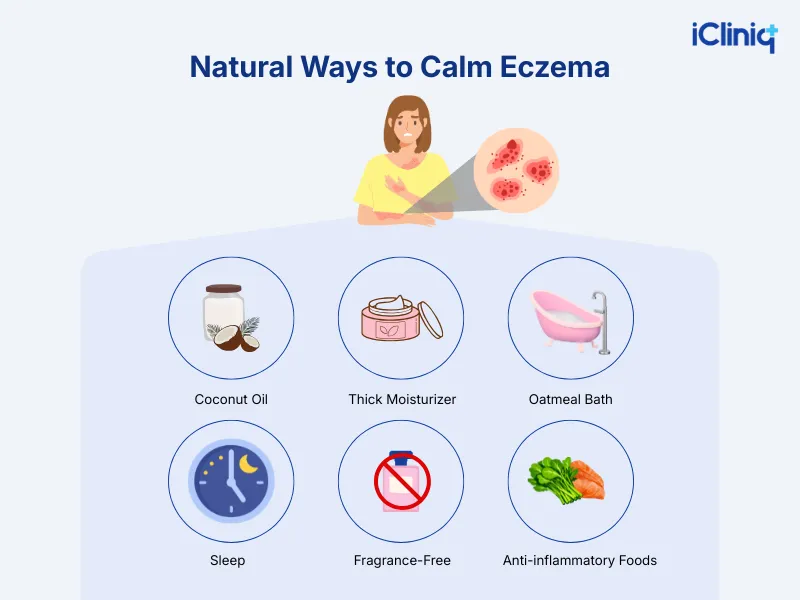
Colloidal oatmeal is one of the best-studied natural remedies for eczema. It is finely ground oat powder that, when added to bathwater or used in a cream, covers the skin and creates a protective barrier. Studies show it has anti-inflammatory, antioxidant, and skin-restoring effects.
A clinical study found that a 1% colloidal oatmeal cream worked as well as a prescription barrier cream for children aged 6 months to 18 years with mild to moderate eczema. It also helps restore the skin’s pH to normal, which is often out of balance in eczema.
How to use it:
-
Bath: Add 1 cup of colloidal oatmeal powder to lukewarm (not hot) water and soak for 1015 minutes.
-
Cream: Apply a colloidal oatmeal cream directly to affected areas after bathing while the skin is still slightly damp.
-
Paste: Mix colloidal oatmeal with water to form a paste for spot treatment of intensely itchy patches.
Baths
Bathing the right way is a helpful treatment for eczema, not just a way to stay clean. Lukewarm baths add moisture to the skin, soften dry areas, and help it absorb moisturizer more effectively.
Best Practices:
-
Use lukewarm (never hot) water; heat inflames eczema-prone skin.
-
Limit baths to 10-15 minutes.
-
Use a fragrance-free, soap-free cleanser.
-
Pat (never rub) skin dry with a soft towel.
-
Apply thick, fragrance-free moisturizer within 3 minutes of getting out. This is often called the soak-and-seal method.
If you don’t bathe often enough, bacteria can build up on your skin, worsening eczema. Most dermatologists recommend bathing every day or every other day, using gentle products and the soak-and-seal method.
Coconut Oil
Virgin coconut oil is a popular and well-supported natural moisturizer for eczema. It has lauric acid, which fights germs and reduces inflammation. A 2014 study found that applying virgin coconut oil to the skin improved eczema symptoms and helped retain moisture, especially in children.
-
How to use: Put virgin or cold-pressed coconut oil (not refined) on damp skin once or twice a day. Do a patch test first. Most people tolerate it well, but coconut oil can sometimes clog pores or cause reactions.
-
Tip: Only use virgin or cold-pressed coconut oil. Refined coconut oil loses most of its helpful compounds during processing.
Honey
Manuka honey, produced in New Zealand, has strong antimicrobial properties. It also reduces inflammation and helps wounds heal, making it useful for eczema-related skin damage and lowering the risk of infection. Its main active ingredient, methylglyoxal (MGO), makes it hard for bacteria to grow.
-
How to use it: Apply a thin layer of medical-grade or Manuka honey to affected areas and leave for 20 to 30 minutes before rinsing. Some studies have used it as an overnight application under a light bandage.
-
Important: Never use honey on babies under 12 months old. Even though the risk of contamination when applying it to the skin is low, there is still a chance of Clostridium botulinum contamination. For older children and adults, regular honey is less powerful than Manuka honey but can still help moisturize the skin.
Tea Tree Oil
Tea tree oil (Melaleuca alternifolia) has natural germ-fighting and anti-inflammatory effects. Some people use it to help with itching and bacteria during eczema flare-ups.
-
Important: Always dilute tea tree oil before putting it on your skin. Usually use 1–2 drops in a teaspoon of carrier oil, such as coconut or sunflower oil. Undiluted tea tree oil can cause skin reactions and make eczema much worse. There is less research on tea tree oil for eczema than on colloidal oatmeal or coconut oil. Most dermatologists do not recommend it as a first choice, but some people find it helps with itching during mild flare-ups if used properly diluted. Never use essential oils on infants under 12 months. Baby skin absorbs substances much more readily, increasing the risk of toxicity and sensitization.
Lifestyle Strategies
Using natural remedies on your skin is just one part of managing eczema. Your daily habits and lifestyle choices are just as important for controlling flare-ups.
Dietary Changes
Some foods are known to trigger eczema, especially in children. Common triggers include eggs, peanuts, cow’s milk, soy, wheat, and fish. However, food triggers vary from person to person. What causes a flare-up for one person may not affect someone else.
Keeping a food and symptom diary for 4 to 6 weeks can help you spot patterns. Only try an elimination diet with a doctor’s guidance, since cutting out foods without reason, especially for children, can lead to nutrition problems.
There is new research that suggests that taking probiotics and eating foods high in omega-3 fatty acids (like oily fish, walnuts, and flaxseed) may help the immune system and make eczema less severe.
Soaps and Detergents
Soaps, shampoos, and laundry detergents are some of the most common things that irritate eczema. Regular soaps are alkaline and remove the skin’s natural oils, which makes the skin barrier weaker.
What to use instead:
-
Fragrance-free, dye-free liquid cleansers labeled for sensitive skin.
-
Laundry detergents labeled free and clear (no fragrance, no dye).
-
An extra rinse cycle when washing clothing to remove detergent residue.
Avoid fabric softeners and dryer sheets. The fragrances they leave on clothes are known to trigger eczema.
Avoid Strong Heat Sources
Heat is a direct trigger for eczema. It makes you sweat more, widens blood vessels near the skin, and makes itching worse. Hot showers, saunas, fireplaces, electric blankets, and heavy bedding are common heat-related triggers. steps:
-
You can use slightly warm water for bathing and hand washing
-
Try to keep your room temperature low in summer, especially around 18 degrees centigrade.
-
Avoid direct heating from fire or other sources. Especially be careful while cooking.
Skin Protection in Cold Weather
Cold, dry air quickly removes moisture from the skin, so winter is often the toughest season for people with eczema. Wind and low humidity make it even harder.
How to protect skin in cold weather:
-
Apply a thick, fragrance-free emollient or barrier cream before going outdoors
-
Wear gloves and a scarf to protect the exposed part of the skin
-
Use a humidifier indoors to maintain 45 to 55% relative humidity
-
Avoid wool and synthetic fabrics that trap heat and cause friction
Acupressure
Acupressure means pressing on certain points of the body. Some people use it alongside other treatments for eczema, especially to help with stress and anxiety that can trigger flare-ups. There isn’t much research yet, and it can’t replace medical care, but some studies suggest it might help reduce itching and improve sleep for people with chronic eczema. Comfortable clothes you wear all day can really affect your eczema. Rough, non-breathable, or heat-trapping fabrics cause friction and sweating, which can make inflammation and itching worse. itching.
Best fabrics for eczema:
-
Cotton - soft, breathable, widely available
-
Silk - smooth, naturally temperature-regulating
-
Bamboo - soft, moisture-wicking, and antibacterial
-
Lyocell/TENCEL - smooth and breathable
Fabrics to avoid:
-
Wool (even "soft" wool can irritate sensitive skin)
-
Synthetic fabrics (polyester, nylon) that trap heat and sweat
Wear loose-fitting clothes, and always wash new clothes before wearing them for the first time.
Avoid Scratching
Scratching may feel good for a moment, but it starts a harmful cycle. Scratching breaks the skin barrier, lets bacteria in, thickens the skin, and makes itching worse. This is called the itch-scratch cycle.
Strategies to interrupt the cycle:
-
Keep nails short and clean.
-
Apply a cold compress or cool water to itchy areas instead of scratching.
-
Use antihistamine creams or oral antihistamines (for nighttime itching, with medical advice).
-
Wear cotton gloves at night to prevent unconscious scratching during sleep.
-
For children, eczema mittens or sleeves are effective barriers.
Stress Management
Stress is one of the most under-recognized eczema triggers. Stress is one of the most overlooked triggers of eczema. The stress hormone cortisol reduces immune function and increases inflammation, worsening eczema symptoms. The American Academy of Dermatology confirms that stress can trigger eczema. Even 10 minutes of daily meditation has been shown to reduce perceived stress and inflammatory markers.
-
Regular moderate exercise such as walking, yoga, or swimming (shower immediately after to remove sweat).
-
Cognitive behavioral therapy (CBT) is recommended for people with chronic eczema, particularly when anxiety or depression is present.
-
Adequate sleep is necessary. Poor sleep amplifies itch perception; aim for 7 to 9 hours per night.
What to Avoid: Natural Remedies That May Irritate Eczema?
Not all natural products are appropriate for eczema-prone skin. The following are commonly promoted but may worsen symptoms:
|
Remedy |
Why to Avoid |
|
Undiluted apple cider vinegar |
Highly acidic; can cause chemical burns and skin damage |
|
Undiluted essential oils (lavender, eucalyptus, etc.) |
Common cause of contact dermatitis and sensitization |
|
Baking soda |
Alkaline; disrupts skin pH and increases dryness |
|
Witch hazel (with alcohol) |
The alcohol content dries and irritates already compromised skin |
|
Olive oil |
Research suggests it may worsen skin barrier function rather than improve it |
|
Fragranced natural products |
"Natural fragrance" (e.g., citrus oils, rose) is still a common allergen |
|
Coconut oil (for those with nut sensitivities) |
Patch test required; can trigger reactions in susceptible individuals |
The general rule: if a natural product stings, burns, or ca General rule: If a natural product stings, burns, or causes redness, stop using it right away and rinse your skin with clean water. Try new products one at a time and watch your skin for 24 to 48 hours before using them regularly. Meaningful relief, particularly colloidal oatmeal, virgin coconut oil, aloe vera, dilute bleach baths, and honey, but they work best as part of a broader management strategy. Moisturizing consistently, avoiding your personal triggers, choosing gentle skincare products, and managing stress are just as important as any topical remedy. If you have any queries regarding the natural remedies for eczema, talk to a skin specialist about this.
Key Takeaways
-
Eczema (atopic dermatitis) affects up to 20% of children and around 10% of adults worldwide, and cases are rising.
-
Natural remedies like colloidal oatmeal, virgin coconut oil, and aloe vera gel can reduce itching, moisturize skin, and support the skin barrier.
-
Not all natural ingredients are safe; some, like essential oils and apple cider vinegar (undiluted), can worsen symptoms.
-
Lifestyle changes, including fabric choices, stress management, and gentle cleansers, are just as important as topical remedies.
