Table of Contents
- 1Why Sleep Matters?
- 2What Is the Recommended Sleep Duration for Adults?
- 3Do Women Need More Sleep Than Men?
- 4How Much Sleep Does a Woman Need?
- 5What Are the Sleep Needs in Different Life Stages?
- 6What Are the Risks of Poor Quality Sleep in Women?
- 7What Are the Tips for Women to Improve Sleep Duration and Quality?
- 8Key Takeaway from iCliniq:
Why Sleep Matters?
Sleep really matters for your overall well-being. Why? When you get enough rest, your body gets busy repairing tissues and boosting your immune system. It is also when your hormones get balanced out and your brain files away all those memories from the day.
What Is the Recommended Sleep Duration for Adults?
How much sleep do you actually need? It is not a one-size-fits-all answer. Your age plays a huge role here.
-
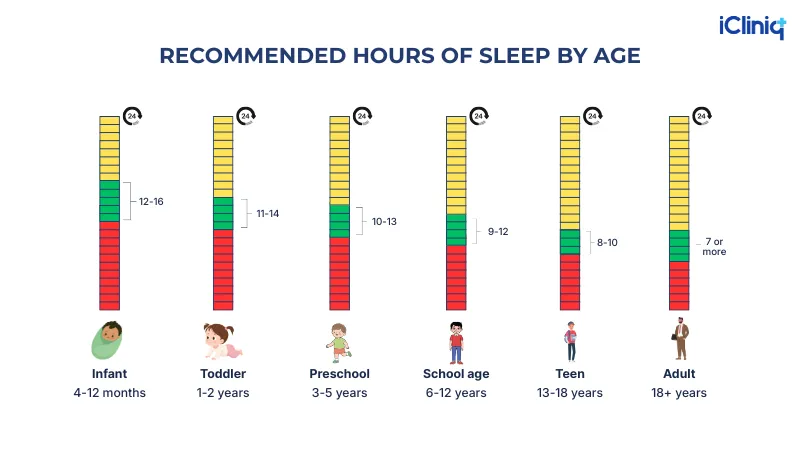
If you are an adult between 18 and 60, you will want to aim for at least seven hours of shut-eye each night.
-
Once you reach your early sixties (61 to 64 years), your recommended sleep duration is typically between seven and nine hours.
-
And if you are 65 or older? You are looking at about seven to eight hours for your best rest.
If you are regularly getting less than seven hours of sleep a night, you are putting your health at serious risk.
What can happen? You might start gaining weight and could even end up with a BMI (body mass index) over 30. Your chances of developing diabetes (high blood sugar level) and high blood pressure go way up. You are also looking at increased risks for heart disease and stroke (disruption of blood flow to your brain). In addition to physical, you are more likely to struggle with depression too.
Do Women Need More Sleep Than Men?
We all need and deserve a good night's sleep. But there is something you might wonder about: Do women need more sleep than men?
Both men and women typically need about the same amount of sleep. But recent research shows that women tend to have their sleep interrupted more often than men do. Why? It comes down to a mix of biological, hormonal, and social factors that affect their sleep patterns.
Sure, some studies have found slight differences in how men and women sleep, but at the end of the day, you still need those seven to nine hours of quality sleep each night, whether you are a man or a woman.
How Much Sleep Does a Woman Need?
What you need to know about your sleep: You should aim for seven to nine hours every night. That is the recommended sleep for women, according to the latest research. However, sleeping more than nine hours can work against you. Studies show it could increase your risk of obesity and other health problems.
From your teenage years to menopause, here's what you need to know about getting quality sleep at every stage.
-
Age 15 to 20s: As a teenager, you need eight to 10 hours of sleep each night for your body and brain to thrive. But between hormonal changes, school stress, and your social life, getting that much sleep can feel impossible.
-
Age 20s to 40s: During this phase, you are balancing work, relationships, and kids while still needing seven to nine hours of sleep. Your menstrual cycle may also affect you, making some nights more challenging than others.
-
Pregnancy: Growing a baby is exhausting work, and your body knows it. You will need more than the usual seven to nine hours, but are you actually getting that sleep?
-
During your first trimester, progesterone makes you feel like you could nap anywhere, anytime. Yet, between morning sickness, constant bathroom trips, and nighttime sleep becomes elusive.
-
Your second trimester often brings sweet relief, as you finally feel more like yourself again. Sure, you might deal with stuffy noses or leg cramps, but it is usually your best sleep during pregnancy.
-
Then comes the third trimester, when sleep becomes a distant memory. Your growing belly makes every position uncomfortable, heartburn strikes at bedtime, and you are up every hour to pee.
-
What Are the Sleep Needs in Different Life Stages?
While you might think men and women need the same amount of sleep, your hormones (especially oestradiol if you are a woman) can seriously affect your sleep. These hormonal shifts affect how deeply you sleep and when you feel tired or awake, and they change throughout your life during:
-
Pregnancy.
-
Menstruation.
-
Menopause.
Hormonal Changes:
There will be ups and downs of estrogen and progesterone throughout your menstrual cycle, pregnancy, and menopause. They affect everything from how quickly you drift off to how refreshed you feel in the morning.
These hormonal changes can leave you dealing with insomnia, night sweats, and waking up multiple times a night. Due to these factors, you are not getting the restorative sleep you need, and sometimes you require extra time to recover.
Pregnancy:
Sleep becomes essential when you are pregnant. Suppose you are not getting enough quality sleep during pregnancy. In that case, you are looking at higher risks of some serious conditions, like preeclampsia (persistent high blood pressure), gestational diabetes (high blood sugar during pregnancy), emergency C-sections, longer labor, preterm birth, and even postpartum depression.
Getting good sleep while pregnant is particularly challenging. You are dealing with back pain, constant bathroom trips, and heartburn. Plus, your hormones are directly affecting your sleep quality. By the third trimester? About 40 percent of pregnant people are dealing with insomnia (breathing disorder) symptoms.
Once the baby arrives with their unpredictable sleep schedule, you are looking at even more daytime exhaustion, especially if you are breastfeeding.
Menstruation:
If you menstruate, your changing hormones throughout your cycle directly impact how well you sleep and how much time you spend in each sleep stage.
If you have premenstrual syndrome (PMS) (physical and emotional symptoms occur before your menstruation arrives), you will notice these sleep changes even more, with extra-intense symptoms and restless nights. But even if you don't have PMS, you will probably notice your sleep quality takes a hit in the days before your period starts.
Menopause:
As you approach menopause, falling asleep and staying asleep can become a real challenge.
Your estrogen and progesterone levels are changing, and your melatonin (that is, your sleep hormone) is affected too, all contributing to sleep troubles.
Many people wake up from hot flashes or night sweats. On top of that, menopause increases your chances of developing sleep disorders like insomnia and restless legs syndrome (a neurological disorder).
What Are the Risks of Poor Quality Sleep in Women?
But what happens when you do not get enough sleep? You are looking at some serious risks. Your chances of developing heart disease or diabetes go up, and your brain takes a hit, too. You may find yourself struggling to focus, feeling emotionally unstable, or making choices you would not usually make.
What Are the Tips for Women to Improve Sleep Duration and Quality?
The tips for women to improve sleep duration and quality are as follows:
-
Try going to bed and rising at the same time each day. If you really need a nap, go for it, but do not overdo it.
-
Make your bedroom a sleep sanctuary. You know what helps? Cutting down on that blue light from your phone or laptop before bedtime.
-
Skip the coffee after lunch.
-
Get your body moving with regular exercise (but avoid it right before bed).
-
When it comes to dinner, keep it light; those heavy meals can really affect your sleep.
-
Put away your screens at least an hour before you want to sleep.
Conclusion
Sleep improves your physical and mental health. However, over and undersleeping can affect your health. The recommended sleep duration is seven to nine hours. Men and women require equal sleep. But women have more interrupted sleep due to hormonal, biological, and social factors. You should adopt some tips to improve your sleep, such as going to bed on time, keeping a good sleep environment, avoiding tobacco, alcohol, and coffee after noon. Do some exercise and limit screen time before going to bed.
Key Takeaway from iCliniq:
-
Women need seven to nine hours of sleep, but some factors, like hormonal changes, puberty, menopause, and pregnancy, may affect their sleep.
-
The risks associated with insufficient sleep are insomnia, heart disease, mood swings, and difficulty concentrating.
-
If your sleep problems worsen, you can consult our psychiatrist at icliniq.com.

