Table of Contents
- 1What Is Bacteremia?
- 2What Are the Causes of Bacteremia?
- 3What Is the Pathophysiology of Bacteremia?
- 4What Are the Bacteria That Cause Bacteremia?
- 5What Is the Diagnosis for Bacteremia?
- 6What Is the Treatment for Bacteremia?
- 7What Are the Complications of Bacteremia?
- 8What Is the Difference Between Bacteremia and Septicemia?
- 9When to See the Doctor?
- 10What Are the Signs and Symptoms of Bacteremia?
What Is Bacteremia?
Bacteremia is an uninvited guest in your bloodstream. It happens when bacteria enter your blood. Now, here's the interesting part. Your body is pretty smart. Most of the time, your immune system catches these bacteria and kicks them out before they cause any trouble. You might not even know they were there.
But sometimes, things don't go as smoothly. If your immune system is weak or overwhelmed, those bacteria can stick around and cause problems. That's when you need to pay attention.
What Are the Causes of Bacteremia?
Bacteria can get into your blood in more ways than you might think. Often, it starts from a small infection somewhere in your body. Maybe it's a urinary tract infection or an infected cut. Sometimes you don't even notice the original infection.
Here are some common ways bacteria enter your bloodstream:
-
Medical Procedures: Surgery is a big one. When doctors make incisions, bacteria can sometimes slip through. The same goes for dental work. Getting a tooth pulled, having a root canal, or even a deep cleaning can open tiny doorways for bacteria.
-
Medical Devices: Catheters and feeding tubes are lifesavers, but they can also become highways for bacteria. These devices go directly into your body, creating a path from the outside world to your bloodstream.
-
Existing Infections: Sometimes, an infection in one part of your body decides to travel. It spreads through your blood to other areas.
-
Needles: Sharing needles or using ones that aren't properly sterilized is a direct route for bacteria to enter your blood.
What Are the Bacteria That Cause Bacteremia?
Not all bacteria are the same. Some are more likely to cause bacteremia than others. Let us introduce you to the usual suspects:
-
Staphylococcus Aureus: This one lives on your skin and in your nose. It's usually harmless until it gets inside.
-
E. coli: You've probably heard of this one. It normally lives in your gut but can cause problems in your blood.
-
Pneumococcal Bacteria: These cause pneumonia and can spread to your blood. Older adults are especially vulnerable to pneumococcal bacteremia, which can become severe quickly if not treated.
-
Salmonella: Yes, the same one from food poisoning.
-
Group A Streptococcus: This causes strep throat and can move into your bloodstream.
-
Pseudomonas Aeruginosa: This one is tough because it resists many antibiotics.
What Is the Difference Between Bacteremia and Septicemia?
You might hear these terms used together, but they're not the same thing. Let us clear up the confusion and learn the difference between bacteremia and septicemia.
With bacteremia, you have a few bacteria floating around in your blood. Your body might handle them just fine. Many people with bacteremia don't even have symptoms.
Septicemia is more serious. The bacteria multiply fast. They're everywhere in your blood. This can turn into sepsis, which is life-threatening. Sepsis happens when your body's response to infection goes into overdrive and starts damaging your own organs.
What Is the Pathophysiology of Bacteremia?
So what exactly happens inside your body? Let us explain what's going on inside when bacteremia occurs. Bacteria normally live on surfaces inside your body, like your gut lining or respiratory tract. Sometimes they break through and enter your bloodstream.
Once they're in your blood, two things can happen. Either your immune system destroys them quickly, or they survive and cause infection. Your body fights back by releasing special proteins called cytokines. These make your temperature rise, which is why you get a fever.
Children are more vulnerable because their immune systems are still learning how to fight. That's why they need extra care.
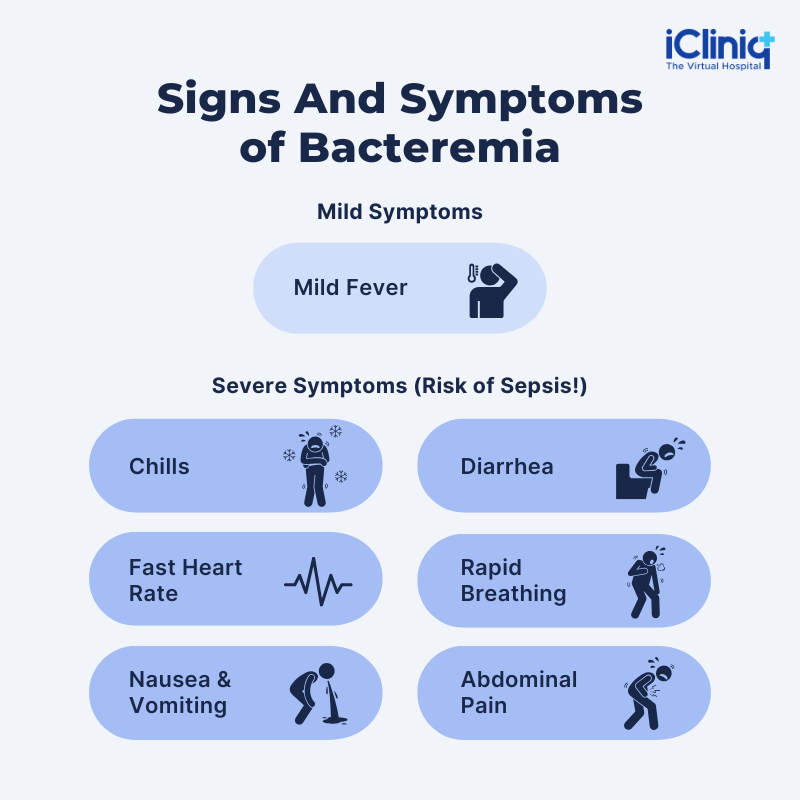
What Are the Signs and Symptoms of Bacteremia?
Here's something important to know. Many people with bacteremia feel perfectly fine. Their immune system handles it quietly in the background.
When Symptoms Are Mild:
-
You might just have a slight fever. That's it. Nothing dramatic.
When Things Get Serious:
If bacteria multiply and spread, the symptoms get worse:
-
Chills that make you shake.
-
Your heart races.
-
You feel sick to your stomach and might vomit.
-
Diarrhea sets in.
-
You're breathing fast.
-
Your belly hurts.
-
You feel extremely tired.
These symptoms mean the bacteria are winning, and you need help right away.
What Is the Diagnosis for Bacteremia?
The main test is blood culture. Here's how it works. Your doctor takes blood from your vein and sends it to a lab. There, they grow any bacteria that might be present and identify the type of bacteria it is.
In order to diagnose based on the symptoms, these are the tests that must be done.
-
Sputum Test: If you have a persistent cough, your doctor might ask for a sample of your mucus to see if bacteria are hiding there.
-
Wound Culture: Any open cut or post-surgery wound can be a doorway for bacteria. A simple swab helps doctors find out if that’s the source of infection.
-
Urine Test: If a urinary tract infection is suspected, your doctor may check your urine to see if bacteria from your bladder or kidneys have entered your bloodstream.
-
Imaging Tests: X-rays or CT (computed tomography) scans help doctors find where the infection started in your body.
What Is the Treatment for Bacteremia?
Good news. Bacteremia is treatable. The main weapons are antibiotics. These medicines stop bacteria from multiplying and prevent serious complications.
You'll likely need to stay in the hospital. Doctors start you on strong, broad-spectrum antibiotics right away. They don't wait for test results because time matters. You'll get these medicines through an IV (intravenous), along with fluids.
If you have a fever, you'll also get medicine to bring it down, like Ibuprofen or Acetaminophen.
Once the lab identifies exactly which bacteria you have, your doctor adjusts your antibiotics. They pick the ones that work best against your specific infection. Treatment for bacteremia usually lasts one to two weeks, depending on how severe your infection is.
Common Antibiotics Used:
Your doctor might prescribe any of these:
-
Amoxicillin and Ampicillin: These break down bacterial cell walls.
-
Ceftriaxone and Cefotaxime: These are powerful third-generation drugs that stop bacteria from building their walls.
-
Gentamycin: Great for tough, gram-negative bacteria.
-
Vancomycin: The heavy hitter for resistant bacteria, especially tough Staph infections.
-
Nafcillin: Works on Penicillin-resistant bacteria but needs careful monitoring.
-
Meropenem: A broad-spectrum choice that works on many types.
-
Cefepime: A fourth-generation drug effective against various bacteria.
What Are the Complications of Bacteremia?
If bacteremia isn’t treated in time, it can lead to serious complications. To be honest with you, some of these can become life-threatening if ignored.
-
Sepsis: This is when your immune system goes into overdrive, causing widespread inflammation that can damage your organs. In severe cases, it can lead to septic shock, where your blood pressure drops dangerously low.
-
Meningitis: The infection can spread to the brain and spinal cord.
-
Pneumonia: Bacteria may move into your lungs and cause infection.
-
Endocarditis: The inner lining of your heart can get infected.
-
Osteomyelitis: Sometimes, the infection reaches the bones.
-
Cellulitis: It can infect the skin, leading to redness, swelling, and pus.
-
Peritonitis: In rare cases, it can spread to organs like the liver or spleen.
-
Pneumococcal Bacteremia in the Elderly: In seniors, pneumococcal bacteria can cause rapid-onset sepsis and pneumonia. Age-related immune decline makes early detection and treatment critical.
When to See the Doctor?
Don't wait if you notice symptoms. See your doctor if you have a fever, chills, or feel sick, especially if symptoms last more than a few days.
You should definitely get checked if you:
-
Had a surgery or dental work recently.
-
Have a medical device like a catheter.
-
I recently left the hospital.
-
Have a respiratory infection that's not getting better.
-
Notice that symptoms aren't improving even with treatment.
If your body feels off or something doesn’t seem right, don’t ignore it; see a doctor sooner rather than later.
Conclusion
Bacteremia means bacteria have entered your bloodstream. Often, your body can fight them off without you even noticing. But sometimes, it needs a helping hand. The important thing is to catch it early; starting antibiotics promptly usually works very well, and most people make a full recovery with the right treatment.
It’s always easier to prevent an infection than to treat it later. Keep wounds clean, follow proper hygiene, and don't skip antibiotics if your doctor prescribes them after dental or surgical procedures. And for any other doubts, you may get in touch with a lung specialist.
Key Takeaway
-
Bacteremia happens when bacteria get into your bloodstream. In many cases, your immune system clears it out on its own. But if it’s left untreated, it can sometimes lead to serious infections like sepsis.
-
The good news is that most people recover well with antibiotics, especially when treatment begins early. That’s why it’s important to watch for warning signs such as a persistent fever, chills, or a fast heartbeat.
-
If you notice symptoms of bacteremia, or if you’ve recently had surgery or a dental procedure, getting the right diagnosis and treatment early can prevent complications and help you recover faster.

