Table of Contents
What Is Caprylic/Capric Triglyceride?
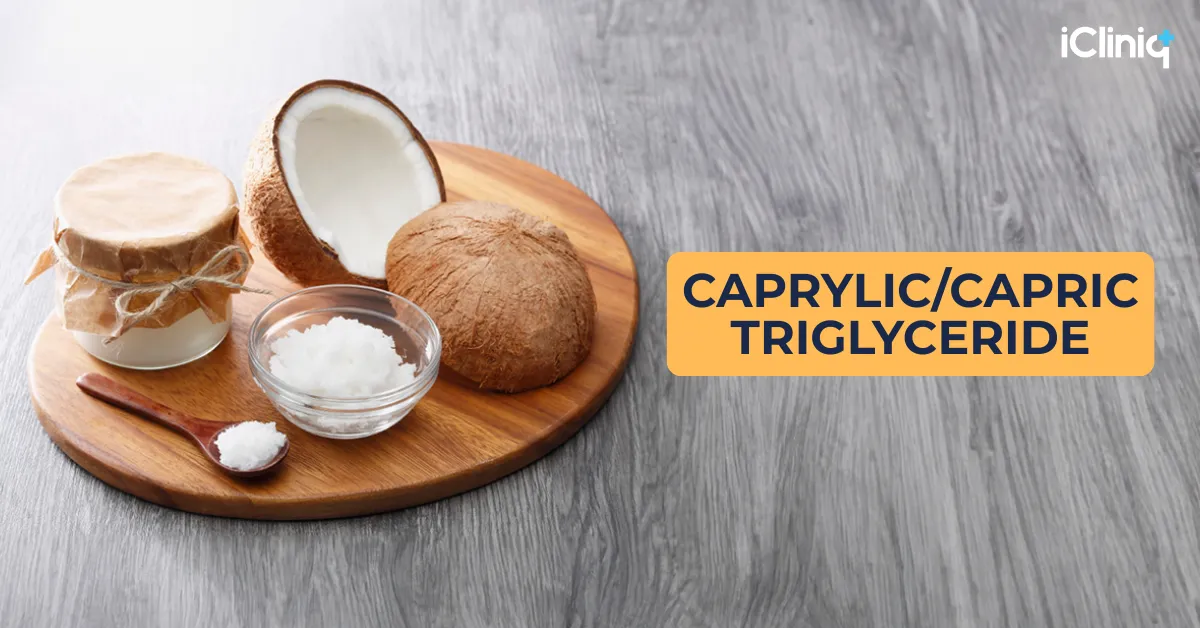
Caprylic/Capric triglyceride is a lightweight oil made from medium-chain fatty acids found in coconut or palm oil. These acids, Caprylic and Capric, are mixed with glycerin to form a smooth, purified ingredient that is safe for skincare, makeup, and even some foods.
Often called fractionated coconut oil, it’s light, non-greasy, and spreads easily. It helps lock in moisture and keeps lotions, creams, and serums from separating. Because it feels gentle and light, many people use Capric triglyceride for skin to improve softness and hydration without heaviness.
What Are the Uses and Benefits of Capric Triglyceride?
1. Skincare
Caprylic/Capric triglyceride is very common in skincare products such as:
-
Face creams.
-
Body lotions.
-
Sunscreens.
-
Eye creams.
-
Anti-aging serums.
It works as an emollient, meaning it keeps skin soft, smooth, and hydrated by creating a protective layer that locks in moisture.
Benefits of Capric triglyceride for the skin include the following:
-
It is light and non-greasy, and it moisturizes your skin without feeling sticky.
-
Gentle on all skin types, so safe for dry, normal, and combination skin.
-
Protects from dryness and keeps skin safe from wind, cold, and pollution.
It is great for sensitive skin, as it gives hydration without heavy oils or harsh chemicals.
2. Makeup and Cosmetics Use:
Caprylic/Capric triglyceride (CCTG) is used in many cosmetics and is commonly found in lipsticks, lip balms, eyeliners, and liquid foundations, as well as blushes and highlighters.
Its role in cosmetics includes:
-
It helps your makeup glide smoothly onto the skin for a flawless, even finish.
-
It keeps your makeup pigments from clumping or creating uneven patches, so your look stays smooth and consistent.
-
Keeps makeup from breaking down during use or storage.
Lipsticks enriched with Caprylic or Capric triglyceride glide effortlessly, feel plush on the lips, and stay smooth for longer. Foundations blend seamlessly, too, giving a natural finish without heaviness.
3. Food Products
You may even find Caprylic or Capric triglyceride added to foods like
-
Cakes and baked goods.
-
Soft candies and chocolates.
-
Cheeses and dairy products.
-
Gelatin desserts and puddings.
For example, lipsticks with Caprylic/Capric triglyceride go on smoothly, feel comfortable, and stay soft longer. Liquid foundations spread evenly for a natural, lightweight finish.
4. Added Benefits
-
Caprylic/Capric triglyceride has antioxidants that protect skin from damage caused by pollution, sunlight, and other environmental stress.
-
Its mild antimicrobial action helps stop certain bacteria from growing, making products safer. It also works as a dispersing agent, which means it helps ingredients mix evenly in skincare, cosmetics, and even food.
-
It makes skincare feel smooth, spread easily, and stay stable. In food, it keeps the texture consistent. With simple precautions, it’s safe for most people to use.
-
Overall, Caprylic or Capric triglyceride improves product quality while keeping the skin soft, hydrated, and protected.
What Are the Side Effects of Caprylic/Capric Triglyceride?
Caprylic/Capric triglyceride is safe for most people, but some may experience mild side effects.
Possible side effects of Caprylic/Capric triglyceride include:
-
Skin Redness or Irritation: Rare, but may occur in people with very sensitive skin.
-
Allergic Reactions: Itching, rash, or small bumps may appear in sensitive individuals.
-
Acne Flare-Ups: People prone to acne may notice more breakouts if using products with heavy or concentrated amounts.
To avoid problems, always perform a patch test before using a new product. Apply a small amount to a tiny area on your arm or behind your ear and wait 24 to 48 hours. If no reaction occurs, the product is likely safe to use on larger areas.
Who Should Be Cautious?
-
People with sensitive skin are more likely to react to new ingredients.
-
Those prone to allergies may experience redness, itching, or bumps.
-
For people with acne-prone skin, heavy use may worsen acne.
-
Individuals with eczema or other skin conditions. They should monitor reactions carefully.
If irritation occurs, stop using the product immediately and consult a dermatologist.
How to Use Products With Caprylic/Capric Triglyceride Safely?
-
Patch Test First: Try a small amount before applying to your face or body.
-
Follow Product Instructions: Use the recommended amount to avoid irritation.
-
Don’t Layer Too Many Products: Using several active ingredients at once can irritate skin.
-
Moisturize Lightly: Apply a small amount to sensitive or acne-prone areas.
-
Ask a Doctor: If you are unsure about a reaction, get professional advice.
Caprylic/Capric Triglyceride In Daily Life
Caprylic/Capric triglyceride (CCTG) is not considered toxic because Capric triglyceride is safe and effective and is found in many daily products:
-
Moisturizers: Keep skin hydrated, soft, and smooth.
-
Sunscreens: Help sunscreen spread evenly and stay on the skin.
-
Foundations and Lipsticks: Ensures even color application and comfort.
-
Body Lotions and Creams: Lock in moisture after bathing or showering.
-
Food Products: Helps baked goods, chocolates, and puddings stay creamy and smooth.
Its presence in so many products shows how versatile and safe this ingredient is for most people. Also, CCTG is generally considered safe to use during pregnancy since it is made from coconut or palm oil.
Conclusion
Caprylic and Capric triglyceride is a gentle, versatile ingredient used in many everyday skincare, makeup, and even food products. It helps the creams and lotions feel smoother, stay stable, and keep your skin moisturized. Most people do well with it, but if you have very sensitive or acne-prone skin, it’s always better to try a small patch first. If someone notices any redness, itching, or new breakouts, stop using the product and check with a dermatologist for guidance.
Key Takeaways
-
Caprylic and Capric triglyceride is a lightweight, non-greasy oil that comes from coconut or palm sources, and it’s often added to skincare products to make them feel soft, silky, and gentle on your skin.
-
Generally safe, but may cause mild irritation in sensitive individuals.
-
People with sensitive or acne-prone skin should perform a patch test before regular use.
-
Helps moisturize, protect, and smooth skin while making cosmetics easier to apply and long-lasting.
-
Works in foods to maintain smooth texture and even ingredient distribution.
-
Need help choosing the right skincare ingredients for your skin type? Chat with an icliniq dermatologist today for safe, personalized advice.