- 1Importance of BMI Before Considering Weight Loss Drugs
- 2Points to be Considered Before Taking Weight Loss Drugs
- 3Understanding Risks and Side Effects
- 4Contraindications and Precautions
- 5Setting Realistic Expectations
- 6When Should One Start Considering Weight Loss Medication?
- 7Criteria for Case Selection and Contraindicated Patients
Introduction
Weight loss is a dream for a lot of individuals suffering from being overweight or obese. Prescription weight loss medications are now considered the first-line treatment. However, an extensive medical evaluation is crucial before starting weight loss drugs to ensure the safety of the drugs based on individual health conditions, medical history, and lifestyle factors. It involves reviewing pre-existing conditions, current medications, past weight loss history, and psychological, dietary, and lifestyle factors. Identifying potential side effects and the high cost of these drugs emphasizes the need for a personalized approach for effective and long-lasting obesity management.
Importance of BMI Before Considering Weight Loss Drugs
The administration of weight loss drugs can be a successful approach toward a healthier lifestyle, but before starting, the body mass index plays an important role. Patients can be categorized by BMI - below 25 normal and above 25 to 30 obese. Weight-loss drugs are typically recommended for healthy individuals with a BMI of 30 or higher or those with a BMI between 27 and 30 who have health issues like hypertension or diabetes. It is also recognized that people with BMIs below 25 can have weight-related health problems, and weight loss can help improve these conditions. So, deciding whether weight-loss drugs are right for someone is based on individual health circumstances and BMI.
Points to be Considered Before Taking Weight Loss Drugs
Medical Evaluation - Before starting weight loss drugs, the patient should undergo a medical examination with an experienced healthcare professional. The evaluation helps determine whether patients can administer such drugs based on their health, test reports, and ongoing medications.
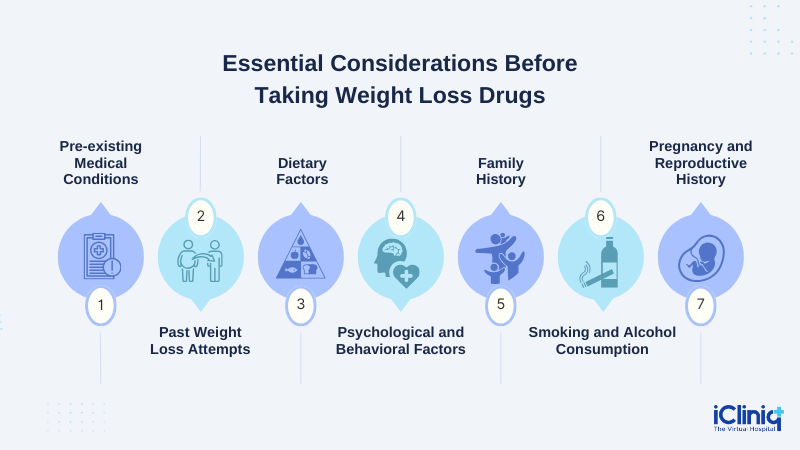
Pre-existing Medical Conditions
-
Underlying or pre-existing disorders like diabetes, hypertension, cardiovascular disease, thyroid, or metabolic problems can affect the patient's normal metabolism and hamper weight management. Certain drugs are indicated for diabetes and obesity and are also considered weight loss drugs.
-
Healthcare professionals try to customize the course of the drug according to the patient's history and pre-existing disorder to minimize the potential side effects or consider alternative options for weight loss.
Medication History
-
An individual's medication history matters while evaluating the administration of weight loss drugs. Certain drugs may interact with weight loss drugs and lead to severe health complications.
-
Certain medications, like antidepressants, corticosteroids, antipsychotics, and some diabetes medications, can lead to health or weight-related side effects.
Family History
-
Genetic predisposition to weight-related issues should be considered before initiating weight loss drugs. Healthcare providers understand the familial patterns of obesity, overweight, diabetes, cardiovascular disease, and other related health conditions to identify genetic predispositions that may impact weight management.
Pregnancy and Reproductive History
-
Pregnancy and reproductive history are important considerations before initiating weight loss drugs due to their potential impact on fertility, maternal health, and pregnancy outcomes.
-
Weight loss drugs may affect fertility and reproductive functions, affecting the menstrual cycle, ovulation, and conception.
-
Concerns related to postpartum weight gain require special attention before administering weight loss drugs because some factors like breastfeeding status, sleep deprivation, hormonal changes, and the impact of caregiving responsibilities on diet and exercise habits need to be considered.
Past Weight Loss Attempts
-
Individuals may have had success with certain weight loss strategies in the past. However, recording previous methods and weight loss attempts can help the healthcare professional understand what is best suited for the patients.
-
Specific challenges or barriers may have hindered past weight loss attempts. Healthcare providers can identify these challenges and develop strategies to overcome them, potentially increasing the likelihood of success with weight loss drugs.
Psychological and Behavioral Factors
-
Psychological and behavioral factors are fundamental aspects to take into account before starting on weight loss drugs.
-
People suffering from problems like emotional eating use food as a way to cope with stress, anxiety, depression, or other mental or emotional issues. Healthcare professionals must understand the patient's eating patterns before starting the weight loss drugs.
-
Binge eating disorder is marked by recurrent episodes of bringing along a feeling of loss of control. People with such problems need special treatment before starting on weight loss drugs.
-
Many people are concerned about their body type. Body types such as pear, inverted triangle, hourglass, and others may vary. These shapes can impact an individual's self-esteem.
-
By understanding all these aspects, doctors can identify the triggering factors, behavioral patterns, overeating habits, or other emotional problems and plan a strategy that may be effective and support successful weight loss efforts.
Dietary Factors
-
Certain dietary patterns give insight into people's eating habits, preferences, and nutritional intake. Understanding the patient’s dietary patterns that may result in nutritional deficiencies, such as inadequate intake of vitamins, minerals, or essential nutrients, is very important. Healthcare providers evaluate nutritional status and address deficiencies before initiating weight loss drugs.
-
Healthcare providers can confirm dietary restrictions or preferences, such as non-vegetarian, vegetarian, or vegan, and food allergies, intolerances, or sensitivities, and plan meals accordingly, which may be suitable for a positive outcome when administering weight loss drugs. Sometimes, cultural and social factors may also vary the outcomes.
Assess Physical Activity Level
-
Physical activity plays a crucial role in obesity management and should be considered before initiating weight loss drugs.
-
To determine the appropriate level of exercise for weight loss, the patient's fitness level needs to be evaluated based on factors like frequency, duration, intensity, and type of exercise.
-
Pre-existing health conditions, injuries, or physical limitations can impact the weight loss journey. Healthcare professionals can find solutions, including suitable workouts or alternative exercises according to the patient's limitations.
Assess the Sleep Patterns
-
Sleep patterns are primarily overlooked in weight management. Any sleep-related issue can impact the weight loss journey. Sleep disorders including insomnia, sleep apnea, or other sleep disorders may cause disrupted sleep and affect weight management.
-
Proper sleep, duration, and quality are important for overall health, metabolism, and weight regulation. Healthcare providers assess an individual's sleep duration, efficiency, and quality to identify deficits or disturbances contributing to weight gain or hindering weight loss efforts.
-
Sleep is vital in regulating hormones that control appetite, metabolism, and energy balance. Disturbances in sleep patterns, such as insufficient or irregular sleep schedules, can affect hormonal regulation. Hormones like leptin, ghrelin, insulin, and cortisol lead to increased appetite, reduced satiety, and alterations in metabolism that promote weight gain.
Smoking and Alcohol Consumption
-
Smoking and excessive alcohol consumption are linked to numerous health risks, including cardiovascular disease, respiratory conditions, liver disease, and certain cancers. Therefore, this is an important factor to consider before starting weight loss drugs.
-
Smoking and alcohol consumption can affect metabolism, energy expenditure, and nutrient absorption, which may influence weight management outcomes.
Understanding Risks and Side Effects
Weight loss pills, like any medication, may come with potential risks and side effects. Common side effects include gastrointestinal discomfort, insomnia, or increased heart rate. However, more severe risks, such as cardiovascular complications or mood disorders, can also happen.
Cardiovascular Risk -
-
Some weight loss drugs can affect cardiovascular problems like high blood pressure, palpitations, arrhythmias, and other problems.
-
It is very important to present any history related to cardiovascular problems like a history of stroke, hypertension, or other heart diseases so that the healthcare professional can understand and plan the drug dosage accordingly.
Mood Disorders -
-
Weight loss drugs may show some effect on the patient’s mood or underlying behavior problems, causing mood swings, anxiety, depression, or self-harming thoughts.
-
Patients require specific attention and management of mood disorders along with the administration of weight loss medications.
Metabolic Effects -
-
Metabolic disturbance can also be observed while on weight loss medications.
-
Weight loss drugs can interfere with normal metabolic parameters, such as blood glucose levels, lipid profiles, and thyroid function.
Liver and Kidney Function -
-
Some weight loss drugs may harm the functioning of the liver and kidneys, leading to hepatotoxicity or nephrotoxicity.
-
It is recommended that liver and kidney function tests be evaluated before starting the weight loss drugs.
Contraindications and Precautions
Before starting weight loss drugs, healthcare providers consider contraindications and precautions to ensure the safety and appropriateness of treatment for each individual.
Contraindications:
-
Pregnancy and Lactation - Weight loss drugs are typically contraindicated during pregnancy and breastfeeding due to potential risks to the fetus or nursing infant.
-
History of Eating Disorders - Patients with a history of eating disorders, anorexia nervosa, or bulimia nervosa may be contraindicated for weight loss drugs due to increased risk of misuse, dependence, relapse, or worsening of symptoms with weight loss drugs.
-
Cardiovascular Disease - Weight loss drugs may be contraindicated in individuals with a history of cardiovascular disease, such as coronary artery disease, heart failure, or arrhythmias, as they can increase heart rate or blood pressure due to other potential cardiovascular risks associated with certain weight loss medications.
-
Uncontrolled Hypertension - Weight loss drugs may be contraindicated in individuals with uncontrolled hypertension or severe hypertension, as some medications can increase blood pressure.
-
History of Stroke - Individuals with a history of stroke or TIA (transient ischemic attack) may have an increased risk of recurrent events with certain weight loss drugs.
-
History of Substance Abuse - Individuals with a history of substance abuse, including drug addiction or alcoholism, may be contraindicated for weight loss drugs due to the potential for misuse or dependence on appetite-suppressant medications.
-
Allergy or Sensitivity - Individuals with known allergies or sensitivities to specific weight loss drugs or their components may be contraindicated for those medications.
-
Severe Liver or Kidney Disease - Patients with severe liver or kidney impairment may have difficulty metabolizing or excreting certain weight loss medications, leading to potential toxicity.
-
Age and Pediatric Use - Some weight loss medications are not approved for use in pediatric populations due to safety concerns.
Precautions
-
Liver or Kidney Impairment - Weight loss drugs may require precautions or dose adjustments in individuals with impaired liver or kidney function to minimize the risk of hepatotoxicity or nephrotoxicity.
-
Psychiatric Conditions - Individuals with underlying psychiatric conditions, such as depression, anxiety disorders, or bipolar disorder, may require precautions when taking weight loss drugs due to the potential for exacerbating mood symptoms or psychiatric side effects.
-
Diabetes Mellitus - Weight loss drugs may require precautions in individuals with diabetes mellitus, particularly those taking medications to lower blood glucose levels, as some weight loss medications can affect glycemic control.
-
History of Seizures - Weight loss drugs may require precautions in individuals with a history of seizures or epilepsy, as some medications can lower the seizure threshold and increase the risk of seizures.
-
Medication Interactions - Weight loss drugs may interact with other medications, including prescription medications, over-the-counter drugs, and dietary supplements, necessitating precautions to avoid potential drug interactions or adverse effects.
Setting Realistic Expectations
Weight loss is a gradual process that depends on factors like metabolism, genetics, and lifestyle habits. Weight loss drugs are a part of weight management. It requires a combination of different strategies like a healthy diet, regular physical activities, and control over emotions. Considering weight loss drugs requires setting realistic expectations as everything takes time, and the individual needs to trust the process. This needs a complete understanding of weight loss drugs. By setting realistic goals and expectations, individuals can positively approach their weight loss journey and increase their likelihood of achieving sustainable results.
When Should One Start Considering Weight Loss Medication?
FDA guidelines suggest that weight-loss medications might be an option for individuals who have diligently attempted lifestyle modifications and meet one or more of the following criteria:
-
A body mass index (BMI) equal to or greater than 30.
-
A BMI equal to or greater than 27 and one or more obesity-related conditions, such as high blood pressure or diabetes.
-
An inability to lose at least five percent of total body weight within three to six months solely through lifestyle changes.
Criteria for Case Selection and Contraindicated Patients
Healthcare providers consider several factors to ensure patient safety and treatment effectiveness when considering weight loss drugs.
Criteria for Case Selection -
-
Body Mass Index (BMI) - A BMI of 30 or higher is typically used as a guideline for those who may benefit from weight loss medication. However, individuals with a BMI of 27 or higher may also be considered if they have comorbidities like type 2 diabetes or high blood pressure.
-
Comorbidities - Obesity-related comorbidities such as type 2 diabetes, hypertension, dyslipidemia, or obstructive sleep apnea may be suitable indicators for weight loss drugs.
-
Risk of Obesity-related Complications - Individuals with a high risk of obesity-related complications, such as cardiovascular disease or joint problems, may benefit from weight loss medications.
-
Failure of Lifestyle Interventions - Patients who have not achieved significant weight loss with lifestyle modification like trying diet, exercise, or behavioral therapy can be candidates for weight loss drugs.
-
Patient Motivation and Compliance - Patients should be confident and motivated to lose weight and be willing to continue the treatment regimen, including regular follow-ups with healthcare providers.
-
Absence of Contraindications - Patients should not have any absolute contraindications to the specific weight loss medication being considered.
Conclusion:
A thorough medical assessment is critical before starting weight loss pills to ensure they are safe and effective. This includes assessing the patient's health, medical history, medications, and lifestyle factors. Weight loss drugs can have side effects, such as gastrointestinal issues, cardiovascular risks, and mood disorders, and they can be expensive. A personalized and comprehensive approach is essential for successful and sustainable weight management.