
- 1What Are Heart Attacks and Strokes?
- 2What Are the Symptoms of Heart Attack and Stroke?
- 3What Are the Recommended Steps for Emergency Response and First Aid?
- 4What Are the Recovery and Rehabilitation Processes for Heart Attack and Stroke?
- 5What Raises Your Chances of a Heart Attack or Stroke?
- 6How to Protect Your Heart and Brain?
- 7Conclusion:
-
Key Takeaway:
-
Heart attacks and strokes are two widespread health problems.
-
They cause about 32% of all deaths, which makes them one of the biggest health issues in the world.
-
Prevention becomes extremely important: eat healthy, exercise regularly, don’t smoke, and get regular check-ups.
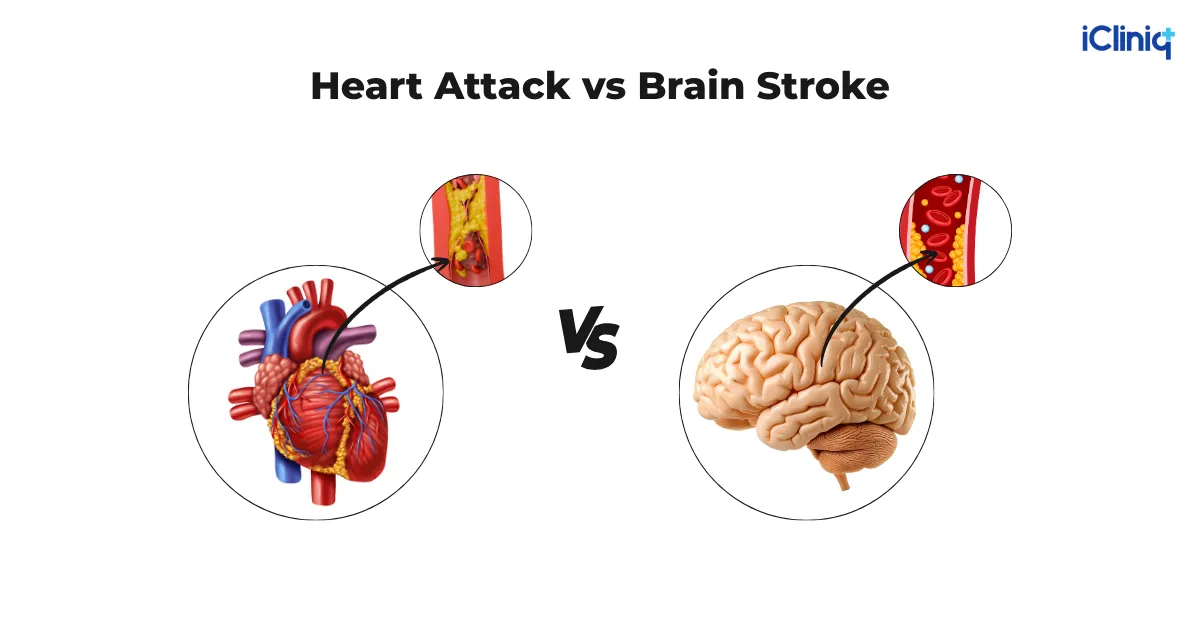
What Are Heart Attacks and Strokes?
Heart attacks and strokes have some things in common. Both are dire emergencies, occurring when blood can’t reach important parts of the body. Let’s learn more about each one!
-
Heart attack (myocardial infarction): This occurs when the blood that carries oxygen to the heart suddenly becomes blocked, depriving the heart of oxygen. When this blood can’t reach the heart, the heart muscle doesn’t receive the oxygen it needs, and part of the heart can start to become damaged.
-
Stroke (brain attack): It happens when blood can’t get to a part of the brain, or it can occur when a blood vessel in the brain bursts. When the blood flow stops, the brain doesn’t get the oxygen and nutrients it needs. Brain cells can be damaged or die in just a few minutes.
There is another condition called a transient ischemic attack (TIA), which people often call a “mini-stroke.” A TIA lasts only a few minutes or up to 24 hours, and it doesn’t cause permanent damage. But it is still a warning sign that a real stroke could happen later.
What Are the Symptoms of Heart Attack and Stroke?
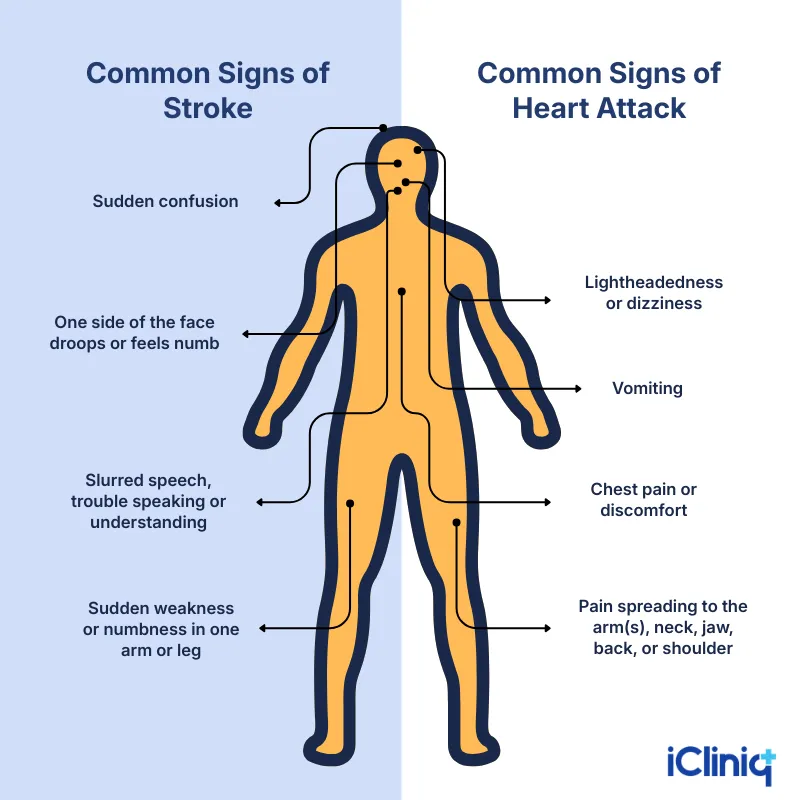
Heart attacks and strokes feel different. A heart attack mostly causes problems in the chest because it affects the heart. A stroke happens in the brain, so it causes problems with how the body works or moves.
Let’s look at how their symptoms are different:
Common symptoms of a heart attack are:
-
Chest discomfort: You may feel pain, pressure, tightness, or a heavy feeling in the chest.
-
Pain in other places: The pain can spread to one or both arms, the back, neck, jaw, or stomach.
-
Shortness of breath: It might feel hard to breathe.
-
Other signs: You may get cold sweats, feel sick to your stomach, have heartburn, feel dizzy or lightheaded, notice your heartbeat acting strange, or feel very, very tired.
Common symptoms of a stroke are:
There’s a simple way to remember stroke symptoms (remember the word FAST):
-
Face drooping: Check if one side of the face droops while smiling.
-
Arm weakness: Ask them to lift both arms. Does one arm drift down?
-
Speech trouble: Is their speech slurred, strange, or hard to understand?
-
Time to call for help: If you notice any of these signs, call emergency services immediately.
Other symptoms of stroke are
-
Sudden numbness or weakness in the face or leg, especially on one side.
-
Sudden trouble walking.
-
Sudden confusion.
-
Sudden difficulty seeing (can affect one or both eyes).
-
Sudden dreadful headache.
-
Sudden stiff neck.
-
Feeling sick (nausea) or vomiting.
-
Feeling very sleepy or drowsy.
Heart attack and stroke symptoms are mostly the same for everyone, but they can look a little different because of age, gender, other health problems, and where people come from.
-
Age: Older adults (especially over 75) may not always feel intense chest pain during a heart attack. Instead, they may experience more general signs, such as feeling very tired or confused. They may also have more serious strokes.
-
Sex: Women can have chest pain during a heart attack, but their symptoms are often quieter or less noticeable. Women may also feel anxiety, back pain, trouble sleeping, indigestion or nausea, and extreme tiredness. Men usually report the “classic” heart attack symptom, strong, crushing chest pain.
-
Comorbidities: People with conditions like diabetes may have a “silent” heart attack, meaning they don’t feel the usual pain because their nerves are affected. High blood pressure is a major risk factor for strokes.
-
Demographics: People from different backgrounds or communities may exhibit similar symptoms, but the way these symptoms manifest or how quickly they receive help can vary. This can sometimes delay treatment.
What Are the Recommended Steps for Emergency Response and First Aid?
1. Heart attack:
When someone has a heart attack, they need help right away. Here are the steps:
-
Call the emergency number first. Don’t drive the person to the hospital. An ambulance can give help on the way.
-
Give Aspirin (only if the person is not allergic). This helps stop blood from clotting.
-
Administer nitroglycerin if a doctor has already prescribed it for the person.
-
Start CPR (cardiopulmonary resuscitation) if the person is not breathing or has no pulse. Push hard and fast on the middle of the chest, about 100 to 120 times each minute.
-
Use an automated external defibrillator. It can give a safe shock to help the heart start beating normally again.
2. Stroke:
-
Call emergency services right away. This is the most important step.
-
Remember the time the symptoms started. Doctors need this information to give the proper treatment.
-
Keep the person calm and comfortable. Help them sit or lie down safely.
-
Keep their neck and head still. Don’t let them move too much.
-
Do not give them anything to eat or drink. They might choke.
-
Do not give any medicines like Aspirin. This can make things worse.
What Are the Recovery and Rehabilitation Processes for Heart Attack and Stroke?
1. Heart attack:
Getting better after a heart attack takes time. Some people feel normal again within a few weeks, while for others, it can take a few months. Here’s what recovery looks like:
Initial recovery:
-
You will stay for a few days in the hospital so doctors can watch your heart and give you treatment.
-
Doctors may prescribe medications such as statins, antiplatelet agents, and beta-blockers to help maintain your heart's health.
-
For the first few weeks, you might feel tired easily. Start with short walks and gradually increase the distance each day. Don’t do heavy chores or hard exercise yet.
-
Take plenty of breaks and naps when you need them.
Long-term recovery:
-
Cardiac rehabilitation: This specialized program helps you gradually regain strength through safe exercises and heart-healthy lessons.
-
Lifestyle modifications: These include quitting smoking, eating healthy foods, keeping a healthy weight, and exercising regularly.
-
Emotional support: It’s normal to feel worried or sad. Take help from family, friends, or a counselor.
2. Stroke:
Most people start getting better from a stroke in the first 3 to 6 months, but they can keep improving for many months or even years.
Recovery happens in different phases, such as:
-
Acute care phase: This is the initial stage of hospital care. Doctors work to keep the person safe and stable, prevent problems from happening, and start early treatments.
-
Rehabilitation phase: This phase can last for many months. The primary goal is to help the person learn or relearn skills they have lost and discover new ways to perform everyday tasks.
-
Long-term recovery phase: This includes ongoing therapy, regular exercises, and learning how to manage life at home. The person may continue to improve gradually over time.
What Raises Your Chances of a Heart Attack or Stroke?
Here are the main shared risk factors:
-
High blood pressure.
-
High cholesterol.
-
Diabetes.
-
Smoking.
-
Drinking too much alcohol or using drugs.
-
Being overweight or obese.
-
Sleep problems, like sleep apnea.
-
An unhealthy diet and not exercising.
-
Men over 45 and women over 55.
-
Polluted air, breathing dirty air, can damage your heart and brain.
Some risks that are more specific to heart attack or stroke
1. Stroke-specific risk:
-
Atrial fibrillation: Because the heart beats very fast or irregularly in this condition, it can cause blood clots that travel to the brain, causing a stroke.
-
Brain aneurysm: This can cause a serious type of stroke called a hemorrhagic stroke.
-
Sickle cell disease: A genetic condition where sickle-shaped red blood cells can damage organs and increase stroke risk.
-
Migraine with aura: Especially in women. This may increase stroke risk.
2. Heart attack-specific risk:
-
Coronary artery disease (the arteries that bring blood to the heart get narrow because of fat buildup) can cause a heart attack.
-
History of preeclampsia during pregnancy
-
Chronic inflammatory conditions like rheumatoid arthritis.
Some things can also make heart attacks or strokes more likely, even if they are less common:
-
High levels of C-reactive protein.
-
Certain bacterial or viral infections.
-
Periodontitis, or gum disease.
-
Psychosocial stress.
-
Sedentary lifestyle.
-
Family history.
-
Chronic kidney disease.
-
Autoimmune diseases.
How to Protect Your Heart and Brain?
You can do many things to keep your heart and brain healthy! Preventing heart attacks and strokes starts with daily healthy habits and regular medical checkups.
1. Lifestyle strategies:
-
Eat healthy foods.
-
Limit sugar, bad fats, and salt in your food.
-
Exercise regularly by trying to move your body for at least 150 minutes a week.
-
Don’t smoke, and limit alcohol.
-
Keep a healthy weight.
-
Manage stress.
-
Treat atrial fibrillation (irregular heartbeat) if your doctor says you need to.
-
Sleep well.
2. Monitoring and regular health screenings:
-
Know your personal risk factors.
-
Monitor your blood pressure and cholesterol levels regularly.
-
If you have diabetes, keep it under control.
-
Visit your doctor regularly.
-
Lastly, take your medicines regularly as suggested by your doctor.
Conclusion:
Heart attacks and strokes are dire, life-threatening conditions, and getting help right away can save lives! How well someone recovers depends on how quickly they receive treatment, the severity of the injury, and their overall health prior to the incident. But everyone’s recovery is a little different. That’s why prevention is super important! Taking care of your heart and brain helps you stay healthy and safe. If you want to lower your risk, you can always talk to our critical care physician for advice and guidance.

