Table of Contents
What Is Wildfire Air Pollution?
Air pollution from wildfires is a combination of gases (carbon monoxide and nitrogen oxides), volatile organic compounds (VOCs), polycyclic aromatic hydrocarbons (PAHs), and PM2.5 particulates that originate from the combustion of vegetation, soil, and, in some cases, architectural structures. This pollution doesn't just stay near the fire. It can travel hundreds of miles and really affect your skin and health. Those tiny particles are so small that they can get deep into your skin and damage your hair and follicles.
What Is Atopic Dermatitis?
Atopic dermatitis is a long-lasting inflammatory skin condition that can make your skin feel dry and itchy.
Your skin normally acts like a shield, keeping moisture in and irritants out. But with eczema, this shield gets weak. Moisture escapes, and allergens enter. People with eczema often lack filaggrin. It's a protein that keeps your skin barrier strong. Without it, pollution and smoke can affect your skin.
How Does Wildfire Smoke Affect Skin Health?
Wildfire smoke affects the skin through several pathways:
-
Particle Penetration: PM2.5 particles are so small that they enter through your hair follicles and any tiny cracks in your skin.
-
Oxidative Stress: Smoke produces reactive oxygen species (ROS), which harm your skin cells. Your body's natural antioxidants try to fight back, but they're totally overwhelmed.
-
Inflammation: Your immune system releases cytokines (inflammation signals). That's why you see redness and swelling.
-
Microbiome Disruption: Protective bacteria live on our skin and keep things balanced. Smoke disrupts this whole ecosystem, leaving your skin more vulnerable than ever.
Even if you've got your eczema under control normally, wildfire smoke can trigger flare-ups. Your skin becomes sensitive and ready to react at the slightest provocation.
Scientific Evidence Linking Wildfires to Eczema:
Research consistently shows an increase in eczema flare-ups among patients. It happens during and after the wildfire events. A study by the National Institutes of Health found that both kids and adults presented to clinics with more severe eczema and itching during California's wildfire season. Those tiny particles in the smoke (called PM2.5) are the real troublemakers. When levels spike, people's symptoms get worse that same week. It means more smoke particles in the air means more scratching and discomfort for folks with eczema.
Who Is at Highest Risk?
Certain groups face a greater risk of wildfire-triggered flares:
-
Children whose skin barrier is thin and still developing.
-
Older adults, whose skin thins with age.
-
People with pre-existing eczema or asthma.
-
People with damaged or irritated skin.
-
Outdoor workers with high smoke exposure.
-
Pregnant woman.
1. Symptoms Triggered by Wildfire Pollution:
Symptoms can appear within hours of exposure and persist for days.
-
Severe itching (pruritus).
-
Redness and burning.
-
Dryness and flaking.
-
New or worsening rashes.
-
Cracked, swollen skin.
If symptoms worsen quickly or spread, you can consult a dermatologist online for a personalized plan.
2. Short-Term Health Effects:
-
Asthma attacks.
-
Heart attacks.
-
Stroke.
-
Respiratory issues, like bronchitis (airway inflammation) and chronic obstructive pulmonary disease (COPD, a lung disease that restricts your breathing).
3. Long-Term Health Effects:
-
Cancer.
-
Premature birth or low birth weight.
Why Does Pollution Worsen Atopic Dermatitis?
What is happening in your body when pollution makes your skin itch?
-
Immune Activation: When pollutants contact your skin, they activate the aryl hydrocarbon receptor (AhR) pathway, triggering inflammation.
-
Cytokine Surge: Pollution can trigger your body to produce pro-inflammatory cytokines, such as IL-4 (interleukin) and IL-13, which can intensify itching.
-
Barrier Breakdown: Your skin barrier falls apart. PM2.5 pollution disrupts two key protective mechanisms, filaggrin and ceramides.
Before and After Wildfire Exposure
|
Skin Feature |
Normal Skin |
After Smoke Exposure |
|
Skin Barrier |
Intact |
Damaged and leaky |
|
Inflammation |
Low |
High |
|
Symptoms |
Mild |
Severe itching and redness |
|
Moisture |
Balanced |
Dry and flaky |
With repeated exposure, chronic inflammation develops, and flares become more frequent.
Treatment Options and Skin Protection Strategies:
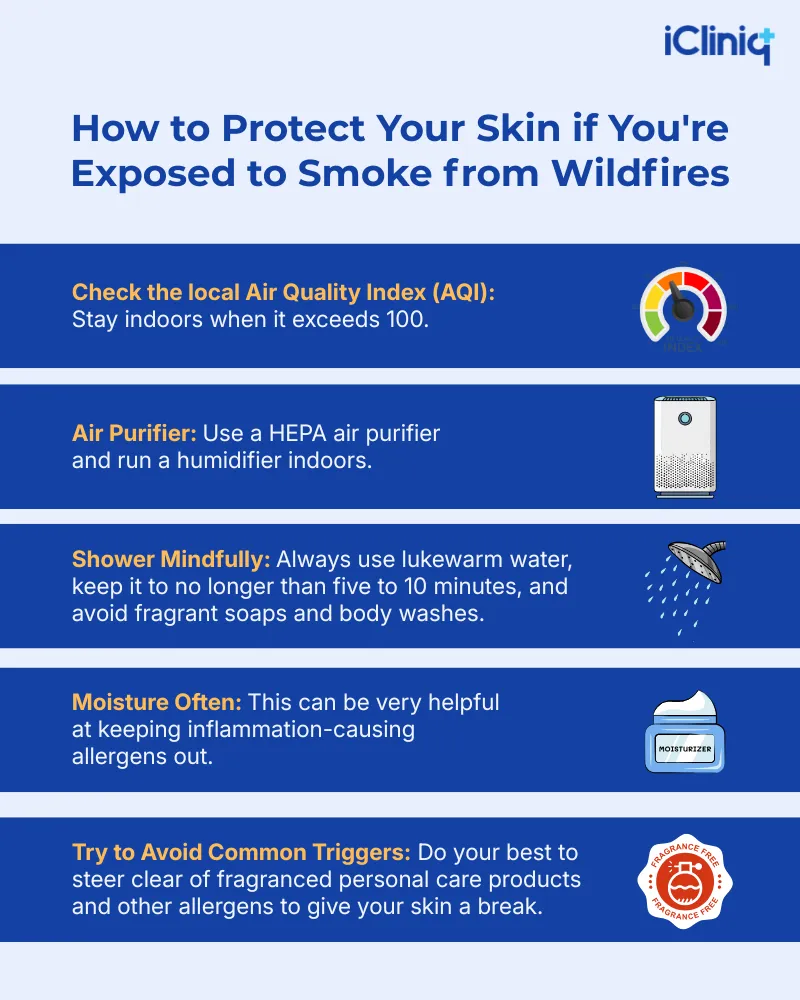
Two ways to manage your eczema during wildfire season: environmental control and consistent skincare.
1. Daily Protection Routine:
-
Check the local air quality index (AQI) and stay indoors when it exceeds 100.
-
Use a HEPA (high-efficiency particulate air) air purifier and run a humidifier indoors.
-
Take short, lukewarm showers with fragrance-free cleansers.
-
Apply a thick barrier-repair moisturizer with ceramides within three minutes of bathing.
-
Wear soft, breathable clothing to reduce friction.
2. Medical Treatment:
Your skin specialist may recommend,
-
Topical Corticosteroids, Calcineurin inhibitors such as Tacrolimus, or non-steroidal options such as Crisaborole.
-
In severe cases, you may need antihistamines, phototherapy, or biologic therapy.
When to See a Doctor?
Go to your skin specialist if you notice:
-
Severe flare-ups that do not improve with routine care.
-
Signs of infection such as oozing, pus, or yellow crusts.
-
Persistent itching that disrupts your sleep.
-
A rapidly spreading rash.
Conclusion:
Wildfire smoke is becoming a major problem for people with eczema. Fire seasons are getting longer, and the air quality just keeps getting worse. Even a few days of breathing in that smoke can damage your skin and trigger inflammation. But don't worry, you've got options. Start checking air quality apps daily. Get yourself a good air purifier for your home. And stick to a solid skincare routine that focuses on repairing your skin barrier.
If you're dealing with recurring flare-ups, it might be time to talk with a skin specialist.
Key Takeaways
-
Wildfire smoke can worsen eczema by breaking down your skin's protective barrier and triggering inflammation.
-
Tiny particles (PM2.5) and toxic gases are the major causes behind sudden eczema flare-ups.
-
Kids, older adults, and anyone already dealing with eczema are most at risk.
-
You can protect yourself by using HEPA air purifiers and barrier-repair moisturizers and staying indoors when the smoke is heavy.
-
If your skin flares are severe, look infected, or just won't improve despite your best efforts, it's time to see a dermatologist.
-
Worried about your eczema getting worse during wildfire season? Talk to our dermatologists online today.

