HomeAnswersPulmonology (Asthma Doctors)pneumococcal pneumonia

Do older adults need a pneumococcal vaccine after pneumonia?

This Premium Q&A, reviewed and published, features a real conversation between an iCliniq user and a physician.

Patient's Query

Hello doctor,

My father, aged 70, had a severe pneumococcal pneumonia last year and was hospitalized for 10 days. His latest chest X-ray still shows mild patchy changes, and he gets tired easily. Should he still receive pneumococcal vaccines (PCV13 and PPSV23) even after having a previous infection? How long does the protection from these vaccines last, and do they need to be repeated after a few years? Also, are there any side effects or medical conditions that make these vaccines unsafe for older adults? Lastly, would pulmonary rehabilitation or breathing exercises help improve stamina after such infections, or does the lung typically recover on its own?

Kindly advise.

Answered by Dr. Amandeep Singh Arneja

Education:

MD RESPIRATORY MEDICINE

Professional Bio:

I am Dr. Amandeep Singh Arneja, a dedicated Chest Physician and Senior Resident in Pulmonary Medicine at Jawaharlal Nehru Medical College (JNMC), Wardha, with extensive training in the management of complex respiratory and critical care conditions. I completed my M.B.B.S. from Universal College of Medical Sciences, Tribhuvan University (2016) and M.D. in Respiratory Medicine from Shri Shankaracharya Institute of Medical Sciences, Bhilai (2025), where I gained hands-on expertise in managing ICU patients, performing advanced diagnostic and therapeutic procedures, and conducting research in pulmonary diseases. My areas of expertise include: Management of asthma, COPD, tuberculosis, and interstitial lung disease Critical care management (ICU care, mechanical ventilation) Pulmonary function testing (spirometry, DLCO) Interventional procedures (thoracentesis, ICD insertion, bronchoscopy) Sleep medicine and polysomnography Research, academic writing, and clinical presentations I hold certifications in Good Clinical Practice and Biomedical Research. I am a proud member of the National College of Chest Physicians (NCCP). Alongside my pulmonary expertise, I have also completed a CPCDM Fellowship in Diabetes from RSSDI, enabling me to provide holistic care for patients with respiratory diseases complicated by diabetes. Currently, I am also pursuing a Fellowship in Critical Care Medicine, which further enhances my ability to manage critically ill patients with respiratory and systemic illnesses. With multiple research publications, conference presentations (NAPCON, SSIMSCON), and a strong academic background, I strive to combine evidence-based medicine with compassionate patient care. My mission is to provide comprehensive, high-quality care to patients suffering from respiratory and lifestyle-related diseases.

This doctor is not available for online consultations on the platform anymore.

Hello,

Welcome to icliniq.com.

I understand your concern.

A past pneumococcal infection does not replace vaccination. Your father (age 70) should still be protected going forward. Current guidance for older adults is to receive one of the following options: a single dose of pneumococcal 20-valent conjugate vaccine (PCV20) or pneumococcal 21-valent conjugate vaccine (PCV21), or pneumococcal 15-valent conjugate vaccine (PCV15) followed by Pneumococcal Polysaccharide Vaccine (PPSV23) one year later. These are safe and recommended even if someone has previously had pneumonia.

For the conjugate vaccines (PCV), protection appears to last for several years. The polysaccharide vaccine (PPSV23) also provides good protection but may wane earlier; some studies show a decline as soon as two to five years. This is one reason many adults now prefer a single PCV20 instead of the older two-dose schedule.

If he receives PCV20 or PCV21, he generally does not need PPSV23 afterward. If the schedule chosen is PCV15, PPSV23, the PPSV23 dose is typically given only once. A second PPSV23 booster is not routine unless he previously received PPSV23 before age 65; in that case, a one-time repeat after age 65 is considered if five or more years have passed.

These vaccines are generally safe. Side effects are usually mild and may include a sore arm, low-grade fever, or fatigue for a day or two. Vaccination should be avoided only in cases of severe allergy to a vaccine component or if the person is acutely unwell; in such cases, it should be deferred. These vaccines are widely used and safe in older adults.

Regarding the lingering X-ray patchy changes and low stamina:

The lungs can take several months to recover after severe pneumonia, and some individuals may be left with small areas of scarring or bronchial changes. Pulmonary rehabilitation and breathing exercises, combined with a gradual walking and strength program, can meaningfully improve endurance, breathlessness, and confidence compared with simply waiting for recovery. It is advisable to monitor oxygen levels during exercise.

If you can share which vaccines he has received before and whether he has any other medical conditions (such as heart disease, diabetes, or kidney issues), I can suggest the most appropriate schedule to discuss with his doctor at the next visit.

I hope you are satisfied with my answer. For further queries, you can consult me at iCliniq.

Thank you.

Medically reviewed by iCliniq medical review team
Published At January 3, 2026
Reviewed At January 3, 2026

Education:

MD RESPIRATORY MEDICINE

Professional Bio:

I am Dr. Amandeep Singh Arneja, a dedicated Chest Physician and Senior Resident in Pulmonary Medicine at Jawaharlal Nehru Medical College (JNMC), Wardha, with extensive training in the management of complex respiratory and critical care conditions. I completed my M.B.B.S. from Universal College of Medical Sciences, Tribhuvan University (2016) and M.D. in Respiratory Medicine from Shri Shankaracharya Institute of Medical Sciences, Bhilai (2025), where I gained hands-on expertise in managing ICU patients, performing advanced diagnostic and therapeutic procedures, and conducting research in pulmonary diseases. My areas of expertise include: Management of asthma, COPD, tuberculosis, and interstitial lung disease Critical care management (ICU care, mechanical ventilation) Pulmonary function testing (spirometry, DLCO) Interventional procedures (thoracentesis, ICD insertion, bronchoscopy) Sleep medicine and polysomnography Research, academic writing, and clinical presentations I hold certifications in Good Clinical Practice and Biomedical Research. I am a proud member of the National College of Chest Physicians (NCCP). Alongside my pulmonary expertise, I have also completed a CPCDM Fellowship in Diabetes from RSSDI, enabling me to provide holistic care for patients with respiratory diseases complicated by diabetes. Currently, I am also pursuing a Fellowship in Critical Care Medicine, which further enhances my ability to manage critically ill patients with respiratory and systemic illnesses. With multiple research publications, conference presentations (NAPCON, SSIMSCON), and a strong academic background, I strive to combine evidence-based medicine with compassionate patient care. My mission is to provide comprehensive, high-quality care to patients suffering from respiratory and lifestyle-related diseases.

This doctor is not available for online consultations on the platform anymore.

Same symptoms don't mean you have the same problem. Consult a doctor now!
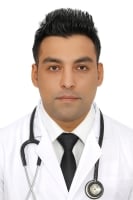
Education:

MD RESPIRATORY MEDICINE

Professional Bio:

I am Dr. Amandeep Singh Arneja, a dedicated Chest Physician and Senior Resident in Pulmonary Medicine at Jawaharlal Nehru Medical College (JNMC), Wardha, with extensive training in the management of complex respiratory and critical care conditions. I completed my M.B.B.S. from Universal College of Medical Sciences, Tribhuvan University (2016) and M.D. in Respiratory Medicine from Shri Shankaracharya Institute of Medical Sciences, Bhilai (2025), where I gained hands-on expertise in managing ICU patients, performing advanced diagnostic and therapeutic procedures, and conducting research in pulmonary diseases. My areas of expertise include: Management of asthma, COPD, tuberculosis, and interstitial lung disease Critical care management (ICU care, mechanical ventilation) Pulmonary function testing (spirometry, DLCO) Interventional procedures (thoracentesis, ICD insertion, bronchoscopy) Sleep medicine and polysomnography Research, academic writing, and clinical presentations I hold certifications in Good Clinical Practice and Biomedical Research. I am a proud member of the National College of Chest Physicians (NCCP). Alongside my pulmonary expertise, I have also completed a CPCDM Fellowship in Diabetes from RSSDI, enabling me to provide holistic care for patients with respiratory diseases complicated by diabetes. Currently, I am also pursuing a Fellowship in Critical Care Medicine, which further enhances my ability to manage critically ill patients with respiratory and systemic illnesses. With multiple research publications, conference presentations (NAPCON, SSIMSCON), and a strong academic background, I strive to combine evidence-based medicine with compassionate patient care. My mission is to provide comprehensive, high-quality care to patients suffering from respiratory and lifestyle-related diseases.

This doctor is not available for online consultations on the platform anymore.

Listen to related tracks in our music library
Comprehensive Second Opinion

Ask your health query to a doctor online

*guaranteed answer within 4 hours

Disclaimer: No content published on this website is intended to be a substitute for professional medical diagnosis, advice or treatment by a trained physician. Seek advice from your physician or other qualified healthcare providers with questions you may have regarding your symptoms and medical condition for a complete medical diagnosis. Do not delay or disregard seeking professional medical advice because of something you have read on this website. Read our Editorial Process to know how we create content for health articles and queries.
