Table of Contents
What Is Stage 2 Endometrial Cancer?
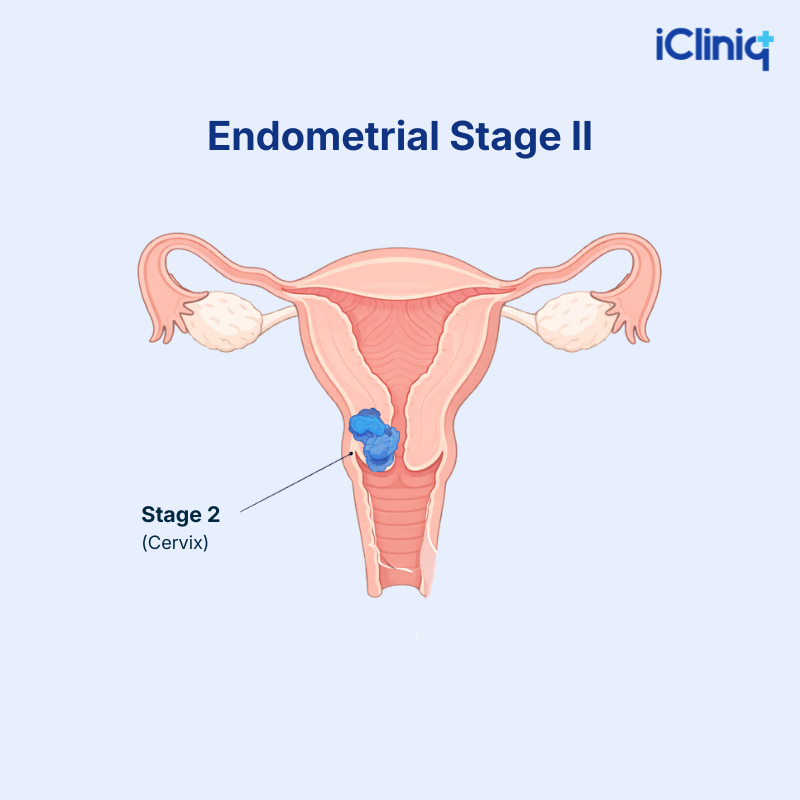
Stage 2 endometrial cancer is a form of uterine cancer. This spreads from the lining of the uterus into the connective tissue of the cervix, but not beyond the uterus. Doctors call this spread "cervical stromal invasion." This term helps determine how advanced the disease is and guides treatment planning.
How Does Stage 2 Differ From Stage 1 and Stage 3?
Understanding how the disease progresses helps patients make better care decisions. The main difference between stage 1 and stage 2 endometrial cancer is whether the cancer has reached the cervix. In stage 1, it stays in the uterus. In stage 2, it spreads into the cervix. Stage 3 means the cancer has spread beyond the uterus to nearby tissues, lymph nodes, ovaries, or the vagina. Because it has spread further, treatment is usually stronger. The outlook is also often different from earlier stages.
Symptoms of Stage 2 Endometrial Cancer
Stage 2 endometrial cancer symptoms may be present before diagnosis. Even if they are often minor at first.
Typical indicators consist of:
-
Unusual vaginal bleeding, particularly following menopause.
-
Pelvic pain or pressure.
-
Unusual vaginal discharge.
-
Pain during intercourse.
-
Alterations in the urine pattern.
-
Fatigue or unexplained weight loss.
Consult a healthcare provider for chronic symptoms. These are especially those after menopause.
What Causes Stage 2 Endometrial Cancer and Who Is at Risk?
Endometrial carcinoma is a disease in which cells in the lining of the uterus grow uncontrollably. The specific cause is not known; various variables, however, may raise risk, including:
-
Obesity.
-
Hormonal imbalance involving excess estrogen.
-
Diabetes.
-
Hypertension.
-
Family history of gynecologic cancers.
-
Late menopause or never having been pregnant.
Age is also a major factor, with most diagnoses occurring after menopause.
How Is Stage 2 Endometrial Cancer Diagnosed?
An accurate stage 2 endometrial cancer diagnosis. It usually involves several tests and evaluations. Physicians often begin with a pelvic examination and transvaginal ultrasound. If abnormalities are detected, an endometrial biopsy is typically performed.
Imaging, such as MRI, CT, or positron emission tomography (PET) scans, may help determine if the disease has spread. Surgical staging after hysterectomy often confirms the final cancer stage.
Treatment Options for Stage 2 Endometrial Cancer
Stage 2 endometrial cancer is usually treated with surgery. The goal is to remove the cancer and reduce the risk of it coming back.
A radical hysterectomy is a common treatment. This surgery removes the uterus, cervix, and nearby tissues. In a few scenarios, even the lymph nodes are removed to check whether the cancer has spread.
After surgery, doctors may recommend radiation therapy. Radiation uses high-energy beams to destroy any cancer cells that may remain in the body.
Some patients have a higher risk of the cancer returning. In these cases, doctors may suggest chemoradiation. This treatment combines chemotherapy and radiation therapy to improve cancer control.
Immunotherapy may also be an option for some patients. It helps the body's immune system find and attack cancer cells. Doctors are more likely to consider immunotherapy when certain molecular markers are present or if the cancer comes back after treatment.
The best treatment plan depends on several factors, including the cancer's features, test results, and the patient's overall health.
Stage 2 Endometrial Cancer Survival Rate and Prognosis
Many patients have a good outlook if the disease is found early and treated quickly. The survival rate for stage 2 endometrial cancer is usually higher than for later stages, especially when surgery and other treatments go well.
Many things can affect the outcome, such as the tumor’s grade, whether lymph nodes are involved, the patient’s age, and overall health. Doctors look at all these factors when talking with patients about stage 2 uterine cancer prognosis.
Reducing Recurrence Risk After Stage 2 Treatment
After treatment, follow-up care is important for tracking your recovery and helping prevent problems. To lower the risk of stage 2 endometrial cancer coming back, you may need to:
-
Go to your regular oncology appointments.
-
Have pelvic exams and imaging tests as scheduled.
-
Keep a healthy body weight.
-
Stay physically active.
-
Let your doctor know right away if you notice any unusual bleeding.
-
Follow the check-up schedule your doctor gives you.
When to Seek a Second Opinion About Stage 2 Endometrial Cancer?
Getting a second opinion can help when treatment choices seem confusing or stressful. Patients might find it helpful to talk to another gynecologic oncologist in situations like these:
-
There is more than one possible treatment plan.
-
You have questions or worries about fertility.
-
The tumor type is rare or unusual.
-
You are thinking about joining a clinical trial.
-
Symptoms are not improving even after treatment.
Conclusion
When endometrial cancer is in stage 2, it has spread to the cervix but is still only in the uterus. It could show up as irregular vaginal bleeding, pelvic pain, or an odd discharge. Biopsy and imaging tests support the diagnosis, and surgery is often used to further evaluate the case.
A hysterectomy is generally the first step in treatment, and radiation or therapy may be added depending on the person's risk factors and the results of the pathology. It is important to see a cancer expert if you have symptoms that won't go away or can't be explained.
Key Takeaways
-
In the case of stage 2 endometrial cancer, the abnormal cells have metastasized to the cervix but remain within the uterus.
-
The diagnosis is frequently made following irregular vaginal bleeding, and it is confirmed through imaging and biopsy.
-
Surgery is the main treatment, though other therapies may also be needed.
-
Early medical care improves the chance of successful treatment.

