Table of Contents
- 1What Does Stage 4 Endometrial Cancer Mean?
- 2What Are the Symptoms of Stage 4 Endometrial Cancer?
- 3How Is Stage 4 Endometrial Cancer Diagnosed?
- 4What Are the Treatment Options for Stage 4 Endometrial Cancer?
- 5What Is the Survival Rate for Stage 4 Endometrial Cancer?
- 6What Are the Complications of Advanced Endometrial Cancer?
- 7Conclusion
- 8Key Takeaways
What Does Stage 4 Endometrial Cancer Mean?
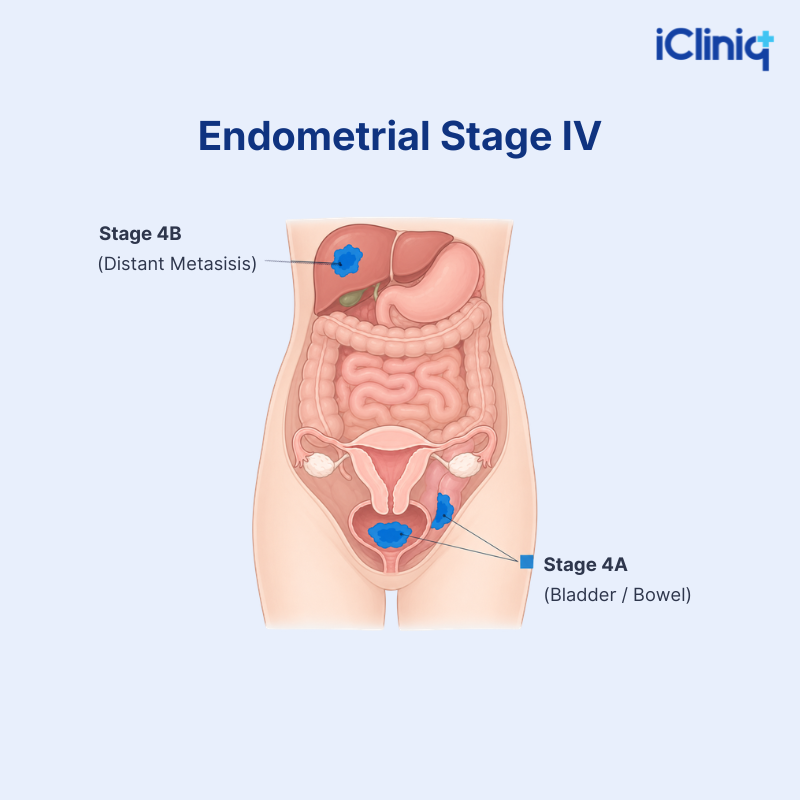
Endometrial cancer stage 4 occurs when the disease has spread beyond the uterus to surrounding tissue, lymph nodes, or other distant body parts, like the lungs, liver, or bones. The condition is regarded as advanced, but there are still some methods of treatment for it. Treatment can be done through a variety of procedures that can include surgery, chemotherapy, radiation therapy, hormone therapy, targeted therapy, or immunotherapy. The primary purpose of treatment is cancer prevention and symptom management.
What Are the Symptoms of Stage 4 Endometrial Cancer?
The symptoms of endometrial cancer at stage 4 may differ based on which organ is affected by cancer. Women may continue to have symptoms associated with the uterus. On the other hand, symptoms related to the lungs, bladder, bowels, or bones may also appear in other patients. Symptoms that usually characterize stage 4 endometrial cancer include:
-
Vaginal bleeding.
-
Vaginal bleeding following menopause.
-
Pelvic pain.
-
Persistent bloating.
-
Painful urination.
-
Persistent bloating.
-
Painful urination.
-
Problems having a bowel movement.
-
Fatigue.
-
Lack of appetite.
-
Unintended weight loss.
-
Difficulty breathing if the cancer spreads to the lungs.
-
Pain in the back or bones.
Additionally, swelling in the leg area can also occur due to lymph node obstruction. In advanced stages of endometrial cancer, the symptoms become prolonged and affect daily activities.
How Is Stage 4 Endometrial Cancer Diagnosed?
Various tests are available to diagnose stage 4 endometrial cancer, along with identifying its advancement. The correct diagnosis and uterine cancer staging are very important to select the best treatment methods.
The diagnosis process usually includes:
-
Interviewing and conducting a physical examination of the patient.
-
Pelvic examination.
-
Transvaginal ultrasound (a tiny probe is placed in the vagina to take pictures of the uterus, ovaries, and other organs in the pelvis).
-
Biopsy (small tissue sample is removed and examined for disease under a microscope) of the endometrium.
Upon confirmation of cancer, imaging studies may be suggested to assess if the cancer has metastasized (cancer spread) beyond the uterus. Such studies may include:
-
CT scan (it is a scan that doctors use to see how far the cancer has spread inside the body).
-
MRI scan (a magnetic resonance imaging scan provides detailed images of soft tissues and helps to determine if there is tumor involvement).
-
PET scan (a positron emission tomography scan can detect active cancer cells and see if the cancer has spread to other organs or lymph nodes).
-
Imaging of the chest cavity.
-
Testing blood levels.
If one is diagnosed with stage 4 uterine cancer, then the cancerous cells may have spread from the uterus to other adjacent and distant organs. Stage 4 uterine cancer can be classified according to the location of metastases. The appropriate classification will allow doctors to make an estimate of the prognosis and choose the best treatment options.
What Are the Treatment Options for Stage 4 Endometrial Cancer?
The treatment methods used for Stage 4 endometrial cancer vary depending on different aspects such as age, overall state of health, the type of cancer, and the extent of spread. In most cases, treatment is based on combining several methods rather than using one.
Treatment methods for endometrial cancer include:
-
Surgical Treatment: In the case of some women, the surgical removal of the tumor, uterus, ovaries, fallopian tubes, and other visible tumors can help cure cancer.
-
Radiation Therapy: It is an effective treatment that helps shrink the tumor, control bleeding, or relieve pain for patients. In the advanced stage of endometrial cancer, radiation therapy may be combined with chemotherapy.
-
Chemotherapy: In the treatment of stage 4 uterine cancer, chemotherapy is widely used as it can affect cancer cells across the body. The selection of drug combinations depends upon the patient’s health condition and the type of cancer.
-
Hormonal Treatment: Hormone treatment may benefit women whose tumors react positively to hormonal medications.
-
Immunotherapy and Targeted Therapy: Recent therapies for the management of stage IV endometrial cancer include immunotherapy and targeted therapy. Immunotherapy is when the immune system is boosted to attack the cancer cells, while targeted therapy refers to the inhibition of growth factors that facilitate tumor development.
-
Palliative Care: It aims at enhancing the quality of life by improving symptom management through the alleviation of discomfort, such as pain, fatigue, shortness of breath, and emotional distress during active cancer treatment.
What Is the Survival Rate for Stage 4 Endometrial Cancer?
Survival from stage 4 endometrial cancer is influenced by different factors, such as the type of cancer, the individual’s physical condition, how the individual responds to treatment, and metastatic location. Some women might respond very well to treatment, while others with a more advanced stage might not survive for many years. In estimating life expectancy in stage 4 endometrial cancer, some of the common factors taken into consideration include the following:
-
Age and overall health.
-
Spread of the cancer.
-
Cancer biology.
-
Reaction to immunotherapy or chemotherapy.
-
Any additional medical problems.
What Are the Complications of Advanced Endometrial Cancer?
Some of the possible complications associated with advanced-stage endometrial cancer include:
-
Chronic pelvic pain.
-
Extreme fatigue.
-
Anemia caused by internal bleeding.
-
Bowel obstruction.
-
Difficulty urinating.
-
Fractures of bones, if cancer affects them.
-
Breathing issues when the lungs are affected by cancer.
-
Accumulation of fluid in the abdominal cavity and lungs.
-
Increased risk of infections.
Conclusion
Endometrial cancer stage 4 is one of the most advanced stages of uterine cancer that calls for special attention and specific therapy. Any symptoms of irregular bleeding, pain in the pelvis region, fatigue, or breathlessness must not be ignored. Though stage 4 endometrial cancer is considered to be quite challenging to treat and is unlikely to be cured completely, there are more promising treatment methods of endometrial cancer emerging that help relieve symptoms and increase patients' life expectancy significantly. To get more information, consult a specialist for a detailed evaluation.
Key Takeaways
-
In stage 4 endometrial cancer, the disease has spread outside the uterus to other areas.
-
Vaginal bleeding, pelvic pain, weakness, and weight loss are typical symptoms of stage 4 endometrial cancer.
-
Imaging tests, biopsies, and correct uterine cancer staging aid in diagnosing stage 4 endometrial cancer.
-
The prognosis for stage 4 endometrial cancer depends on general health and how far the cancer has progressed.
-
Though curing stage 4 endometrial cancer can be very challenging, newer therapies might offer hope.

