Introduction:
According to the World Health Organization (WHO), at least 2.7 million adults die every year because they are overweight or obese. Being overweight also causes 42 percent of diabetes cases, 22 percent of heart disease cases, and seven to 40 percent of a few cancer cases.
Obesity usually happens when someone consumes more calories than they burn. This may occur due to a lack of exercise and eating high-calorie junk (unhealthy) foods. Obesity is a major health risk for an individual. The person is considered overweight if their body mass index (BMI) is 25 or higher. If the BMI is 30 or higher, the person is considered obese.
With over one in three people in the United States being overweight and childhood obesity rates globally increasing tenfold since the 1970s, we tend to reveal ten shocking facts about why people are gaining weight and how it impacts long-term health and well-being.
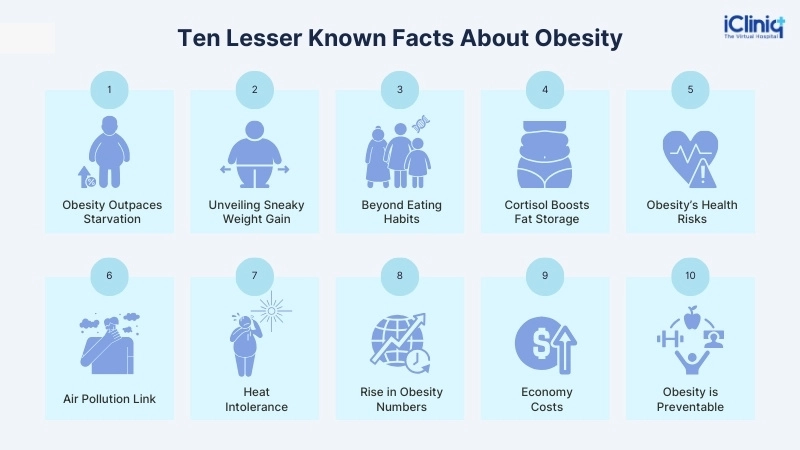
Ten Lesser Known Facts About Obesity
1. Obesity Outpaces Starvation - In most countries, obesity causes more deaths than starvation (hunger), largely due to socioeconomic factors. According to the WHO, the prevalence of overweight and obesity among children, teenagers, and adolescents aged 5 to 19 has skyrocketed from 5 percent in 1975 to over 20 percent in 2016. This percentage increase is similar for both genders, as per the reports.
2. Unveiling Sneaky Weight Gain - People are not born obese. Weight gain tends to creep up on individuals over time. According to Professor Claude Bouchard from the Pennington Biomedical Research Center, most people gain about two to four pounds annually for 15 to 25 years. This small, gradual weight gain makes it challenging to identify specific causes of obesity in individuals. Overeating, food preferences, and a sedentary (inactive) lifestyle all contribute to obesity. These factors are closely associated with the social environment and living conditions. Interestingly, the same diet and physical exercise routines can impact different people differently due to the combination of these factors.
3. Beyond Eating Habits - There are other causes of obesity. While lifestyle plays a role, genetics also matter. As Prof. J. Alfredo Martinez from the University of Navarra quotes, up to 70 percent of body weight differences are due to genetic factors. Obesity is not just about overeating. Other factors play a crucial role, too, such as genetics, human behavior, hormones, and basal metabolism. Some of these factors are beyond people's control. A gene called ankyrin-B has been discovered by recent studies as a crucial factor in obesity. The study found that variations in the ankyrin-B gene cause too much glucose to enter fat cells, making them grow twice as large.
Research also shows that physiological conditions like pregnancy and adolescence and medical conditions like PCOD (polycystic ovary disorder) increase the potential risk of obesity. Additionally, parents' dietary habits and genetics impact children's and adolescents' risk of becoming overweight. However, developing healthy eating habits during childhood can help prevent obesity and related lifestyle issues. The bacteria in the host’s gut can impact how their body stores fat and balances glucose levels, influencing weight gain.
4. Cortisol Boosts Appetite, and Fat Storage - Overeating (being gluttony) and growing fatter are the consequences of chronic stress disorder. This occurs because the body synthesizes cortisol, which increases appetite and fat storage.
5. Obesity’s Health Risks Beyond Obesity - Obesity is associated with more than 60 diseases and health issues, including:
- Depression.
- Fertility issues.
- Joint Pain.
- Breathing problems.
- Diabetes.
- Stroke.
- Heart disease.
- Sexual problems.
A BMI of 30 or higher is associated with a 93-fold increased risk of diabetes. Also, there are big risks to newborns and mothers due to maternal obesity. Obesity can also cause a significant increase in the number of birth defects. In addition, it has been found that obese mothers are more susceptible to giving birth to sufficiently bigger babies. This condition is known as macrosomia. It is a serious condition that is associated with higher rates of cesarean delivery (C-section) in such mothers. It also increases the mother’s risk of significant bleeding during childbirth. Also, the risk of bone fractures in newborn babies is significantly high.
6. Air Pollution Link - Recent research suggests that exposure to air pollution may also contribute to obesity by causing inflammation and metabolic changes in the body.
7. Heat Intolerance - Obese individuals often feel hotter and sweat more. Fat acts as an insulator, affecting the body's ability to regulate temperature.
8. Alarming Rise in Obesity Numbers - Since 1980, global obesity rates have nearly doubled. Currently, 2.3 billion children and adults are affected by overweight and obesity. According to the World Health Organization (WHO), one in eight people worldwide will be living with obesity in 2022. If current trends persist, 2.7 billion adults could be living with overweight or obesity by 2025. The fifth most common cause of death globally is obesity. One in every six children in the United States is overweight.
9. Economy Costs - The average medical bill for an obese person is nearly 1,500 dollars higher than that of a healthy-weight person. The economic impact of obesity is staggering. In the United States alone, the healthcare cost of obesity-related diseases is estimated to be over $190 billion. One of the lowest numbers of obesity cases in the United States of America is found in Colorado state. It leads the country in low obesity rates, followed by Hawaii, Washington, Massachusetts, and California. Americans consume 23 percent more calories than 50 years ago. Obese people miss 56 percent more work than people of average weight.
10. Obesity is Preventable - While some individuals may be more prone to obesity, it can still be prevented. By minimizing the fat, sugar, and salt intake in processed foods and making healthy choices, one can fight against obesity. Ensure that nutritious and healthy options are available, and commit to a healthy lifestyle with physical activities like yoga, walking, and exercise. The diet should include complex carbohydrates, fruits, green vegetables, healthy fats, and lean protein. Meanwhile, one should limit or restrict the intake of refined carbs, trans fats, and saturated fats.
Conclusion:
Obesity develops when the body consumes more calories than the amount it burns. These lesser-known interesting facts highlight the complexity of obesity, showing that many factors beyond a simple diet and exercise influence it. Understanding these can help develop and execute more potential therapeutic strategies for preventing and tackling this global medical problem.