Table of Contents
Introduction
Obesity is a growing pandemic in the country. Obese people are at a greater risk of having reduced mobility and face severe social stigma that comes with obesity. It also calls for amendments in policies that could bring down the socioeconomic burden inflicted by obesity. The following provides helpful data, statistics, and facts on obesity and its effects on the US (United States) population.
Obesity Statistics
-
It has been reported that 93 million Americans suffer from obesity in the US, which is more than 27% of the entire US population.
-
Obese people are at a greater risk of having reduced mobility and face severe social stigma that comes with obesity.
-
Obesity and socioeconomic level are closely related. Minority communities with low incomes are more prone to be overweight and experience obesity at a higher rate.
-
In 2001, the top five obese counties were Mississippi, West Virginia, Michigan, Kentucky, and Indiana.
-
The annual death rate of obesity is close to 112,000 (3% of all US deaths).
-
Forty percent of adults in the US are not involved in recreational physical activity.
Severe Obesity Statistics
-
Overweight or severe obesity dramatically raises the risk of several other diseases, including osteoarthritis, type 2 diabetes, hypertension, heart disease, and stroke.
-
Severe obesity is exceeding 100 pounds above their ideal body weight or having a body mass index (BMI) of 40 or above.
-
Environmental, genetic, and behavioral factors contribute significantly to severe obesity.
-
In 2002, 25 percent of people suffering from extreme obesity were treated for six or more obesity-related diseases.
Childhood Obesity Statistics
-
Obesity affects around 9 million adolescents (children and teenagers aged 6 to 19).
-
Early-life childhood obesity predisposes children to obesity and severe obesity in adulthood. Obese children are 70 percent more predisposed to stay obese when they turn adults.
-
Environmental factors, including increased digital time and a lack of physical activity, have contributed to a more sedentary lifestyle.
-
Today, children with obesity are considerably more likely to develop type 2 diabetes.
-
Childhood obesity rates have been highest among African Americans, Hispanics, and American Indians. About 25 percent of children belonging to these ethnic groups suffer from obesity.
Sixteen Potential Health Impacts of Obesity
Obesity is not just about carrying extra weight; it is associated with certain risks that can significantly affect health and well-being. Being obese increases one's susceptibility to health crises, including diabetes, heart disease, infertility, asthma, and many more. It could even hamper mental health. Therefore, understanding the potential risks of obesity is important for maintaining a balanced weight and enhancing overall well-being.
Here are some of the potential health challenges that obesity could bring out:
1. Type 2 Diabetes:
An increase in blood glucose levels marks type 2 diabetes. About 90 percent of people diagnosed with type 2 diabetes are classified as obese or overweight. High levels of glucose in the blood have the potential to cause several health complications, such as renal disease, heart disease, stroke, nerve damage, and vision problems.
2. High Blood Pressure:
High blood pressure, also known as hypertension, develops when blood moves through the bloodstream with excessive force. Being overweight can raise blood pressure because this necessitates the heart exerting extra effort to circulate blood to every cell in the body. Additionally, kidney damage from excess fat might affect blood pressure regulation. Hypertension may cause strain on the heart, affect blood vessels, thereby escalating the likelihood of heart attacks, strokes, and kidney disorders, and death.
3. Heart Diseases:
Heart disease refers to a variety of health conditions affecting the heart, including heart failure, heart attack, angina, and an irregular heart rhythm. Being overweight or obese significantly elevates the probability of having heart-related disorders such as high blood pressure, high cholesterol, and high blood glucose.
4. Stroke:
Stroke results from blockage or rupture of a blood vessel in the brain or neck, which stops blood flow to the brain segment that the blocked vessel supplies. The stroke can cause brain damage affecting the body in various degrees, from speech impairment to paralysis.
5. Metabolic Syndrome:
Metabolic syndrome represents a collection of related disorders that amplify the risk of cardiovascular disease, diabetes, and stroke. Three or more of the following symptoms must be present for a diagnosis of metabolic syndrome.
-
Large waist measurement.
-
Elevated blood triglyceride level.
-
High blood pressure.
-
Elevated blood glucose levels while fasting.
-
Low levels of HDL or "good" cholesterol.
6. Fatty Liver Diseases:
Fatty liver disease arises when excess fat deposits in the liver, resulting in cirrhosis, severe liver damage, or even liver failure. These conditions include nonalcoholic steatohepatitis (NASH) and nonalcoholic fatty liver disease (NAFLD). Overweight or obese individuals are more frequently affected by NAFLD and NASH. NAFLD and NASH can also occur in people with metabolic syndrome, insulin resistance, high blood fat levels, type 2 diabetes, and certain genes.
7. Cancers:
Adipose (fat) tissue produces a variety of proteins and hormones called adipokines. Leptin is one adipokine that is overproduced in obese people and may stimulate the proliferation of cancer cells.
8. Mental Health Problems:
Obesity can have an impact on both physical and mental health and lead to the chance of developing:
-
Chronic stress.
-
Concerns with body image.
-
Low self-esteem.
-
Depression.
-
Eating disorders.
-
Sexual function problems.
9. Sexual Health Problems:
Obesity may also raise the risk of experiencing issues with sexual functions. Obesity and being overweight increase the risk of erectile dysfunction (ED), a condition affecting male sexual function in which men cannot maintain or get an erection adequately to fulfill sexual activity. Research has examined the potential effects of obesity on female sexual function, including the possibility of causing issues with orgasm, lack of desire, inability to get or maintain arousal, and pain during intercourse.
10. Fertility Problems:
Obesity can lead to reduced sperm count and quality. Obesity in women is associated with issues related to ovulation and the menstrual cycle. Additionally, obesity can affect the effectiveness of several infertility therapies or procedures.
11. Pregnancy Problems:
Being overweight and obese increases the susceptibility to health complications during pregnancy, impacting both maternal and fetal health. Pregnant women who are obese may have a greater chance of:
-
The development of gestational diabetes (diabetes occurring during pregnancy).
-
Preeclampsia, or high blood pressure during pregnancy, if not addressed can lead to serious health consequences for the expectant mother and fetus.
-
Needing a cesarean delivery or c-section and prolonged recovery time postpartum (after giving birth).
-
Surgical and anesthetic complications, particularly among those with significant obesity.
-
Continued weight gain or maintaining to be overweight or obese after the baby is born.
12. Asthma:
Asthma is a long-term, chronic lung disorder that damages the airways. Air is transported into and out of the lungs through tubes called the airways. Being obese raises the chances of getting asthma, worsens the symptoms, and makes it more difficult to control symptoms.
13. Sleep Apnea:
Sleep apnea is a prevalent issue that may arise while sleeping. Sleep apnea is identified by blockage of the upper airway, which results in irregular or intermittent cessation of breathing. Untreated sleep apnea heightens the risk of various health issues, including heart disease and diabetes.
14. Osteoarthritis:
Osteoarthritis is a prevalent, long-term condition that impairs movement and produces pain, edema, and stiffness within the joints. Obesity correlates with an increased risk of osteoarthritis in the hips, knees, and ankles.
15. Gout:
Gout is a type of arthritis defined by joint pain and swelling. Uric acid crystal buildup in the joints
leads to the development of gout. Obese males with uncontrolled hypertension and a diet rich in purine are at risk of gout.
16. Kidney Disease:
Obesity is linked to higher risks of diabetes and high blood pressure, which are the main culprits
of chronic kidney disease (CKD). Obesity may augment the risk of getting CKD and worsen its progression even in the absence of diabetes or high blood pressure.
Effect of Obesity on Mental Health
Mental health challenges affect treatment and prognosis as they take a toll on a person to make poor dietary choices and eat more food to cope with them, and in turn, end up gaining weight. These emotional challenges include:
-
Mood swings.
-
Low self-esteem.
-
Body image issues.
-
Judgment and stigma.
Moreover, there are various mental health conditions, such as stress, anxiety, depression, and eating disorders, which lead to carbohydrate cravings and thus, cause increased weight. Therefore, for all these reasons, most obesity treatment teams also include mental health experts to support patients with these issues.
Fortunately, losing weight can enhance mental well-being, especially for the ones shedding a significant amount, like those who have undergone bariatric surgery. However, some people have recurring mental health issues or develop new ones after losing weight.
Even if weight is regained, psychological struggles do persist. This stresses the significance of physicians assessing mental health at the start of treatment, tracking changes during weight loss, and being alert to any worsening symptoms if the lost weight is regained.
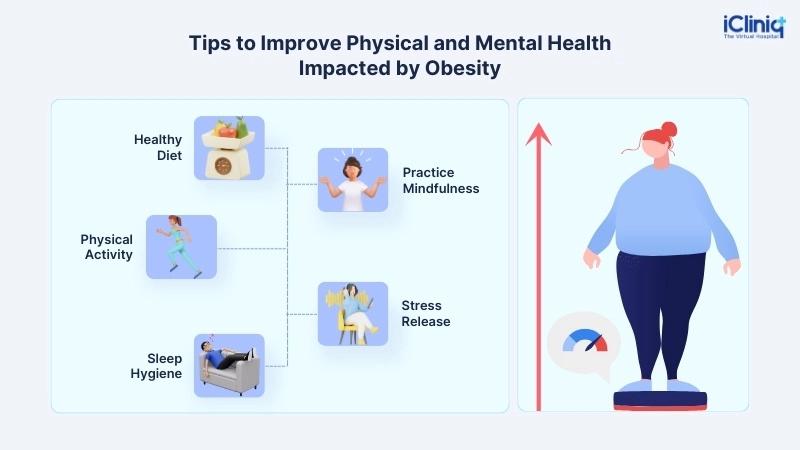
Following are some tips to improve physical and mental health by making certain lifestyle changes:
-
Healthy Diet: Food affects serotonin production, which can elevate a person’s mood, appetite, and sleep. A healthy diet must consist of whole grains, fruits and vegetables, oils and healthy fats, fat-free or low-fat dairy, limited saturated and trans fat, processed food, sugar, and sodium, and a good amount of protein from eggs, meat, soy, nuts, and seeds.
-
Physical Activity or Movement: Physical and mental health stays sound with some daily physical activity, and also decreases the risk of heart attack, stroke, high blood pressure, and diabetes.
-
Sleep hygiene: Not getting enough sleep greatly impacts one’s physical and mental health. This further leads to binge eating due to mental stress due to sleep deprivation, and thus, causes weight gain. Therefore, one must get eight to nine hours of good sleep, and ensure good sleep habits, such as:
-
Sticking to regular sleep and awake time daily.
-
Limit caffeine intake in the morning and post-afternoon.
-
Regular morning exercise.
-
Take a bath or indulge in meditation before going to bed.
-
Avoid mobile phones and other devices before going to bed.
-
White noise can be considered for relaxation.
-
Avoid bright lights before bed.
-
Bedrooms must be kept clean, comfortable, and dark before sleeping.
-
-
Practice Mindfulness. Mindfulness is a type of meditation that helps keep a person aware of the present moment or situation and decreases depression, anxiety, and binge eating. One can also engage in mindful eating practice, which increases awareness about foods and decreases or slows down eating patterns or processes.
-
Stress Release: Eating is a way for many people to cope with stress; therefore, it should be managed effectively by indulging in activities that help one manage their stress. These activities may include:
-
Chatting or talking to friends and family.
-
Book reading.
-
Expressing feelings through music, art, writing, and music.
-
Exercise.
-
Traveling or spending time alone in nature.
-
The Economic Impact of Obesity
Overweight and obesity is a personal as well as a nationwide economic crisis. The most notable are the direct medical expenses related to treating disorders linked to obesity. Compared to people of lower weight, obese people are much more likely to need home medical care, outpatient appointments, lots of medication, be admitted to the hospital, and have surgery. The expenses of care and hospital stays are higher for obese patients.
-
The economic effects of obesity involve indirect expenses associated with decreased or stopped productivity and human resources.
-
Research from several different nations demonstrates that people who are obese miss more work days due to absenteeism and perform less well at work while they are present (presenteeism).
-
Obesity also raises the risk of unemployment and reduces income.
-
Premature deaths from conditions linked to obesity suggest a loss of future economic contributions.
-
Studies have shown that obesity has significant negative economic effects in certain nations. Estimates of medical expenses and lost productivity range from 0.13 percent of GDP in Thailand to 9.3 percent in the USA.
In 2008, obesity cost the US $147 billion in medical expenses, and this number is expected to keep rising. It is not just about healthcare—obesity also leads to $4.3 billion in lost productivity due to absenteeism. By 2018, obesity-related medical costs made up 8.5 percent of total healthcare spending. By 2030, these costs could jump to $48 to $66 billion annually. To meet the demand for healthier options, the food industry is shifting towards more nutritious products, with a global market projected to reach $1 trillion by 2027. These numbers show the urgent need for action to address obesity through healthcare, workplace policies, and better consumer choices.
Effect of Gender-Reaffirmation Hormonal Drugs on Causing Obesity
Transgender individuals tend to use gender-affirming hormone therapy (GAHT) to align their physical appearance with their gender identity, focusing on improving their quality of life. While GAHT can lead to low long-term risks, transgender women can have a slightly higher chance of experiencing venous thromboembolism, cardiovascular disease (CVD), and cerebrovascular accidents (CVA). In contrast, transgender men may encounter acne, polycythemia, and alopecia.
Guidelines from the Endocrine Society and World Professional Association for Transgender Health suggest that the hormone levels be maintained within the expected range for the affirmed gender and avoid excessive doses of GAHT to reduce these risks.
However, research on how BMI changes in transgender individuals undergoing GAHT is scarce, and studies are still ongoing. Some studies suggest that transgender women have experienced a remarkable increase in BMI after 12 months of GAHT, while transgender men show higher BMI levels after six months and up to 54 months of GAHT.
Nevertheless, more long-term studies, especially in the United States, are deemed necessary to gain a better insight into GAHT's impact on BMI.
Conclusion
Globally, addressing obesity requires comprehensive strategies integrating healthcare policies, societal norms, and public education. Despite its pervasive challenges, initiatives promoting healthier lifestyles and supportive environments show promise in reducing obesity rates. Encouragingly, ongoing research and innovative interventions aim to enhance prevention and treatment outcomes, fostering a healthier future for populations worldwide. By prioritizing prevention, promoting physical activity, and improving nutritional education, we can collectively combat obesity's health risks and economic burdens, ensuring sustainable well-being and quality of life for generations to come.