Table of Contents
- 1Understanding Angina
- 2What Is Stable Angina?
- 3What Is Unstable Angina?
- 4What Is the Difference Between Stable and Unstable Angina?
- 5What Are the Common Symptoms of Stable and Unstable Angina?
- 6What Are the Common Causes of Stable and Unstable Angina?
- 7What are the Risks and Complications of Stable and Unstable Angina?
- 8How Are Stable and Unstable Angina Treated?
- 9Conclusion:
Understanding Angina
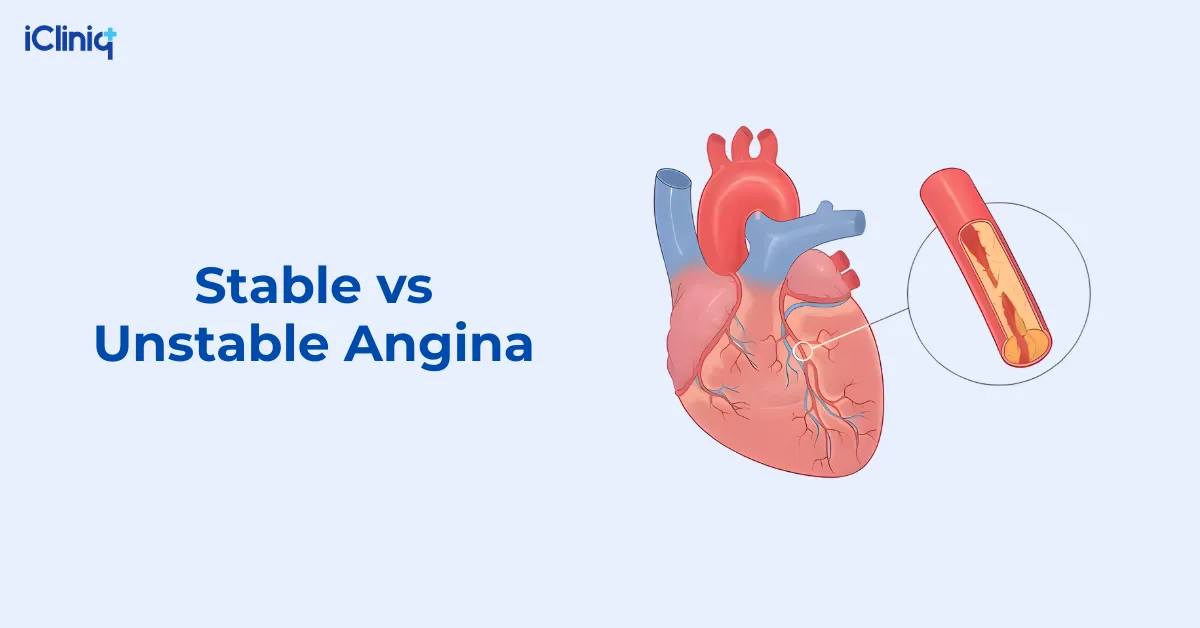
Angina means chest pain. It happens when the heart does not get enough oxygen-rich blood.
This is because the blood arteries are too narrow. Angina is a warning sign that the heart is not very healthy, and there is a higher chance of a heart attack. There are three types of angina. One is stable angina, and the second one is unstable angina. The third type is rare and is known as variant angina (also referred to as Prinzmetal’s angina). This type occurs when the heart’s blood vessels constrict, and it can happen even when a person is at rest.
What Is Stable Angina?
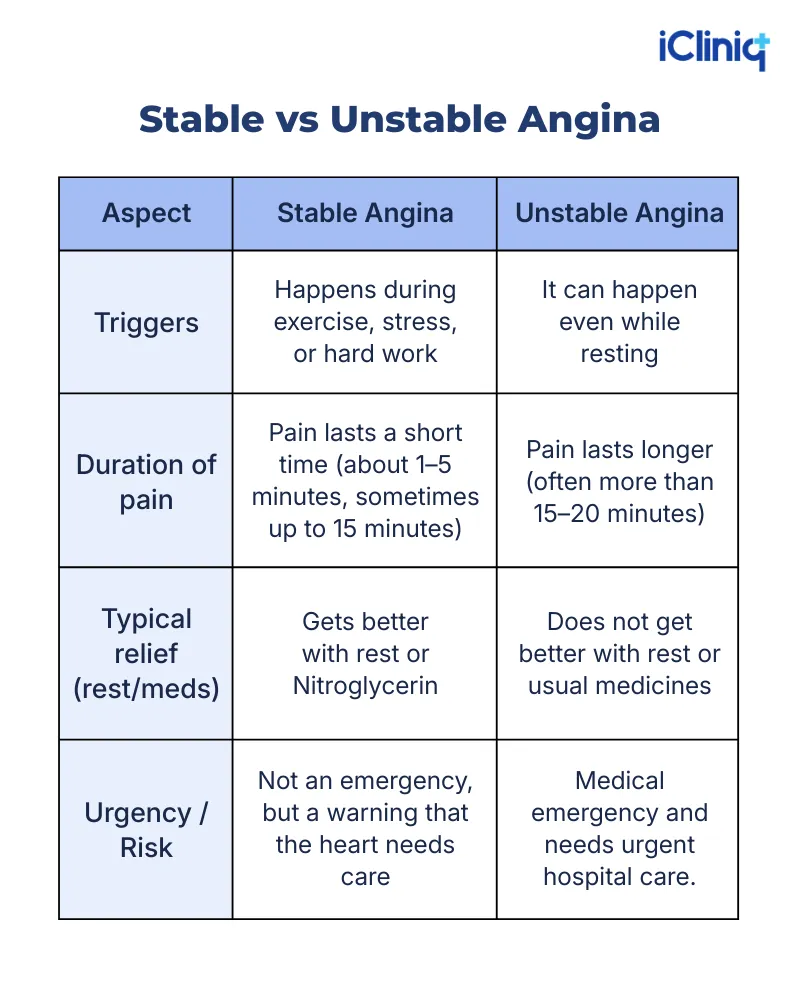
Stable angina is a common kind of chest pain. It happens when the heart does not get enough oxygen-rich blood. This is because the heart’s blood vessels become narrow due to a sticky buildup called plaque. It usually occurs when someone is active, stressed, or exposed to cold temperatures. The pain often subsides after resting or taking a medication called nitroglycerin, which helps dilate the blood vessels. This type follows a pattern. It happens in the same way, lasts about the same time, and has the same triggers for at least two months.
What Is Unstable Angina?
Unstable angina is a serious and dangerous chest pain. It happens when the heart suddenly gets less blood. This can be caused by plaque breaking open in narrow blood tubes or a blood clot forming. This is an emergency. The pain is unpredictable and can happen even when a person is resting. It is a warning sign of a high risk of a heart attack. The pain is usually worse and does not get better with rest or regular medicine. Unstable angina needs immediate treatment, like oxygen, special medication, or sometimes surgery.
What Is the Difference Between Stable and Unstable Angina?
Stable and unstable angina are both chest pains that happen when the heart does not get enough blood. But they are different in how serious they are. Stable angina is not an emergency, whereas unstable angina is very serious and is an emergency.
What Are the Common Symptoms of Stable and Unstable Angina?
Both stable and unstable angina have similar symptoms. However, unstable angina is stronger and lasts longer.
Common symptoms include:
-
Chest discomfort that feels like tightness, pressure, burning, squeezing, or a heavy feeling in the chest.
-
Pain spreads to the shoulders, arms, neck, or jaw.
-
Shortness of breath.
-
Other symptoms include sweating, dizziness, nausea, indigestion, cold and clammy skin, or extreme tiredness.
What Are the Common Causes of Stable and Unstable Angina?
Both stable and unstable angina happen because of coronary artery disease, when sticky plaque builds up inside the heart’s blood vessels.
The main difference is how the problem occurs:
-
Stable angina: It occurs when the heart needs more oxygen (like during exercise or stress). Due to plaque buildup, narrow blood vessels cannot send enough blood to the heart.
-
Unstable angina: Happens when plaque suddenly breaks open. This causes a blood clot to form, and the clot may partly or fully block the blood flow to the heart.
What are the Risks and Complications of Stable and Unstable Angina?
1. Risk factors of stable and unstable angina
Both stable and unstable angina share many common risk factors. These things can make heart problems more likely:
-
Coronary artery disease (plaque buildup in the blood vessels).
-
High blood pressure.
-
High cholesterol.
-
Diabetes.
-
Obesity.
-
Not getting enough exercise.
-
Smoking or using tobacco damages blood vessels.
-
Too much alcohol or drug use.
-
Older age (men over 45, women over 55). Men have a higher risk earlier, while women’s risk increases after menopause.
-
Family history of heart disease.
-
Emotional stress.
-
Unhealthy diet.
These risk factors can raise the chance of angina and heart attacks, so taking care of the heart is very important.
2. Complications of stable and unstable angina
Stable angina can lead to serious complications over time, such as:
-
Turning into unstable angina.
-
Heart attack (sudden stoppage of blood flow to the heart).
-
Sudden cardiac death.
-
Heart failure (the heart becomes weak and cannot pump enough blood).
-
Abnormal heartbeats (irregular rhythms).
-
More heart-related problems over time.
Unstable angina is very serious and can cause big problems, such as:
-
Heart attack.
-
Heart failure.
-
Ventricular arrhythmias (abnormal heart rhythms in the lower parts of the heart).
-
Cardiac arrest (the heart suddenly stops beating).
-
Stroke (blood flow to the brain is stopped).
How Are Stable and Unstable Angina Treated?
Stable angina can be managed with healthy habits and medicines.
1. Healthy habits (lifestyle changes):
-
Healthy diet.
-
Regular exercise.
-
Healthy weight management.
-
Avoiding smoking.
-
Keeping blood pressure, cholesterol, etc., under control.
-
Reducing stress.
-
Getting vaccinations (like flu shots).
2. Medicines:
-
Nitroglycerin.
-
Beta blockers or calcium channel blockers.
-
Statins (lower cholesterol).
-
Aspirin (prevents blood clots).
-
ACE (angiotensin-converting enzyme) inhibitors (to manage blood pressure).
3. Procedures (if needed):
-
Angioplasty (opens a narrow artery).
-
Stent (keeps the artery open).
Unstable angina is very serious and needs quick medical help in a hospital.
1. What doctors do right away:
-
Immediate hospitalization with continuous heart monitoring.
-
Strong medicines, like Heparin (blood thinner), IV nitrates (to relieve chest pain), antiplatelets (to stop clots), beta blockers (to help the heart work less), and statins (to lower cholesterol).
2. Special procedures:
-
Angioplasty (opens narrow or blocked arteries).
-
Stent.
-
Coronary artery bypass graft (CABG) surgery (rerouting of blood using healthy vessels).
3. Long-term care:
-
Even after treatment, people need healthy lifestyle changes like eating well, exercising, not smoking, and managing stress.
Conclusion:
Angina is chest pain that happens when the heart does not get enough oxygen-rich blood. There are two types: stable and unstable. Stable angina is less serious and usually lasts a few minutes. Unstable angina is more severe, can last more than 15 minutes, and is a medical emergency. Both types are warnings of heart disease and need long-term care. This includes healthy lifestyle changes, medicines, and sometimes surgery to keep the heart healthy. If your chest suddenly hurts and it keeps getting worse, call your local emergency number right away. If you want more help or have questions, you can talk to a heart specialist.
Key Takeaways:
-
Both stable and unstable angina cause chest pain, but they are different: Stable angina is predictable and usually happens during exercise or stress. Unstable angina is unpredictable and can happen even when resting.
-
Stable angina is the most common type of chest pain. Unstable angina doesn’t happen as much, but it’s more serious and can be dangerous.
-
Stable angina pain goes away when you rest or take a medicine called nitroglycerine. Unstable angina is very dangerous and needs an emergency hospital visit.

