Table of Contents
What Is Lower Right Back Pain?
Feeling a sharp pain on the right side of your lower back and wondering why it is happening? Pain in this area typically occurs when a muscle becomes strained or a nerve near the spine becomes pinched. However, sometimes that pain is not just muscle-related; it can originate from an internal organ located deeper within the body. The majority of the organs are at the front; however, the pain may radiate to the back, sharp and deep. The ovaries, intestines, and appendix share nerve pathways with the muscles and ligaments in the lower back; therefore, pain can occur in this area. So, if any of these organs are affected, especially those on the lower right side, it can result in pain in the lower right part of the back as well.
Most Common Causes
-
Physical exertion: Lifting heavy objects improperly or making sudden movements can strain or sprain the muscles in the lower right back. This causes stiffness, soreness, and difficulty in movement. Sometimes the pain does not appear immediately but instead shows up hours later, making it easy to overlook what actually caused it.
-
Bulging discs: When the discs between the spinal bones bulge or rupture, they can press on nearby nerves and cause pain. This pressure may also cause tingling, numbness, or weakness that travels down the leg. The discomfort can worsen while sitting, bending, or twisting.
-
Osteoarthritis: Problems such as osteoarthritis or spinal stenosis affect the lower back and cause continuous discomfort. Over time, even the protective cushioning in the joints wears down, making simple tasks painful. This type of pain often gets more painful with age and may flare up after long periods of standing or walking.
-
Kidney stones: A kidney stone moving through or getting stuck in the right ureter can cause sharp, intense pain in the lower back. The pain may come in waves and can spread to the abdomen or groin. Nausea, vomiting, or changes in urine color may also happen along with the back pain.
-
Infections: Urinary tract infections or problems like appendicitis may cause pain in the lower right side of the back. These conditions may bring symptoms such as fever, burning during urination, or abdominal discomfort. In such cases, early medical attention is important to prevent complications.
Lower Right Back Pain Diagnosis
Doctors usually run a few tests to figure out what is causing the pain.
-
Medical evaluation: It is important to get lower right back pain checked by a healthcare professional. A proper medical evaluation helps identify the real cause and ensures the right treatment. Just a minor muscle strain could be associated with an underlying medical issue. Therefore, seeking early expert guidance can prevent worsening of the problem. Early evaluation also helps avoid unnecessary worry and provides better treatment options.
-
Diagnostic tests: To better understand the problem, doctors may recommend tests such as X-rays, MRI scans (magnetic resonance imaging), CT scans (computed tomography scans), and blood or urine tests. These tests reveal what is happening inside the body and help in determining the exact reason for the pain. Imaging tests reveal issues such as disc problems or joint changes, while lab tests help detect infections or kidney-related concerns. Together, they help doctors create a targeted treatment plan that fits the specific condition.
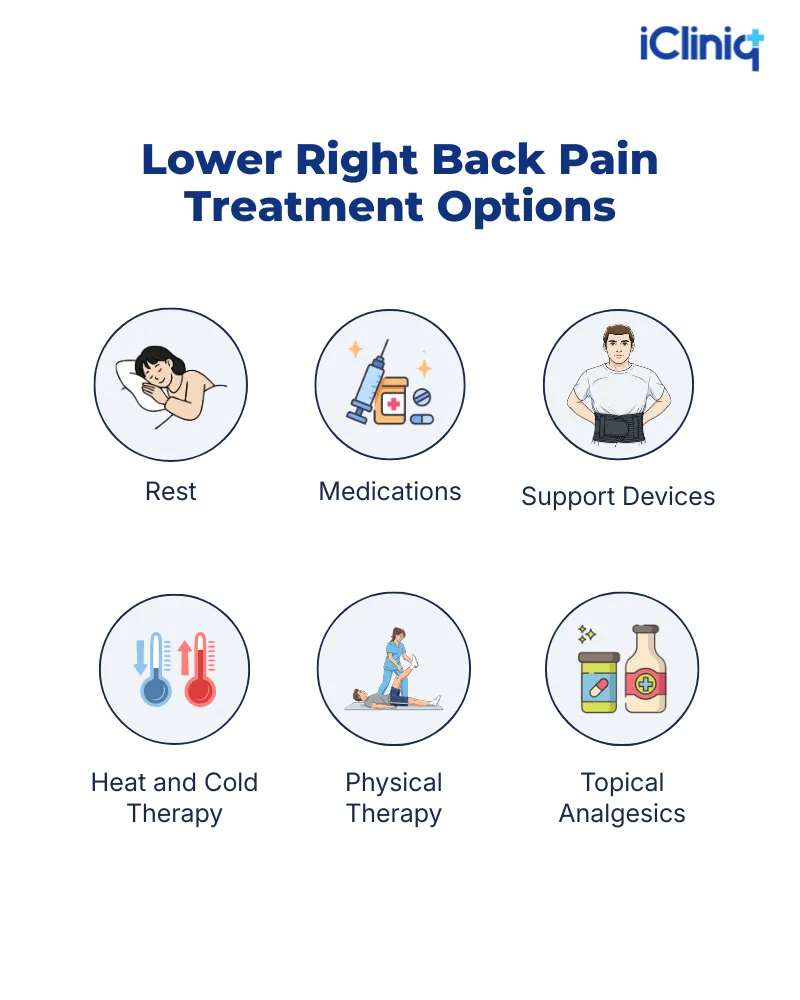
Lower Right Back Pain Treatment Options
There are various ways to treat lower right back pain:
-
Medications: Doctors may prescribe medications such as NSAIDs (non-steroidal anti-inflammatory drugs) or muscle relaxants to alleviate lower back pain. It must be used only under a doctor’s supervision, as it may have side effects. These medicines help reduce inflammation, relax tight muscles, and make daily activities more comfortable. However, long-term use is usually avoided, so regular follow-ups with the doctor are helpful to ensure safe and effective treatment.
-
Interventional treatments: In cases of severe or persistent pain, doctors may recommend epidural steroid injections. These help reduce inflammation and offer temporary relief. They are specifically useful when the pain is caused by nerve irritation or swelling around the spine. While the effect may not be permanent, it can provide enough relief to continue physiotherapy or daily routines more comfortably.
-
Surgical options: For very severe cases where other treatments have not worked, surgery may be considered. Surgeries such as laminectomy, discectomy, or spinal fusion aim to relieve pressure and improve movement. Surgery is basically the last option after trying all conservative treatments. It is referred to only after a detailed examination to ensure it is the best choice. The goal is to minimize pain, improve mobility, and restore quality of life when other methods fail to help.
Lower Right Back Pain Prevention
With a few preventive steps, it is possible to reduce the chances of developing lower right back pain:
-
Maintaining good posture: Keeping the right posture while sitting, standing, or lifting heavy items helps protect the lower back. Good posture reduces unnecessary strain on the muscles and joints. Paying attention to your lower right back when breathing, sitting, lying down, and walking, as well as bending the knees while lifting heavy weights, can actually make a big difference. These small steps prevent injuries and keep the back feeling supported all day.
-
Regular exercise: It is essential to stay active with exercises like walking, yoga, or swimming, as they can help keep the lower back strong and flexible. Regular movement improves blood flow, reduces stiffness, and strengthens the core muscles that support the spine. Even a few minutes of stretching each day can help prevent discomfort. Making exercise a routine also promotes better posture and overall back health.
-
Weight management: Maintaining a healthy weight is crucial because excess weight can put additional pressure on your lower back. Excess weight, especially around the abdomen, shifts the body’s balance and increases strain on the spine. By maintaining a healthy weight through mindful eating and regular physical activity, it becomes easier to move comfortably and reduce the risk of back pain in the future.
When to See a Doctor?
See a healthcare provider soon if your lower right back pain is very strong, doesn’t go away, or keeps getting worse. You should get checked even sooner if the back pain comes along with any of these symptoms:
-
Pee that looks bloody or cloudy, has a strong smell, or causes pain when you pass it.
-
Blood or pus in your stool.
-
Fever.
-
Vomiting.
-
Nausea.
-
Pain that spreads to the groin.
-
Changes in the menstrual cycle.
-
Pain during or after sex.
Conclusion
Have you ever wondered why that nagging pain on the lower right side just won’t go away? Lower right back pain can occur for many reasons - sometimes it is just a muscle strain, and other times it involves the spine or internal organs. Early identification of the symptoms and seeking a timely medical evaluation make it easier to identify the exact issue. With the right treatment, many people can manage the pain effectively and prevent future discomfort. Paying attention to warning signs and getting timely care ensures better recovery and long-term back health. For any further guidance, please consult our orthopedic surgeon at iCliniq.
Key Takeaways
-
Lower right back pain can arise from muscles, nerves, or even internal organs, much like warning lights alerting to issues under the hood of a car.
-
Knowing the possible causes, recognizing warning signs, and understanding when to seek medical help helps prevent complications and long-term discomfort.
-
It is vital to follow the treatment plan, including medications, exercises, other therapies, and regular monitoring to keep your back healthy.
-
To manage and prevent pain effectively, you need consistent proper posture habits, regular physical activities, weight management, and guidance from healthcare professionals.