Table of Contents
Introduction:
Picture a moment when you are choking on food or a sudden cough erupts as you accidentally swallow the wrong way. These seemingly small incidents can sometimes trigger a much more serious condition—aspiration pneumonia. The lungs, which are supposed to be free from unwanted substances, end up housing things that should not be there, like food, liquid, or even stomach acid. As it invades through this unexpected passage, it is going to trigger inflammation and infections, making the lungs susceptible to further complications. Most individuals do not have a clue of the fact that aspiration pneumonia has become a rather common, overlooked threat that might affect anyone healthy, as well as even individuals in hospitals. It is especially dangerous because it may worsen very fast if not addressed and, thereby, cause additional conditions like sepsis or failure in respiration and be deadly in severe instances. The prevention of the worst complications from arising is facilitated with early diagnosis and treatment of the condition.
What Is Aspiration Pneumonia?
Aspiration pneumonia is a disease that only arises once huge volumes of fluid or food have been inhaled. In fact, even a tiny amount of foreign material, such as saliva or bacteria from your mouth, can be enough to cause a serious lung infection. The damage occurs when substances that should never be in your lungs find their way there, either accidentally or because the body's protective mechanisms are compromised. People who have trouble swallowing or a weakened gag reflex are especially vulnerable. This makes aspiration pneumonia more common in patients with previous health conditions or in scenarios such as sedation or coma. Also, due to inefficiency, ineffective swallowing, and airway protection, patients with illnesses like Parkinson's disease, stroke, or even Alzheimer's disease are more susceptible.
The three types of aspiration categorized are:
-
Aspiration Due to Bacteria: Classic pneumonia.
-
Aspiration Due to Oil: Rare but seriously known as lipoid pneumonia.
-
Foreign Object Aspiration: Usually due to obstruction and infection.
What Leads to Aspiration Pneumonia?
Aspiration pneumonia occurs due to a chain of unlucky events that might happen in numerous circumstances. Inhaling foodstuff, liquid, or vomit into the lungs causes infection due to the presence of harmful bacteria that have been aspirated. Among the risk conditions and activities are:
-
Vomiting: When stomach contents enter the lungs.
-
Swallowing Disorders: Conditions such as stroke or neurological disorders that affect swallowing increase your risk.
-
Dental Procedures: Poor oral hygiene or dental procedures can allow bacteria to enter the lungs.
-
Breathing Devices: Medical tubes or ventilation equipment can sometimes increase the chance of aspiration.
-
Gastroesophageal Reflux Disease (GERD): When stomach acid or food particles move from the stomach into the lungs.
-
Cognitive or Unconscious States: If you are not fully conscious, you may not be able to protect your airway from substances entering your lungs.
What Are the Symptoms of Aspiration Pneumonia?
Aspiration pneumonia does not always announce itself right away. In many cases, its symptoms can develop slowly and intensify over time. Look out for signs such as:
-
Persistent Coughing: Often accompanied by thick, yellow, or green mucus.
-
Fever and Chills: Classic signs of an infection.
-
Chest Pain: Feeling like something is stuck in the middle of your chest or squeezing tightly.
-
Dyspnea: Dyspnea is difficulty breathing or catching breath; shortness of breath.
-
Rales: Sounds crackling or rattling while breathing. Sometimes referred to as "rales."
-
Dizziness or confusion.
-
Low oxygen level.
-
Low Blood Pressure: may indicate a very severe and active infection
Who Is at Risk of Aspiration Pneumonia?
Aspiration pneumonia is an equal opportunity threat. However, there are those who are at greater risk for this. These may include:
-
Choking: Choking or frequent coughing during meals.
-
Deglutition Issues: Difficulty in swallowing due to neurological disorders or aging.
-
Dental or Oral Health Issues: Poor oral hygiene or dental work that leaves bacteria in your mouth.
-
Breathing Tubes or Ventilators: Common in hospitalized patients.
-
Acid Reflux (GERD): If left untreated, this condition can lead to aspiration.
-
Altered Mental States: Confusion, sedation, or unconsciousness can reduce your ability to protect your airway.
How Is Aspiration Pneumonia Diagnosed?
Early detection of aspiration pneumonia is diagnosed with a series of diagnostic aids by doctors. These include the following:
-
Blood Tests: Infection signs and oxygen levels checked.
-
Chest X-ray: Detection of fluid or inflammation within the lungs.
-
Sputum Culture: Examination of mucus to determine which bacteria cause infection.
-
Bronchoscopy: The process allows a doctor to visualize the lungs and airways when necessary, helping him to spot foreign objects.
-
Thoracentesis: A procedure in which fluid is aspirated from the lungs to aid in the diagnosis of infection or relief of breathing.
How to Treat Aspiration Pneumonia?
Fortunately, aspiration pneumonia is curable with appropriate interventions. Early diagnosis and timely treatment can avoid serious complications. Here is how it is usually treated:
-
Antibiotics: The mainstay of treatment is that antibiotics target the bacteria causing the infection.
-
Oxygen Therapy: For people whose oxygen saturation level drops, this therapy would provide the appropriate assistance.
-
Ventilator: For patients with compromised breathing abilities, a ventilator may be needed to ensure they can breathe properly.
How to Prevent Aspiration Pneumonia?
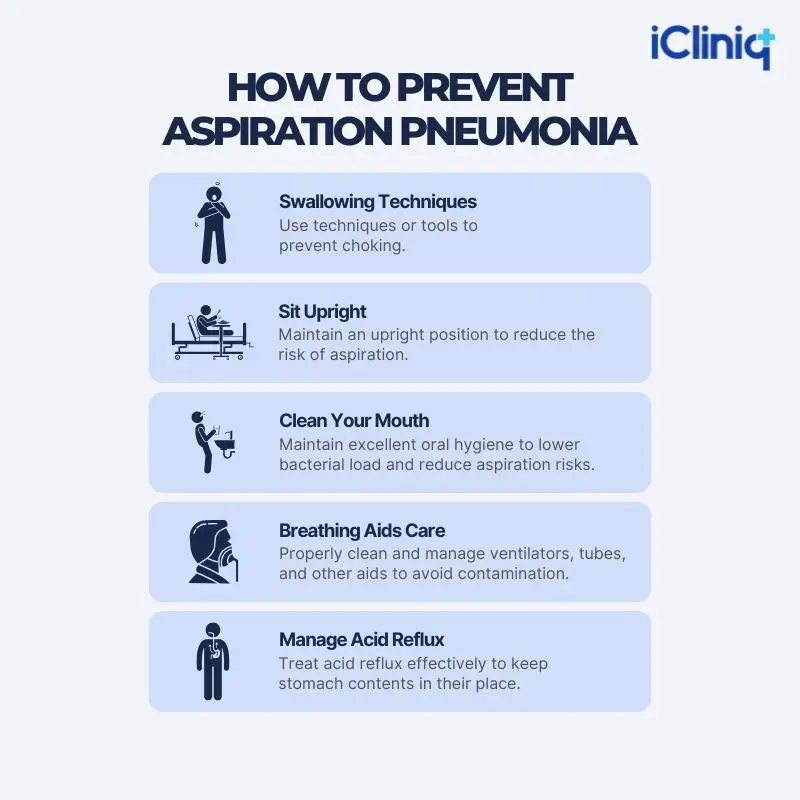
Indeed, as it goes, an ounce of prevention is better than a cure, especially in aspiration pneumonia. Here is how to lessen the risk of acquiring it.
-
Techniques in Swallowing: This method or equipment could help a patient avoid choking in case the patient has a problem with his or her ability to swallow.
-
Lift Head During Consumption or Drinking: One will minimize the risks of aspiration through this means.
-
Keep Oral Cleanliness: Mouth hygiene ensures a decrease in bacterial load, thus the likelihood of aspirating is minimized.
-
Breathing Aids Care: With tubes and ventilators, their use has to be properly cared for in a manner that will not allow aspiration.
-
GERD Management: If acid reflux is a problem, appropriate treatment can keep stomach contents where they belong.
Conclusion:
Aspiration pneumonia sounds like such an exotic, rare, and complicated disease. But the truth is that it can happen to anyone. You never know when aspiration will strike, whether you are recovering from surgery, trying to battle with a neurological condition, or just simply choking on food. However, with proper intervention early on, the right treatment, and preventive measures, you can safeguard your lungs from this potentially damaging aspiration pneumonia. Stay alert, inform yourself, and work ahead of time to protect your lungs—because keeping your lungs clear can mean a simple cough versus a dangerous infection. You never know when aspiration will strike, whether you are recovering from surgery or trying to battle with a neurological condition, or just simply choking on food. However, with proper intervention early on, the right treatment, and preventive measures, you can safeguard your lungs from this potentially damaging aspiration pneumonia. Stay alert, inform yourself, and work ahead of time to protect your lungs—because keeping your lungs clear can mean a simple cough versus a dangerous infection.