HomeAnswersPulmonology (Asthma Doctors)lung cancer

Is a CT angiogram reliable for detecting my lung cancer?

This Premium Q&A, reviewed and published, features a real conversation between an iCliniq user and a physician.

Patient's Query

Hello doctor,

I am a 52-year-old man with a long history of smoking, and my cardiologist recently ordered a CT angiogram to check my heart arteries after I complained of chest pain and shortness of breath. When the results came back, my doctor mentioned that the scan picked up a suspicious nodule in my lung that was not the reason for the scan at all, and now I have been referred to a pulmonologist. Can a CT angiogram detect lung cancer? How reliable is this type of scan compared to a dedicated lung cancer screening CT when it comes to identifying malignancy?

Kindly help.

Answered by Dr. Amandeep Singh Arneja

Education:

MD RESPIRATORY MEDICINE

Professional Bio:

I am Dr. Amandeep Singh Arneja, a dedicated Chest Physician and Senior Resident in Pulmonary Medicine at Jawaharlal Nehru Medical College (JNMC), Wardha, with extensive training in the management of complex respiratory and critical care conditions. I completed my M.B.B.S. from Universal College of Medical Sciences, Tribhuvan University (2016) and M.D. in Respiratory Medicine from Shri Shankaracharya Institute of Medical Sciences, Bhilai (2025), where I gained hands-on expertise in managing ICU patients, performing advanced diagnostic and therapeutic procedures, and conducting research in pulmonary diseases. My areas of expertise include: Management of asthma, COPD, tuberculosis, and interstitial lung disease Critical care management (ICU care, mechanical ventilation) Pulmonary function testing (spirometry, DLCO) Interventional procedures (thoracentesis, ICD insertion, bronchoscopy) Sleep medicine and polysomnography Research, academic writing, and clinical presentations I hold certifications in Good Clinical Practice and Biomedical Research. I am a proud member of the National College of Chest Physicians (NCCP). Alongside my pulmonary expertise, I have also completed a CPCDM Fellowship in Diabetes from RSSDI, enabling me to provide holistic care for patients with respiratory diseases complicated by diabetes. Currently, I am also pursuing a Fellowship in Critical Care Medicine, which further enhances my ability to manage critically ill patients with respiratory and systemic illnesses. With multiple research publications, conference presentations (NAPCON, SSIMSCON), and a strong academic background, I strive to combine evidence-based medicine with compassionate patient care. My mission is to provide comprehensive, high-quality care to patients suffering from respiratory and lifestyle-related diseases.

This doctor is not available for online consultations on the platform anymore.

Hello,

Welcome to icliniq.com.

I understand why this situation would worry you, especially when the scan was done for the heart, and suddenly something about the lung was mentioned.

A computed tomography angiogram of the heart does capture images of the lungs because the scan passes through the chest. So doctors can notice a lung nodule on it. In many people, these are found incidentally, meaning they were not the reason for the scan and were simply noticed while reviewing the images. Very often, such nodules are due to old infections, small scars, or minor inflammation and may not mean cancer at all.

That said, a computed tomography angiogram is not specifically designed to evaluate lung nodules in detail. A dedicated chest computed tomography or a lung screening computed tomography is better for this purpose because it uses settings that show lung tissue much more clearly. These scans allow doctors to measure the nodule accurately and study its shape and other features that help estimate whether it is harmless or something that needs more attention.

The important point is that many lung nodules, even in people who have smoked, turn out to be benign. What matters most includes:

  • The size of the nodule.

  • Its appearance on imaging.

  • Whether it changes over time.

The pulmonologist you have been referred to will review the scan and usually advise a proper chest computed tomography. or follow-up imaging to look at it more carefully. In many cases, the nodule is simply monitored over time with repeat scans to see if it stays stable. That approach helps avoid unnecessary procedures while still being careful.

I hope you are satisfied with my answer. For further queries, you can consult me at iCliniq.

Thank you.

Medically reviewed by iCliniq medical review team
Published At March 13, 2026
Reviewed At March 13, 2026

Education:

MD RESPIRATORY MEDICINE

Professional Bio:

I am Dr. Amandeep Singh Arneja, a dedicated Chest Physician and Senior Resident in Pulmonary Medicine at Jawaharlal Nehru Medical College (JNMC), Wardha, with extensive training in the management of complex respiratory and critical care conditions. I completed my M.B.B.S. from Universal College of Medical Sciences, Tribhuvan University (2016) and M.D. in Respiratory Medicine from Shri Shankaracharya Institute of Medical Sciences, Bhilai (2025), where I gained hands-on expertise in managing ICU patients, performing advanced diagnostic and therapeutic procedures, and conducting research in pulmonary diseases. My areas of expertise include: Management of asthma, COPD, tuberculosis, and interstitial lung disease Critical care management (ICU care, mechanical ventilation) Pulmonary function testing (spirometry, DLCO) Interventional procedures (thoracentesis, ICD insertion, bronchoscopy) Sleep medicine and polysomnography Research, academic writing, and clinical presentations I hold certifications in Good Clinical Practice and Biomedical Research. I am a proud member of the National College of Chest Physicians (NCCP). Alongside my pulmonary expertise, I have also completed a CPCDM Fellowship in Diabetes from RSSDI, enabling me to provide holistic care for patients with respiratory diseases complicated by diabetes. Currently, I am also pursuing a Fellowship in Critical Care Medicine, which further enhances my ability to manage critically ill patients with respiratory and systemic illnesses. With multiple research publications, conference presentations (NAPCON, SSIMSCON), and a strong academic background, I strive to combine evidence-based medicine with compassionate patient care. My mission is to provide comprehensive, high-quality care to patients suffering from respiratory and lifestyle-related diseases.

This doctor is not available for online consultations on the platform anymore.

Same symptoms don't mean you have the same problem. Consult a doctor now!
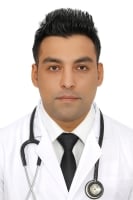
Education:

MD RESPIRATORY MEDICINE

Professional Bio:

I am Dr. Amandeep Singh Arneja, a dedicated Chest Physician and Senior Resident in Pulmonary Medicine at Jawaharlal Nehru Medical College (JNMC), Wardha, with extensive training in the management of complex respiratory and critical care conditions. I completed my M.B.B.S. from Universal College of Medical Sciences, Tribhuvan University (2016) and M.D. in Respiratory Medicine from Shri Shankaracharya Institute of Medical Sciences, Bhilai (2025), where I gained hands-on expertise in managing ICU patients, performing advanced diagnostic and therapeutic procedures, and conducting research in pulmonary diseases. My areas of expertise include: Management of asthma, COPD, tuberculosis, and interstitial lung disease Critical care management (ICU care, mechanical ventilation) Pulmonary function testing (spirometry, DLCO) Interventional procedures (thoracentesis, ICD insertion, bronchoscopy) Sleep medicine and polysomnography Research, academic writing, and clinical presentations I hold certifications in Good Clinical Practice and Biomedical Research. I am a proud member of the National College of Chest Physicians (NCCP). Alongside my pulmonary expertise, I have also completed a CPCDM Fellowship in Diabetes from RSSDI, enabling me to provide holistic care for patients with respiratory diseases complicated by diabetes. Currently, I am also pursuing a Fellowship in Critical Care Medicine, which further enhances my ability to manage critically ill patients with respiratory and systemic illnesses. With multiple research publications, conference presentations (NAPCON, SSIMSCON), and a strong academic background, I strive to combine evidence-based medicine with compassionate patient care. My mission is to provide comprehensive, high-quality care to patients suffering from respiratory and lifestyle-related diseases.

This doctor is not available for online consultations on the platform anymore.

Listen to related tracks in our music library
Comprehensive Second Opinion

Ask your health query to a doctor online

*guaranteed answer within 4 hours

Disclaimer: No content published on this website is intended to be a substitute for professional medical diagnosis, advice or treatment by a trained physician. Seek advice from your physician or other qualified healthcare providers with questions you may have regarding your symptoms and medical condition for a complete medical diagnosis. Do not delay or disregard seeking professional medical advice because of something you have read on this website. Read our Editorial Process to know how we create content for health articles and queries.
