Table of Contents
How Common Is It to Cough After Eating?
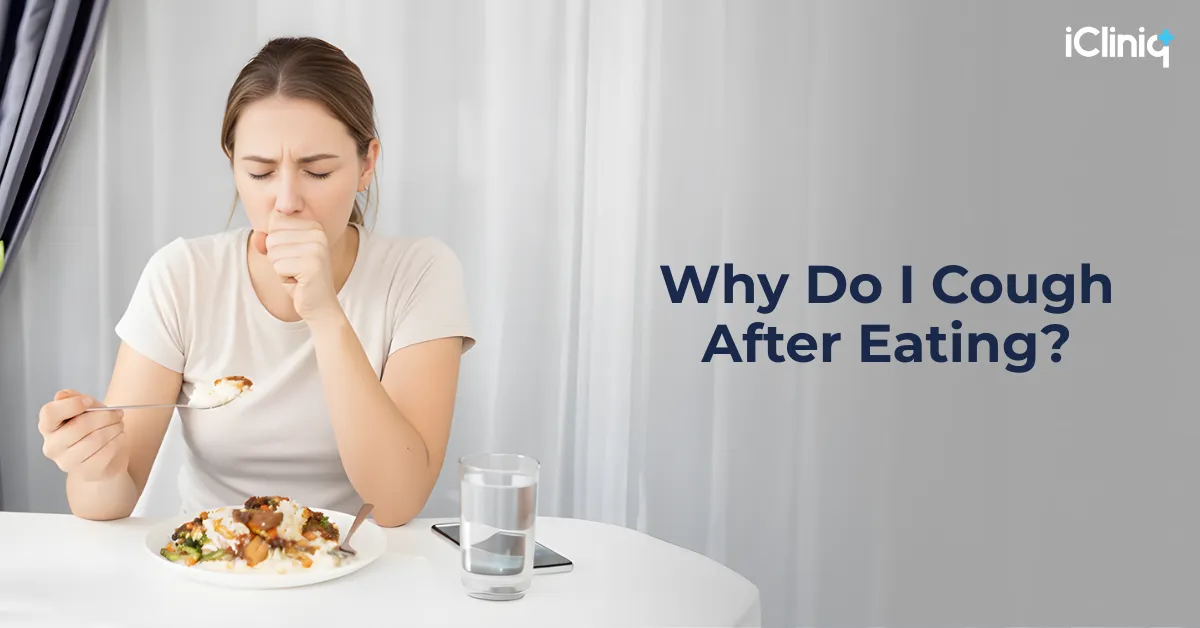
It may be common knowledge that coughing after eating is a normal occurrence. Coughs following meals are common among many adults, often occurring after consuming heavy, spicy, or acidic foods. Chronic sinus or acid reflux conditions may also be attributable to coughing up mucus after consuming food in some cases. Although coughing is not a cause for concern, repeated coughing after meals should be addressed with a doctor to rule out respiratory or gastrointestinal problems.
Causes of a Cough After Eating?
There can be several reasons for post-meal cough, but the common causes of coughing after meals are listed below:
-
Acid reflux:
Acid reflux is a condition in which the stomach acid goes back to the esophagus following the consumption of food. This acid may cause a sore throat and a cough. Foods such as citrus, chocolate, caffeine, fried foods, and spicy foods are risk factors. If you experience a burning sensation in the throat or a dry cough after eating, it may be caused by acid reflux. Symptoms can be reduced with minor changes, such as eating small portions of food, avoiding late-night meals, and refraining from consuming trigger foods.
-
Gastroesophageal reflux disease (GERD):
GERD is a chronic and acute acid reflux. It can cause coughing following food intake, as stomach acid constantly irritates the esophagus. You can also experience chest pains, a sore throat, or throat coughing. A lot of patients report experiencing a lump-in-the-throat sensation. Coughing up mucus following eating is also possible as a result of GERD due to the throat's attempts to clear the irritation. Long-term relief may involve lifestyle modification and drug treatment.
-
Asthma:
Some foods or the consumption of large amounts of food may trigger an asthma outburst. Airway sensitivity resulting in post-meal cough may be triggered by cold drinks, preservatives (in packaged foods), sulfites (in packaged foods), and allergens. The cough is typically accompanied by breathlessness, wheezing, and chest tightness.
-
Food allergies:
With nuts, dairy, eggs, soy, and shellfish, food allergies can cause coughing almost immediately after eating. The cough is manifested as a defense mechanism of the body against an allergen. You can also get hives, a sore throat, watery eyes, or alveolar dyspnea. A coughing response due to food allergies should not be overlooked, especially when it is accompanied by swelling or difficulty breathing.
-
Upper respiratory infections:
Throat irritation and mucus can persist even after an infection has cleared, which may prompt a cough after eating. The swallowing process holds the possibility of triggering a swollen throat, resulting in a post-meal cough. This can be achieved by consuming warm liquids, eating mild foods, and rehydrating until the inflammation subsides.
-
Dysphagia:
Dysphagia refers to the difficulty swallowing. When food or liquid enters the airway instead of the food pipe, it can cause coughing immediately after swallowing. This is more prevalent in older adults or individuals who have neurological conditions. If you continue to cough each time you take a bite, you should be examined.
-
Excessive phlegm:
Sinus problems, allergies, and respiratory diseases can cause thick mucus dripping into the throat. When such mucus combines with the food you eat, it may cause you to cough as a way of clearing your airway. Taking hot showers, using sprays containing saline, and staying hydrated may also help decrease mucus formation and prevent coughing after meals.
-
Aspiration pneumonia:
Aspiration is a process in which food, saliva, or liquid accidentally enters the lungs. Recurring aspiration may result in pneumonia. When one suddenly coughs after eating, particularly when food falls down the wrong pipe, this is the body's protection mechanism against the airway. Constant coughing, fever, chest pain, or shortness of breath are some conditions that require immediate treatment.
-
Postnasal drip:
The postnasal drip is when the nasal mucus and the sinuses flow down to the throat. In the case of eating, swallowing can cause the mucus to move and provoke coughing. This is common in people who have allergies, sinus infection, or chronic rhinitis. The management of nasal congestion can effectively reduce post-meal cough.
What Other Symptoms to Watch For?
When you develop a cough following a meal and have the following symptoms, it could be a pointer to a more profound health problem:
-
Difficulty swallowing.
-
The throat or the chest burns.
-
Persistent sore throat.
-
Hoarseness or voice changes.
-
Phlegm or mucus during coughing.
-
Wheezing or chest tightness.
-
Unexplained weight loss.
-
Blood in mucus.
These symptoms help determine when coughing is not merely an irritation that occurs during meals, but is a symptom of a larger disease.
What Are the Treatment Options?
The management is based on the cause:
-
Acid reflux or GERD:
Dietary modification, antacids, and proton pump inhibitors.
-
Asthma:
Inhalers and prevention of triggers.
-
Food allergies:
Antihistamines and allergen avoidance.
-
Dysphagia:
Speech therapy and swallowing exercises.
-
Too much mucus:
Nasal sprays, hydration, and steam inhalation.
Your doctor may suggest changes to your lifestyle and nutrition.
How to Reduce the Chances of Cough After Eating?
This can be done following simple precautions:
-
Eat slowly and chew well.
-
Avoid overeating.
-
Do not lie down immediately after taking a meal.
-
Avoid hot, fried, and acidic foods.
-
Remain hydrated during the day.
-
Limit caffeine and alcohol.
-
Precisely detect and prevent food allergens.
-
Maintain a healthy weight.
Even such simple tricks can help you prevent coughing up mucus after eating and allow you to savor your meals.
What Are the Possible Complications to Watch For?
By overlooking recurrent coughing after meals, one may develop:
-
Chronic throat irritation.
-
Sleep disturbances.
-
Anorexia due to the fear of coughing.
-
Worsening GERD.
-
Nutritional deficiency (when foods are not eaten in excess).
With proper diagnosis, routine symptoms can be dealt with early.
When to Seek Medical Attention?
Ask for assistance in case of coughing after meals:
-
More than three times a week.
-
Difficulty of breathing with wheezing.
-
The feeling of choking.
-
With fever or chest pain.
-
With mucus, coloured or bloody.
-
Having lost weight without any explanation.
It is necessary to seek medical help if coughing persists after consuming food, especially if it is severe or affects normal daily life.
Conclusion
A cough following a meal might seem insignificant, but when it becomes common, it might affect the enjoyment and self-assurance of a meal. The critical insight into the reason is the source of relief. Post-meal cough can be managed through lifestyle modifications, effective food management, and, when necessary, medical assistance, allowing you to resume eating without experiencing any unpleasant sensations. If you experience a persistent post-meal cough lasting more than three weeks, you can consult a general practitioner online.
Key Takeaways
-
Reflux, allergies, or swallowing problems may manifest as coughing after eating.
-
The timely detection of symptoms aids in avoiding complications such as aspiration or persistent throat irritation.
-
Post-meal coughing can be significantly reduced by making lifestyle modifications, adjusting your diet, and undergoing medical management.