HomeAnswersPulmonology (Asthma Doctors)sleep apnea

At 20, what mask should I use for CPAP in sleep apnea?

This Premium Q&A, reviewed and published, features a real conversation between an iCliniq user and a physician.

Patient's Query

Hello, Doctor,

I am 20 years old and recently got diagnosed with obstructive sleep apnea. I started using a CPAP (continuous positive airway pressure) machine, but I find the mask very uncomfortable and often remove it in my sleep. Please let me know,

  1. Is this normal for beginners?
  2. Or should I consider changing my mask setup?
  3. Doesn’t wearing the mask inconsistently affect my condition adversely in the long run?

Thank you.

Answered by Dr. Amandeep Singh Arneja

Education:

MD RESPIRATORY MEDICINE

Professional Bio:

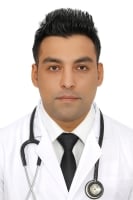
I am Dr. Amandeep Singh Arneja, a dedicated Chest Physician and Senior Resident in Pulmonary Medicine at Jawaharlal Nehru Medical College (JNMC), Wardha, with extensive training in the management of complex respiratory and critical care conditions. I completed my M.B.B.S. from Universal College of Medical Sciences, Tribhuvan University (2016) and M.D. in Respiratory Medicine from Shri Shankaracharya Institute of Medical Sciences, Bhilai (2025), where I gained hands-on expertise in managing ICU patients, performing advanced diagnostic and therapeutic procedures, and conducting research in pulmonary diseases. My areas of expertise include: Management of asthma, COPD, tuberculosis, and interstitial lung disease Critical care management (ICU care, mechanical ventilation) Pulmonary function testing (spirometry, DLCO) Interventional procedures (thoracentesis, ICD insertion, bronchoscopy) Sleep medicine and polysomnography Research, academic writing, and clinical presentations I hold certifications in Good Clinical Practice and Biomedical Research. I am a proud member of the National College of Chest Physicians (NCCP). Alongside my pulmonary expertise, I have also completed a CPCDM Fellowship in Diabetes from RSSDI, enabling me to provide holistic care for patients with respiratory diseases complicated by diabetes. Currently, I am also pursuing a Fellowship in Critical Care Medicine, which further enhances my ability to manage critically ill patients with respiratory and systemic illnesses. With multiple research publications, conference presentations (NAPCON, SSIMSCON), and a strong academic background, I strive to combine evidence-based medicine with compassionate patient care. My mission is to provide comprehensive, high-quality care to patients suffering from respiratory and lifestyle-related diseases.

This doctor is not available for online consultations on the platform anymore.

Hello,

Welcome to icliniq.com.

I read your query and can understand your concern.

What you are experiencing is very common in people who have recently started on CPAP (continuous positive airway pressure) for obstructive sleep apnea. Many patients remove the mask unknowingly during sleep in the first few weeks because the body and brain are still adjusting to the sensation of positive pressure and wearing a mask overnight. This does not mean the treatment will fail or that you are doing something wrong.

The most important thing early on is comfort. Different mask styles suit different people. Some patients feel much better with a nasal pillow mask, while others tolerate a nasal mask or full-face mask more comfortably, depending on whether they breathe through the nose or mouth during sleep. Even a small issue like air leakage or pressure marks can make people subconsciously remove the mask at night, so mask fitting is extremely important.

The settings may also need adjustment. If the airflow feels too strong while falling asleep, features like ramp mode or pressure adjustment can make adaptation much easier. Dryness of the nose or throat can also reduce tolerance, and adding humidification often improves comfort significantly.

At 20 years of age, it is important to adapt properly because untreated sleep apnea over many years can increase the risk of

  1. Daytime fatigue.
  2. Concentration problems.
  3. High blood pressure.
  4. Metabolic issues.
  5. Long-term cardiovascular complications.

Inconsistent CPAP use does not permanently worsen the condition itself, but it reduces the protective benefit of therapy and allows symptoms and long-term risks to continue.

In real-world practice, many patients struggle initially but improve greatly once the correct mask and settings are found. One useful trick is wearing the mask for short periods during the evening while awake, so your brain becomes more accustomed to it without the pressure of trying to sleep immediately.

I hope this information helps you.

Feel free to ask further queries.

Thank you.

Medically reviewed by iCliniq medical review team
Published At May 31, 2026
Reviewed At July 9, 2026

Education:

MD RESPIRATORY MEDICINE

Professional Bio:

I am Dr. Amandeep Singh Arneja, a dedicated Chest Physician and Senior Resident in Pulmonary Medicine at Jawaharlal Nehru Medical College (JNMC), Wardha, with extensive training in the management of complex respiratory and critical care conditions. I completed my M.B.B.S. from Universal College of Medical Sciences, Tribhuvan University (2016) and M.D. in Respiratory Medicine from Shri Shankaracharya Institute of Medical Sciences, Bhilai (2025), where I gained hands-on expertise in managing ICU patients, performing advanced diagnostic and therapeutic procedures, and conducting research in pulmonary diseases. My areas of expertise include: Management of asthma, COPD, tuberculosis, and interstitial lung disease Critical care management (ICU care, mechanical ventilation) Pulmonary function testing (spirometry, DLCO) Interventional procedures (thoracentesis, ICD insertion, bronchoscopy) Sleep medicine and polysomnography Research, academic writing, and clinical presentations I hold certifications in Good Clinical Practice and Biomedical Research. I am a proud member of the National College of Chest Physicians (NCCP). Alongside my pulmonary expertise, I have also completed a CPCDM Fellowship in Diabetes from RSSDI, enabling me to provide holistic care for patients with respiratory diseases complicated by diabetes. Currently, I am also pursuing a Fellowship in Critical Care Medicine, which further enhances my ability to manage critically ill patients with respiratory and systemic illnesses. With multiple research publications, conference presentations (NAPCON, SSIMSCON), and a strong academic background, I strive to combine evidence-based medicine with compassionate patient care. My mission is to provide comprehensive, high-quality care to patients suffering from respiratory and lifestyle-related diseases.

This doctor is not available for online consultations on the platform anymore.

Same symptoms don't mean you have the same problem. Consult a doctor now!
Education:

MD RESPIRATORY MEDICINE

Professional Bio:

I am Dr. Amandeep Singh Arneja, a dedicated Chest Physician and Senior Resident in Pulmonary Medicine at Jawaharlal Nehru Medical College (JNMC), Wardha, with extensive training in the management of complex respiratory and critical care conditions. I completed my M.B.B.S. from Universal College of Medical Sciences, Tribhuvan University (2016) and M.D. in Respiratory Medicine from Shri Shankaracharya Institute of Medical Sciences, Bhilai (2025), where I gained hands-on expertise in managing ICU patients, performing advanced diagnostic and therapeutic procedures, and conducting research in pulmonary diseases. My areas of expertise include: Management of asthma, COPD, tuberculosis, and interstitial lung disease Critical care management (ICU care, mechanical ventilation) Pulmonary function testing (spirometry, DLCO) Interventional procedures (thoracentesis, ICD insertion, bronchoscopy) Sleep medicine and polysomnography Research, academic writing, and clinical presentations I hold certifications in Good Clinical Practice and Biomedical Research. I am a proud member of the National College of Chest Physicians (NCCP). Alongside my pulmonary expertise, I have also completed a CPCDM Fellowship in Diabetes from RSSDI, enabling me to provide holistic care for patients with respiratory diseases complicated by diabetes. Currently, I am also pursuing a Fellowship in Critical Care Medicine, which further enhances my ability to manage critically ill patients with respiratory and systemic illnesses. With multiple research publications, conference presentations (NAPCON, SSIMSCON), and a strong academic background, I strive to combine evidence-based medicine with compassionate patient care. My mission is to provide comprehensive, high-quality care to patients suffering from respiratory and lifestyle-related diseases.

This doctor is not available for online consultations on the platform anymore.

Listen to related tracks in our music library
Comprehensive Second Opinion

Ask your health query to a doctor online

*guaranteed answer within 4 hours

Disclaimer: No content published on this website is intended to be a substitute for professional medical diagnosis, advice or treatment by a trained physician. Seek advice from your physician or other qualified healthcare providers with questions you may have regarding your symptoms and medical condition for a complete medical diagnosis. Do not delay or disregard seeking professional medical advice because of something you have read on this website. Read our Editorial Process to know how we create content for health articles and queries.
