Table of Contents
- 1What Is Snoring and Why Does It Happen?
- 2What Are the Main Causes of Snoring?
- 3What Symptoms and Risk Factors Are Linked to Snoring?
- 4How Is Snoring Diagnosed?
- 5What Complications Can Snoring Lead To?
- 6What Are the Best Treatments for Snoring?
- 7How Can You Stop Snoring Naturally at Home?
- 8Can Children Snore and When Is It a Problem?
- 9What Are the Effective Long-Term Strategies for Living With and Managing Snoring?
- 10Key Takeaway From iCliniq
What Is Snoring and Why Does It Happen?
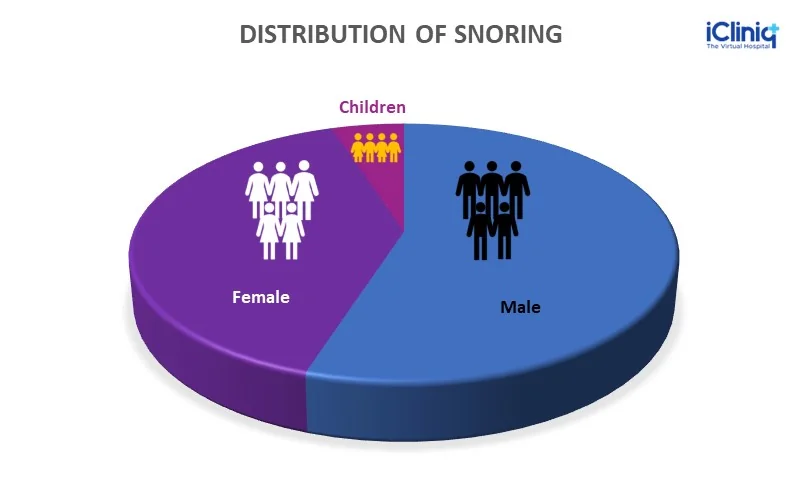
We often produce an abnormal hoarse sound while sleeping. While these sounds can be annoying, they can also create abnormal vibration while sleeping. This sound is called snoring. Snoring is a common thing in our everyday lives. For many of us, making such an abnormal sound while sleeping is normal. In fact, nearly 50 percent of men and 30 percent of women worldwide experience snoring. However, most of us ignore this as a natural phenomenon. However, this is a concerning sign that may be indicative of underlying diseases.
In normal cases, our breathing process is regular and quiet. The fresh air enters our body through the nose and passes from the windpipe to the lungs. On the other hand, the deoxygenated harmful air goes back from the lungs to the nose. In this process, several muscles of the throat, neck, and chest region play a crucial role. However, during snoring, one can experience a strange noise and vibration during breathing. This is primarily due to obstructions and turbulence in the breathing passage. These obstructions and turbulences create vibrations in different tissues, such as the tongue, throat muscles, and soft palate.
What Are the Main Causes of Snoring?
The main causes of loud snoring include;
The most common cause of snoring is nasal obstructions. Such obstructions in the nasal airways often develop due to regular sinus infection, cough, and cold. Additionally, nasal polyps, abnormal deviation of the nasal bone, and structural deformity in the nose contribute to nasal airway obstruction.
Another common cause is a structural abnormality of your oral cavity. Sometimes our jawbones are abnormally placed. This results in either a large or small jawbone. Apart from this, crooked teeth or such jaw issues can cause difficulty in mouth movement. These issues ultimately lead to problems in the different oral muscles, like the palate, throat, and jaw muscles. Gradually, these muscles lose their tone, leading to poor breathing.
The back portion of our palate is known as the soft palate, a muscular structure. However, you can see deformity in the soft palate or the fleshy extension of the soft palate. Such deformity often causes breathing problems while sleeping.
Obesity, or excessive fat deposition in the body, can be linked to sleep apnea and snoring. Excess fat can compress the windpipe and loosen the muscles in the throat, potentially causing breathing difficulties. As a result, such obstructions can cause snoring.
Smoking, alcoholism, or drug addiction can cause narrowing of your windpipe. This can be linked to snoring.
What Symptoms and Risk Factors Are Linked to Snoring?
The common symptoms related to snoring are;
The most common symptom is loud noise and vibration during sleep. Snoring sounds are rattling or snorting in nature.
Snoring often causes interruptions during sleeping. You will experience a bad or interrupted sleep cycle.
As snoring is caused by a disruption in your breathing, you can experience a choking sensation while sleeping.
Snoring often causes a headache or discomfort after sleeping.
Additionally, snoring is often associated with several risk factors. These are;
Obesity or excess body weight.
It is common among people with high blood pressure.
Patients with a history of snoring often suffer from repeated tonsillitis.
If you regularly suffer from allergies, you may also experience snoring.
How Is Snoring Diagnosed?
Often, snoring is diagnosed by your close relatives. The loud noise during sleeping makes it easier to diagnose. However, a doctor needs additional tests to determine the effects and causes of snoring. These tests are;
A sleep study, also known as polysomnography, is a useful test to determine your sleep pattern. This test collects information about multiple factors, including brain waves, heart rate, oxygen intake, and breathing pattern. These data are useful to determine whether you are suffering from sleep apnea or not.
Doctors use a camera-like device to see any abnormalities in your upper respiratory tract. It is called nasopharyngoscopy.
The detection of your snoring loudness and its acoustic analysis can help doctors identify the causative factor for snoring.
Additionally, X-rays, CT scans (computed tomography), and MRI (magnetic resonance imaging) can help identify issues with your sinuses, nasal polyps, and defects in the nasal septum.
What Complications Can Snoring Lead To?
Snoring causes several health problems. These are,
The most common effect of snoring is an interruption in your oxygen supply. This causes a disturbing sleep cycle and a lack of oxygen supply during your sleep. This condition leads to obstructive sleep apnea (OSA).
Snoring and sleep apnea together can cause several health issues. It can lead to heart issues, high blood pressure, and digestive issues.
Lack of oxygen in the body can cause hormonal issues. In the long run, it can cause type 2 diabetes and gynecological problems.
As snoring creates a problem while you are sleeping, you feel dizzy throughout the day. You can feel mood swings, depression, and a change in your functional activities.
Long-term snoring can cause you regular coughs and colds. Also, it can increase the tendency to allergies.
What Are the Best Treatments for Snoring?
You must understand that several factors lead to snoring. That is why to stop snoring, you must understand the causative factors. As a result, snoring treatment options may vary. These treatment options are;
One of the most effective treatments for snoring is weight loss. In most cases, snoring is caused by obesity. That is why regular exercise and weight loss can reduce your smoking.
Sometimes, snoring is related to your crooked teeth and abnormal jaw position. In such cases, you can use anti-snoring devices. These devices are called jaw repositioning devices or mandibular advancement devices. These devices can reposition your jaw bones. Apart from this, orthodontic treatment for jaw and tooth alignment might be needed. In severe cases, doctors can advise you on jaw surgery.
If you have problems related to your soft palate, nasal septum, or sinus, you might need surgery.
Apart from this, the goal of snoring treatment is to maintain the oxygen level in your body while sleeping. For this, CPAP (continuous positive airway pressure) for snoring is an effective treatment. This will not only maintain the oxygen level in your body but also prevent obstructive sleep apnea.
How Can You Stop Snoring Naturally at Home?
Some simple snoring remedies can keep us healthy. Snoring remedies at home that we can follow are,
Regular exercise will keep us healthy.
You have to maintain a proper sleep cycle.
Meditation and lifestyle changes can be beneficial, as they can help reduce stress.
You can slightly elevate your head while sleeping, and try sleeping in a side position.
Avoid smoking, alcohol, or taking sedatives.
You can use nasal strips, which can widen your nostrils.
Can Children Snore and When Is It a Problem?
Snoring is uncommon among children. However, infrequent and light snoring can be seen. It is not abnormal. If your child snores regularly with a loud noise, it is dangerous. Such snoring in children is seen due to;
Repeated respiratory tract and nasal infection.
Infection in the tonsil or sinus area.
Children with severe health issues can have sleeping issues.
What Are the Effective Long-Term Strategies for Living With and Managing Snoring?
Snoring has several bad impacts on your health. That is why living with snoring can have a severe effect on your body. Not only that, but it can also affect your personal and family life.
Therefore, finding effective snoring solutions is crucial. You must know how to stop snoring, naturally.
If you are suffering from smoking, you must visit a doctor.
Regular exercise and breathing exercises can reduce your symptoms.
If you have bad habits like smoking or alcoholism, you should get rid of them.
If you have undergone treatment for your snoring, you should maintain a healthy lifestyle to prevent its recurrence.
Conclusion
Obstruction in your windpipe leads to snoring. Snoring is a dangerous and unhealthy habit. Snoring can pose health risks, including heart disease, high blood pressure, and hormonal imbalances. That is why consulting a doctor immediately is crucial to maintaining your body's health. Apart from medical treatments, lifestyle changes can improve your snoring habits.
Key Takeaway From iCliniq
Snoring is common among patients who suffer from nasal issues, obesity, and jaw problems. If left untreated at an early stage, it can cause severe damage to your body. However, apart from medical treatments, lifestyle changes can also be effective in reducing snoring. If you have any queries related to this, please remember that our sleep medicine specialists at iCliniq are always available to help.